
The New York herald (New York [N.Y.]), January 30, 1855, (MORNING EDITION)
THE 118TH ANNIVERSARY OF THE BIRTHDAY OF THOMAS PAINE.
Its celebration by the believers in his principles.
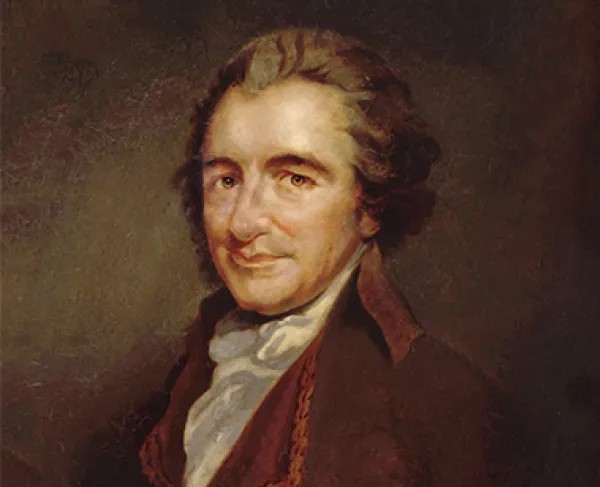
The birthday of Thomas Paine was celebrated last evening, in the Chinese Assembly Rooms, by the believers in his political and moral principles. There were between five and six hundred ladies and gentlemen present. The festivities of the evening commenced and terminated with dancing, there being an intermission of an hour or more for supper and speeches appropriate to the occasion.
About 11 o’clock the whole company proceeded to the supper, where, after partaking of the good things spread before them by Mr. Bell, the Superintendent of the Chinese Assembly Rooms, they enjoyed a feast of reason in the speeches and toasts.
Dr. Hall presided and read the toasts, which were interspersed with music by the band.
The President made the opening address. He commenced by speaking of the fathers of the Revolution and the great services which they rendered not only to their country but the whole human race. They were men who were above every mean consideration, and sacrificed everything to their love of country. The beneficial influence of their exertions was felt not only in the dissemination of liberal principles but in the promotion of the arts and sciences. Civilization was extending, and even religion, and clergymen were becoming Christian. Their character was approximating the principles of Paine, who believed that there was but one God, and whose religion was to do good. His definition of infidelity, he said, was professing to believe what one did not believe, and his doctrine in this respect did not differ from that of the more enlightened sects of the present age. The object was to simplify the great truths of the Divinity and free them from the obscurity in which the ministers of the church involved them. These teachers would find it to their interest to conform more to his principles; and when they prevailed throughout the earth, the cross, instead of being the emblem of persecution, would be regarded as the emblem of peace and good will to all men. The day would come when the great man, whose birthday they were assembled to celebrate, would be enrolled on the list of those who had conferred a benefit on their race.