
A Breakthrough in Thomas Paine Studies
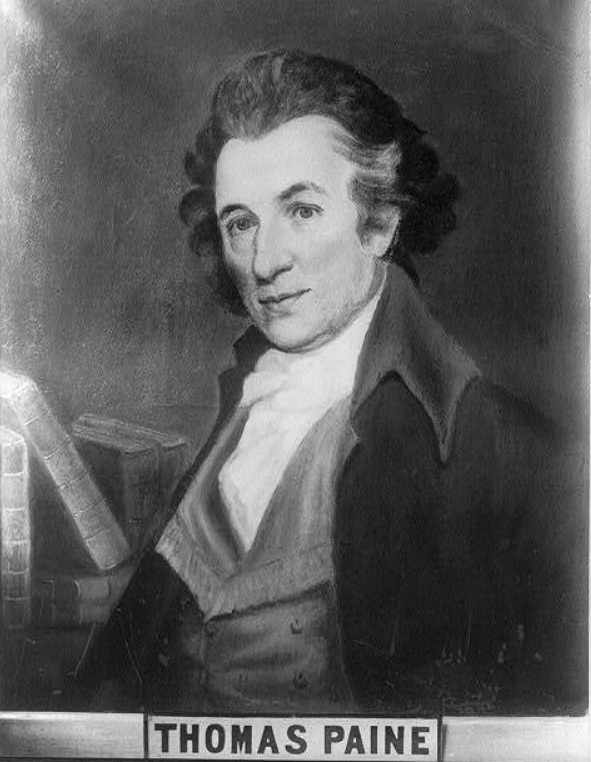
In the summer of 2026, Princeton University Press released a groundbreaking collection of Paine’s writings that revolutionizes Paine studies. This includes almost 400 newly discovered works previously unknown.
The Thomas Paine Collected Writings Project is being managed by the Thomas Paine Historical Association. For more information from Princeton University Press see here.
Contributors
Gregory Claeys
Royal Holloway, University of London
Editor-in-Chief
Marc Belissa
Université de Paris Nanterre
Editor
Gary Berton
Thomas Paine Historical Association
Editor
Yannick Bosc
Université de Rouen
Editor
Scott Cleary
Iona University
Editor
Carine Lounissi
Université de Rouen
Editor
The Thomas Paine Collected Writings Project
Volume 1: 1772 to 1782
Thomas Paine: Collected Writings is the first major new edition of Paine’s works, bringing together all his writings in six breathtaking volumes that dramatically revise our previous understanding of his activities as a writer and his importance as a democratic theorist in the age of revolutions. It includes about 180 new letters and some two hundred works newly attributed to Paine, with twenty-nine works previously regarded as Paine’s being deattributed. Drawing on pioneering computerized text analysis that makes possible for the first time attributions of anonymous and pseudonymous texts, this collection includes in volumes 5–6 newly identified pamphlets and newspaper and journal contributions, and suggests that Paine was extremely active as an oppositional Whig writer in the decade prior to the American Revolution. Many writings from the period of his residence in France (1792–1802) and his subsequent return to the United States are also restored to his published output. Paine emerges as a much more consistent and serious democratic theorist than is often assumed, whose contributions to revolutionary debates in America, Britain, and France were unparalleled in their time.
This volume spans the years 1772 to 1782, a decade that witnessed a diverse output of writings from Paine, from editorials and magazine pieces to pamphlets and newspaper articles. The book includes the Forester Letters, the Crisis papers, the Deane Affair articles, and Common Sense, with Gregory Claeys’s general introduction and commentary by the editors providing invaluable historical context.
Volume 2: 1782 to 1793
This volume spans the years 1782 to 1793, a period in which Paine explored the theoretical foundations of the ideas and institutions he championed in Common Sense. The book includes the Letter to the Abbé Raynal, Dissertations on Government, Prospects on the Rubicon, and Rights of Man. It also reprints “Liberty Tree,” “The Death of General Wolfe,” and other poems, with commentary by the editors providing invaluable historical context.
Volume 3: 1793 to 1809
This volume spans the years 1793 to 1809, a period that saw Paine’s imprisonment in France in 1793–94 and his return to America, where he remained active until his death. The book includes The Age of Reason, Letter to George Washington, Letters to the Citizens of the United States, Agrarian Justice, and Examination of the Passages in the New Testament, with commentary by the editors providing invaluable historical context.
Volume 4: 1765 to 1808
Spanning the years 1765 to 1808, this volume brings together Paine’s correspondence with such figures as Benjamin Franklin, Thomas Jefferson, George Washington, and Robert Morris. These letters reveal his deep engagement with diverse Enlightenment networks and his views on topics ranging from politics and science to religion and marriage. Commentary by the editors provides invaluable historical context.
Volume 5: 1758 to 1772
The supplementary writings in this volume span the years 1758 to 1772, a formative period in which Paine honed his voice as a Grub Street writer and close confederate of Benjamin Franklin. Writing pseudonymously in journals and newspapers, he developed the narrative and ideological traits that would form the basis for his later social and political thought. Commentary by the editors provides invaluable historical context.
Volume 6: 1772 to 1808
The supplementary writings presented in this volume span the years 1772 to 1808, a time of political maturation for Paine as he engaged with a host of issues and causes in America, Britain, and France. Often written anonymously or under known or new aliases, these pieces suggest a very different narrative of his activities and development during this period. Commentary by the editors provides invaluable historical context.