
Daily national intelligencer (Washington City [D.C.]), May 10, 1833
London paper
House of Commons, Friday, March 22
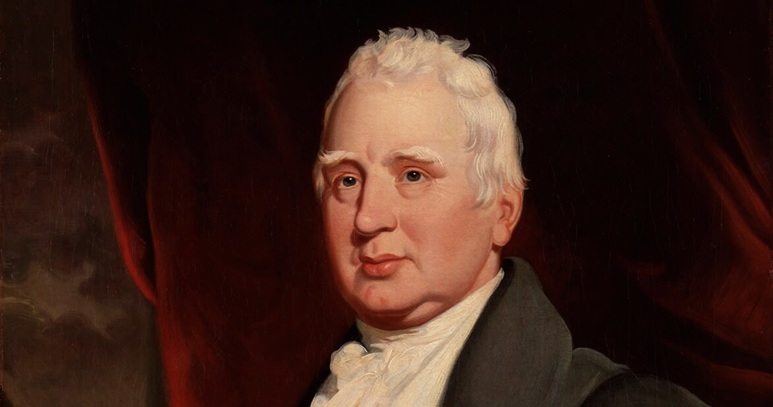
A number of petitions were presented for the better observance of the Sabbath, which Mr. Cobbett condemned as originating in pounds, shillings, and pence feelings, and not in a respect for the Gospel. In observing on one petition presented in favor of the emancipation of the Jews, the same honorable member said that the Jews were one of the most industrious classes of his Majesty’s subjects. Now, he would ask the hon. member whether he could produce a Jew who ever dug or went to plough, or who ever did any thing except get money from the pockets of the people? Mr. E. J. Stanley, in reply, said that as the hon. member had once condemned Paine as a blasphemer, and yet afterwards assisted at his apotheosis, it was to be hoped that he (Mr. C.) would exhibit a similar change of opinion with regard to the Jews.
Mr. Cobbett denied that he had ever held up Mr. Paine as a blasphemer. He had always, however, drawn a distinction between Mr. Paine’s political and religious opinions. With respect to his bringing Mr. Paine’s bones to England, all he should say was, that in doing so he considered he was only doing his duty, out of respect to his writings on the subject of paper money, which if they had been attended to, and his advice followed, would have prevented the present difficulty of dealing with the currency.
Mr. E. J. Stanley said, that after what had fallen from the hon. member for Oldham, he must be allowed to justify himself by reading the very words of the publication of the hon. member himself: “In no part of the Age of Reason does Paine speak in terms of impious irreverence of God; he praises God, and calls upon his name, and that, too, in a strain of eloquence, the equal of which I have never heard in any sermon.” Vol. 25, p. 725. “The Age of Reason is as despicable as the author. The wretch has all his life been employed in leading fools astray from their duty. His religion is of a piece with his politics, the one inculcates the right of revolting against government, the other against God.” Vol. 3, p. 389. “Though Thomas Paine was no Christian, he was no blasphemer. He offers no indignity to God himself.” Vol. 35, p. 735. “Paine was a cruel, treacherous, and blaspheming ruffian; he was a traitor, and a traitor is the foulest fiend on earth.” Vol. 4.
This little exposé is so characteristic of Cobbett that we have transcribed it, although we have repeatedly published these and a hundred other equally palpable contradictions. There is a little book called the “Beauties of Cobbett, or Blowing Hot and Cold,” entirely filled with his assertions and contradictions, as palpable as those here exposed respecting Thomas Paine.
The Speaker concluded, we presume, that Cobbett had received a regular floorer, and interfered to prevent Mr. Stanley pummelling a fallen man. The Rt. Hon. Member, he said, had now answered the Hon. Member for Oldham, and it would be quite out of order for him to proceed.