Have some fun scrolling through some interesting images reflecting Paine’s life and the impact of his work! This assortment of images is a gateway into the legacy of the founder of modern democracy. Click on any image to enlarge.
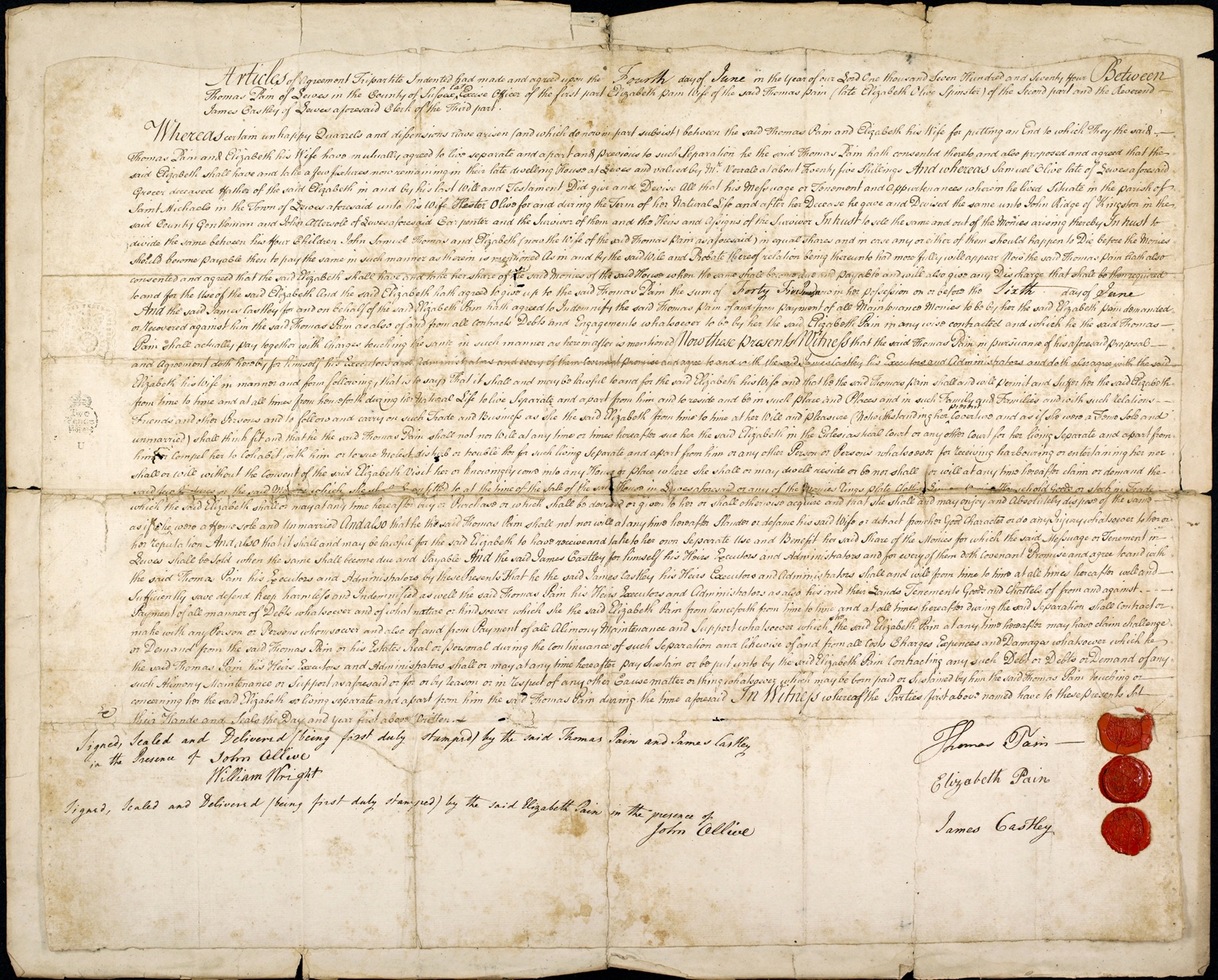
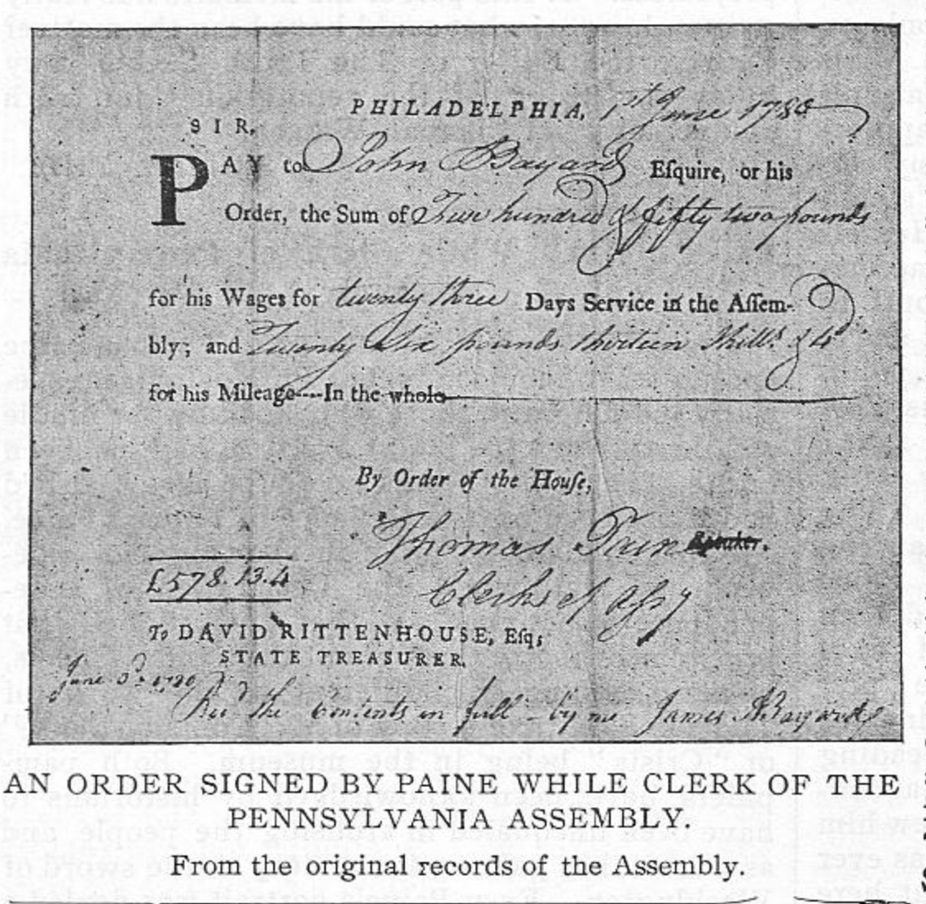
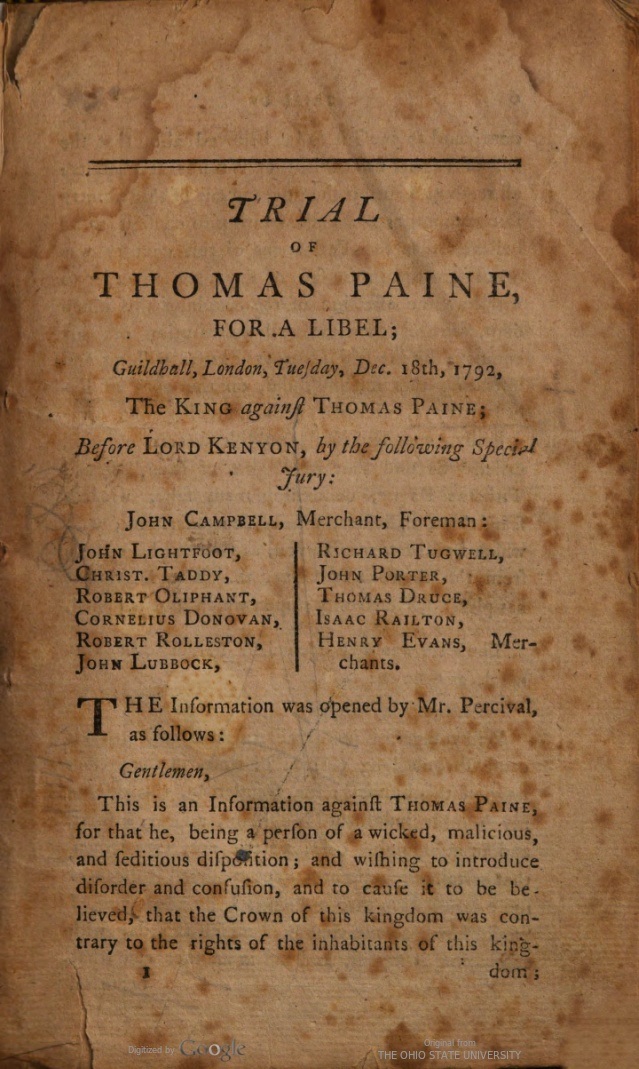
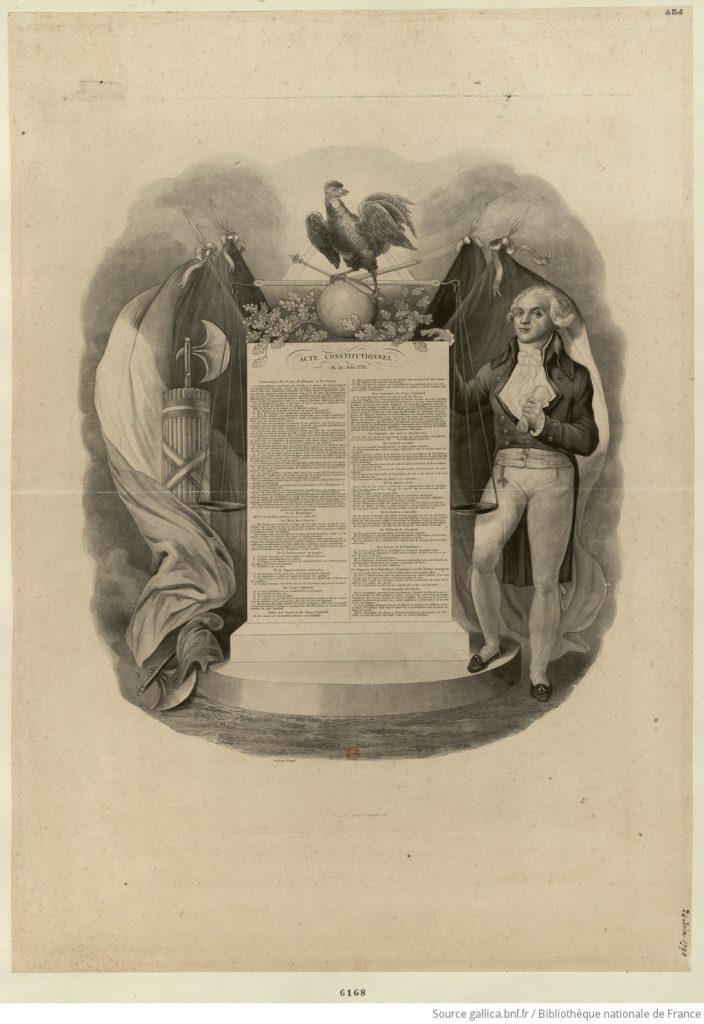
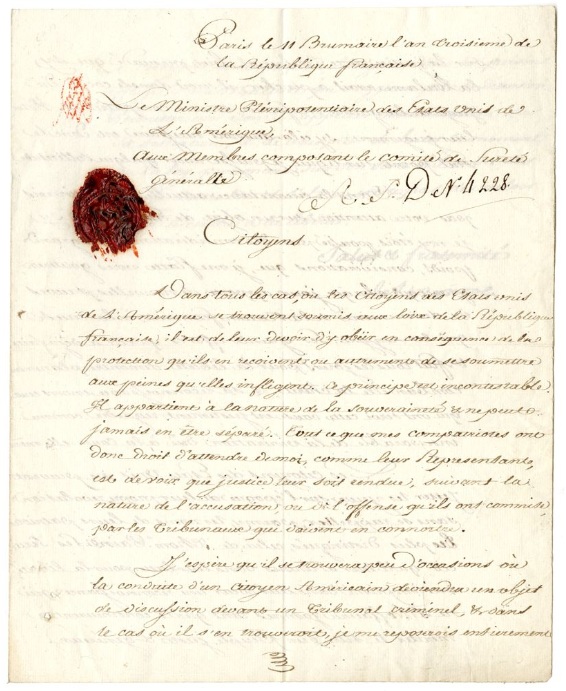
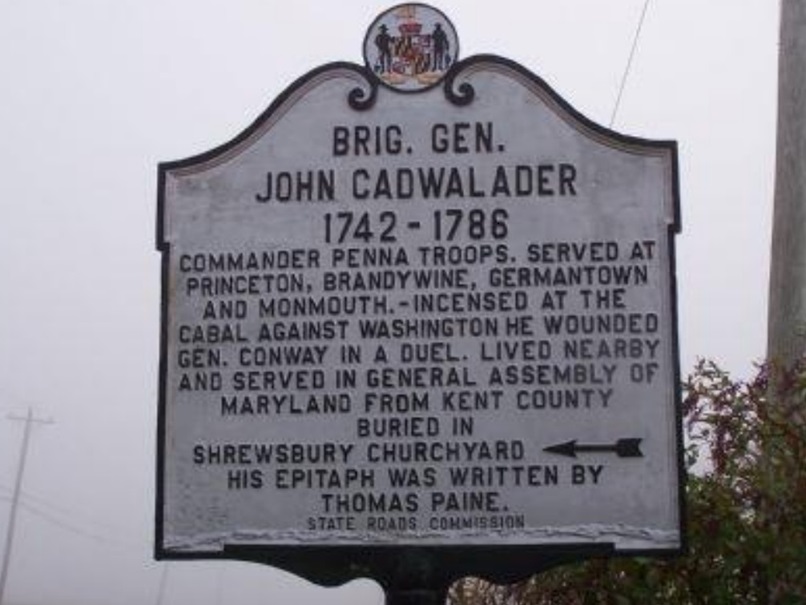
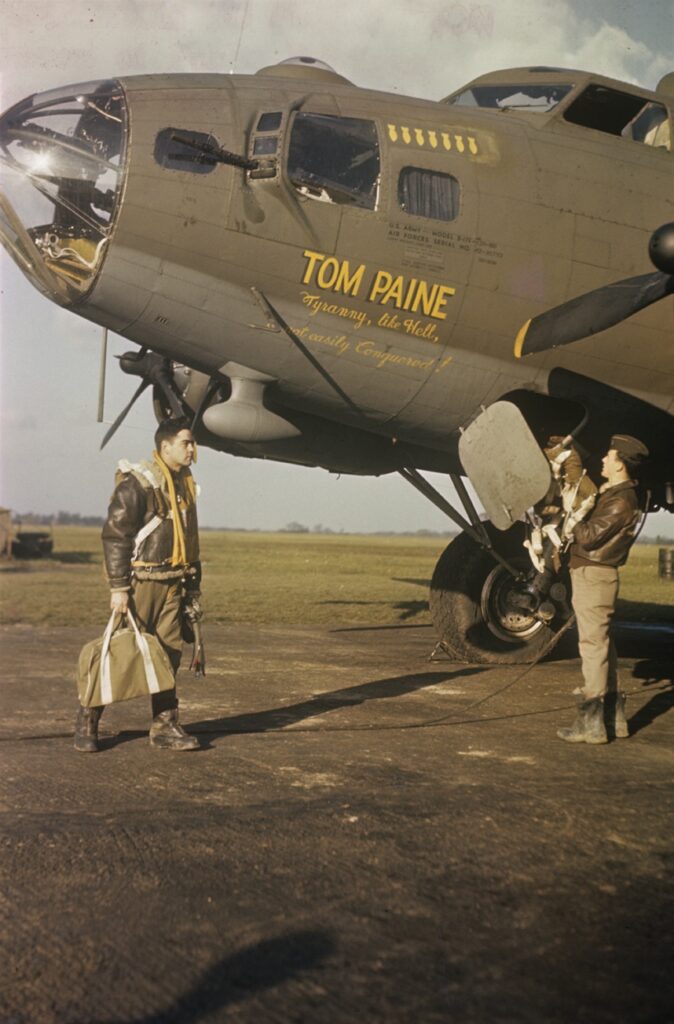
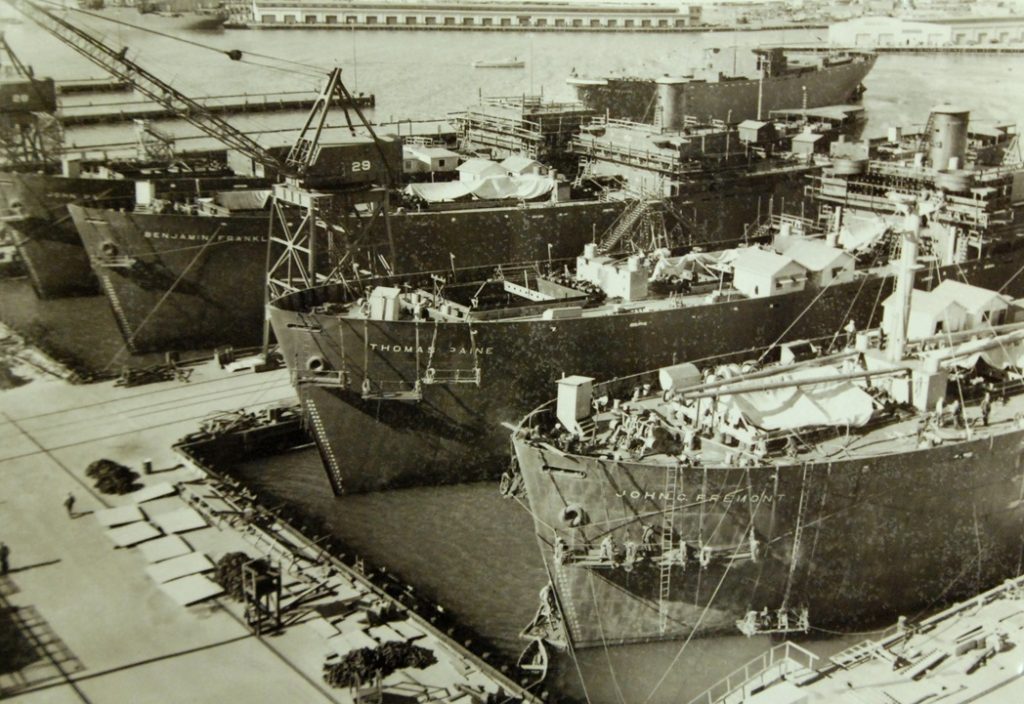
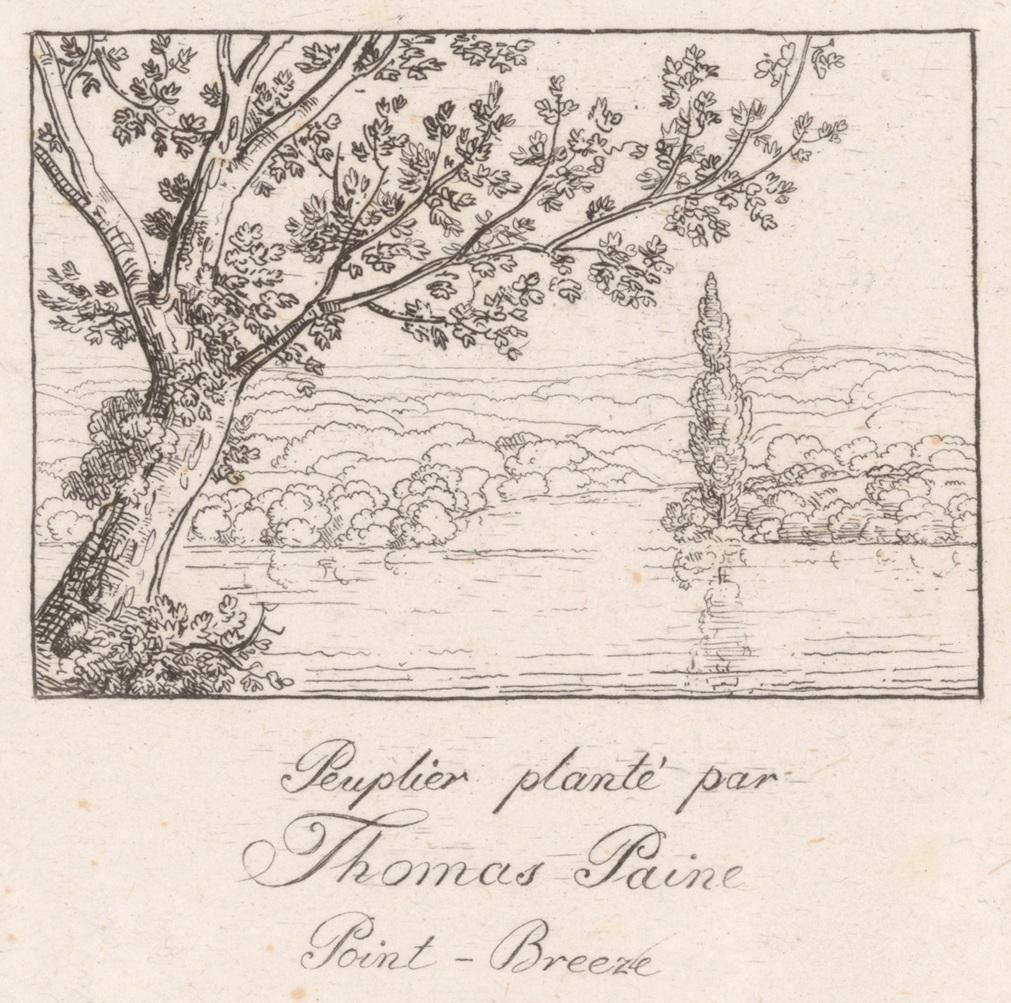
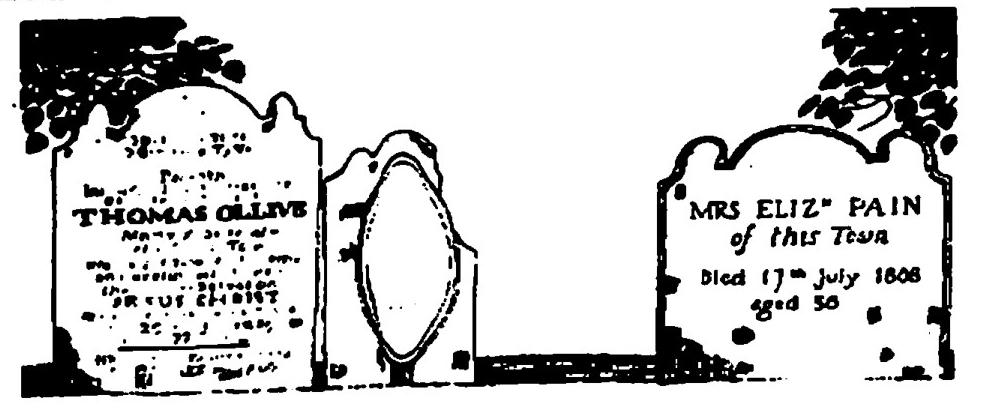
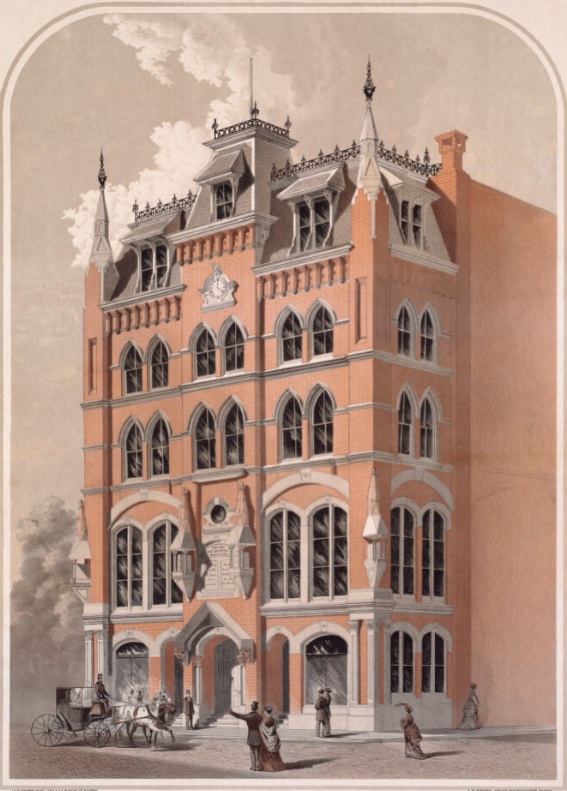
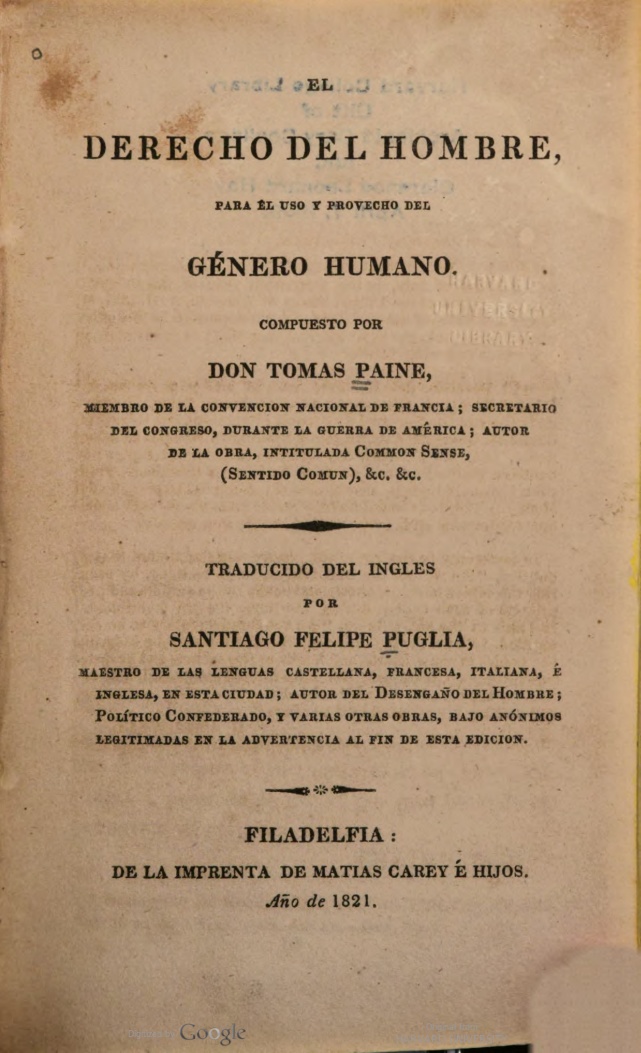
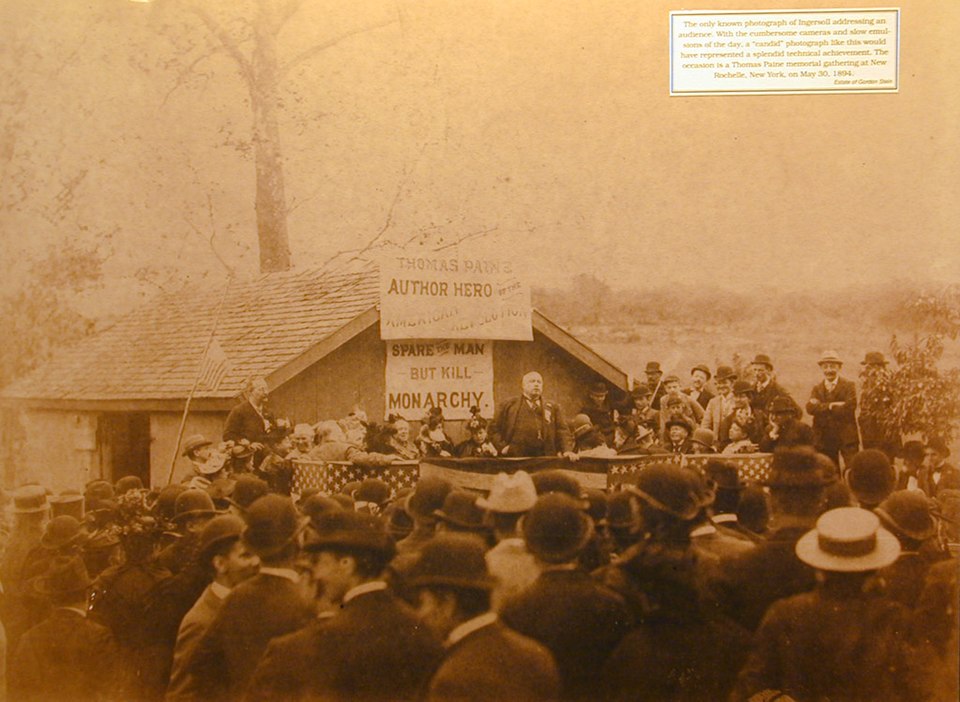
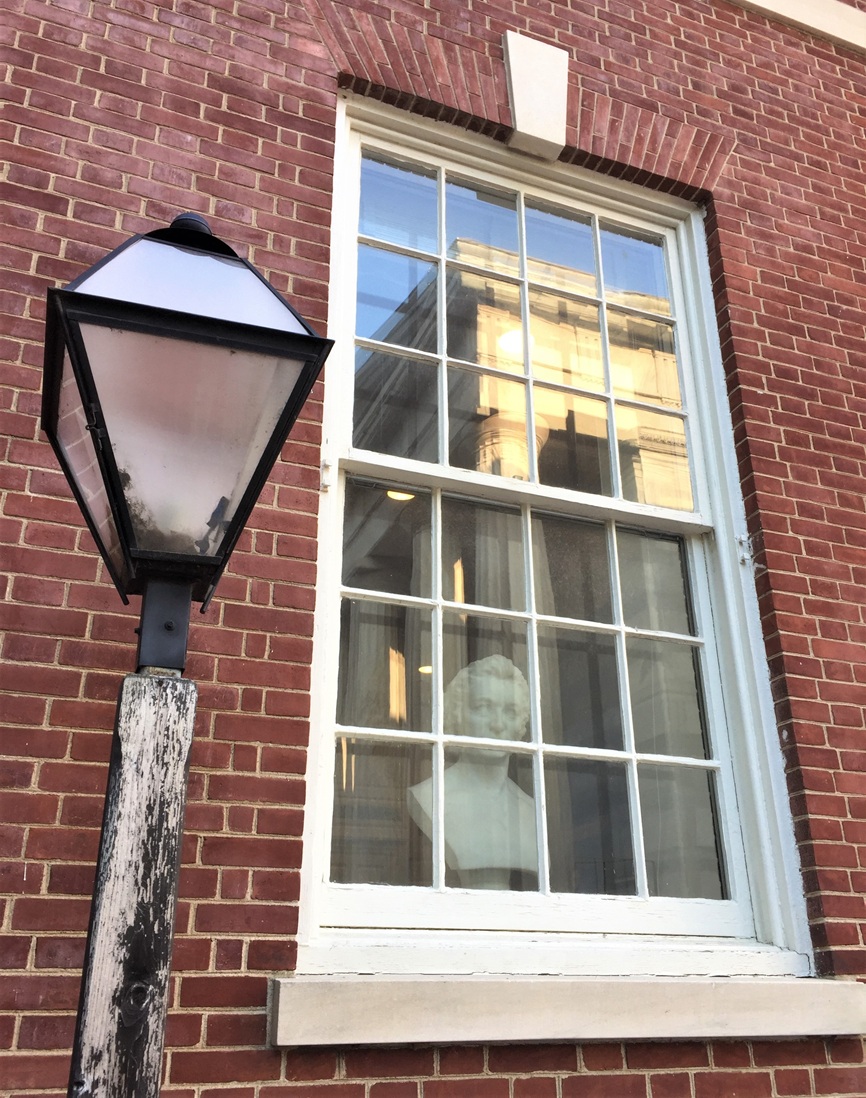
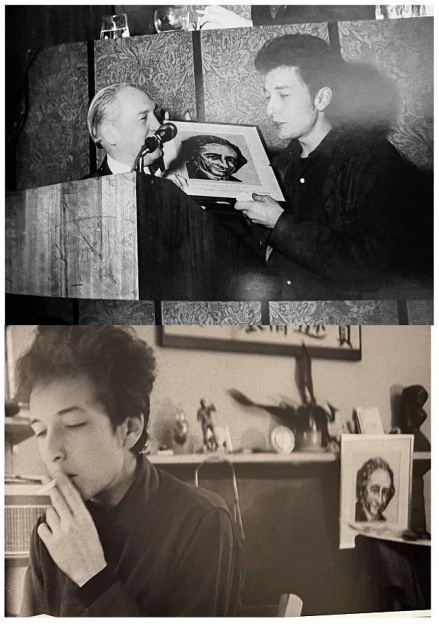
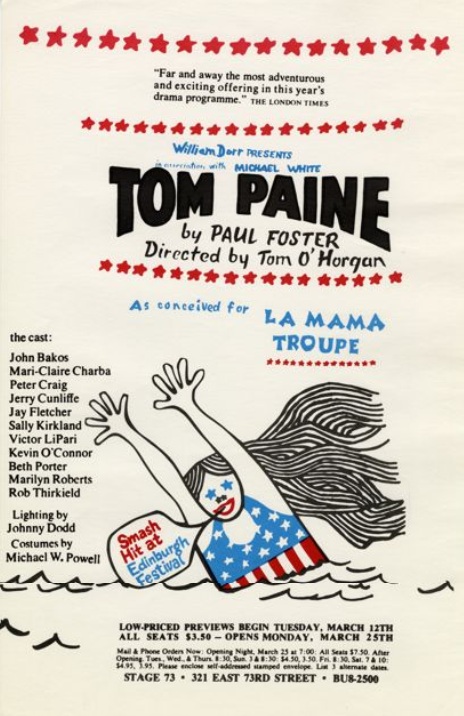
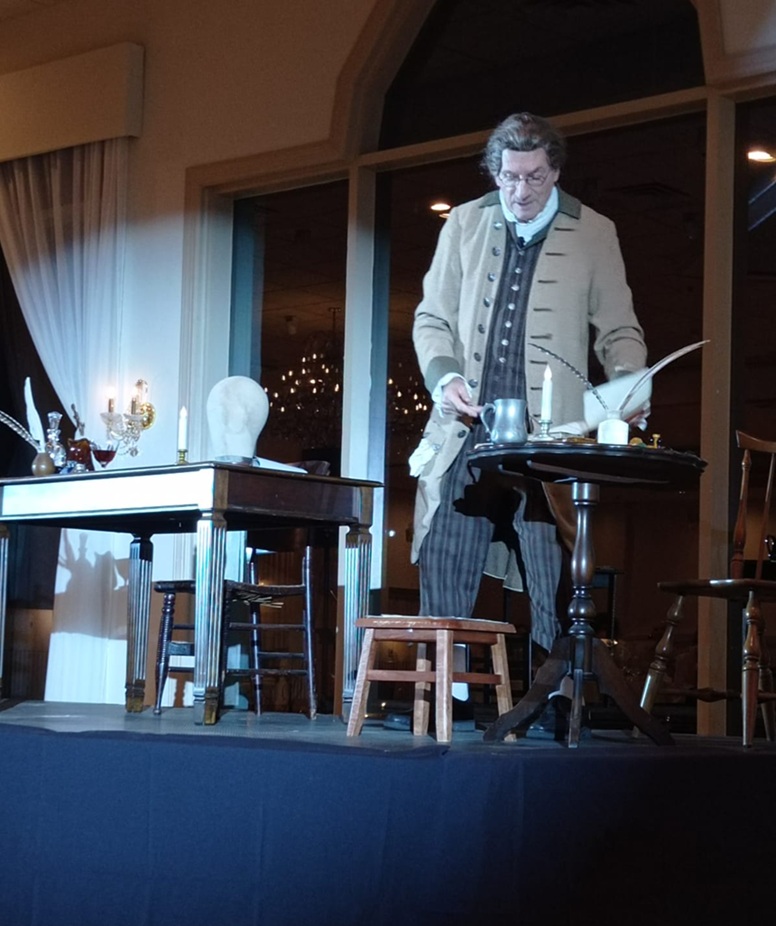
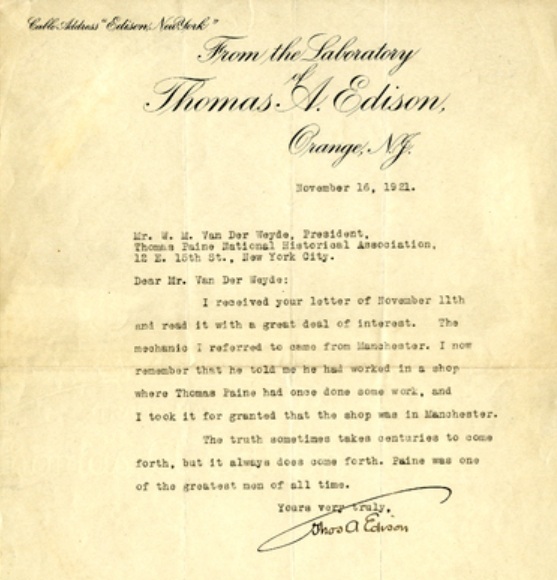
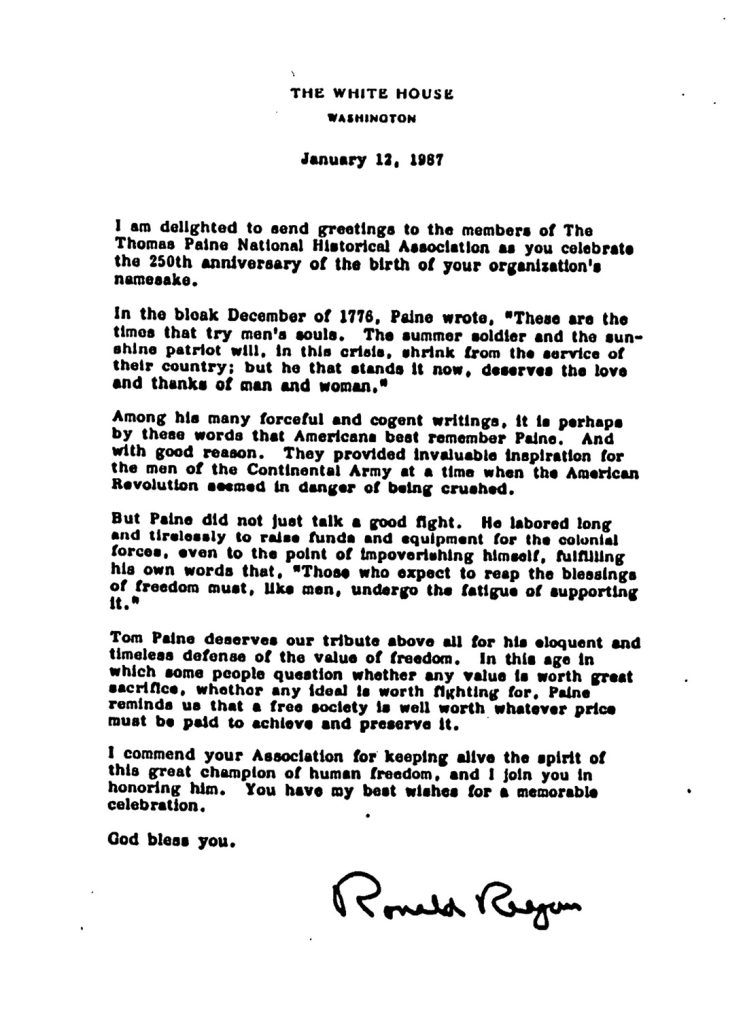
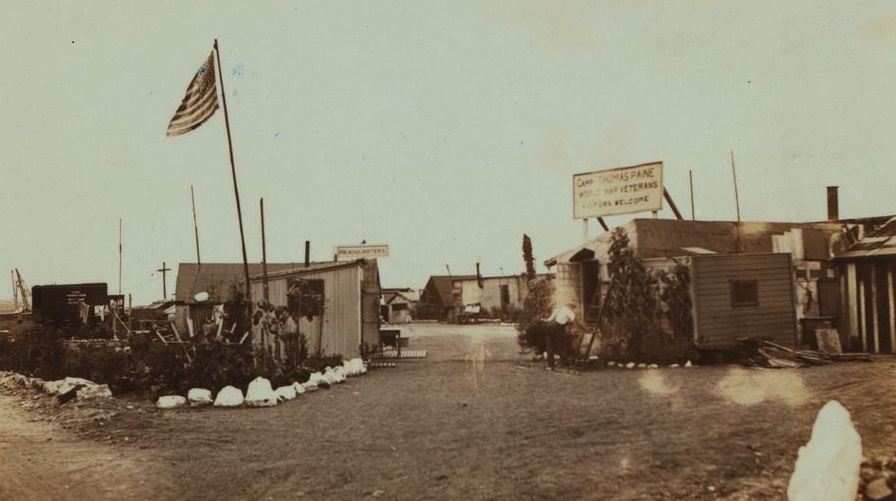
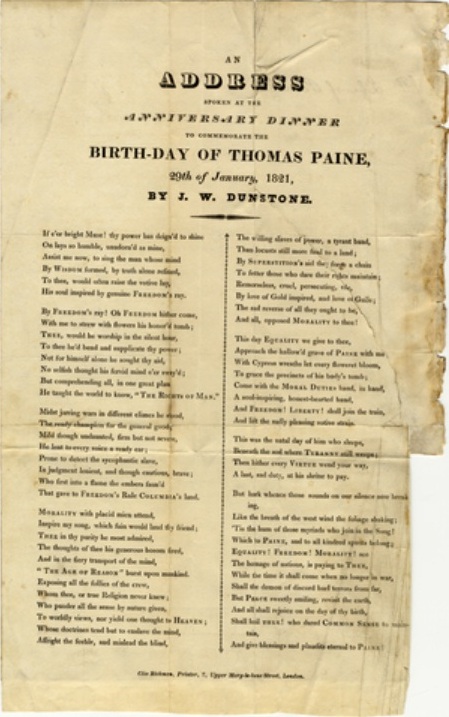
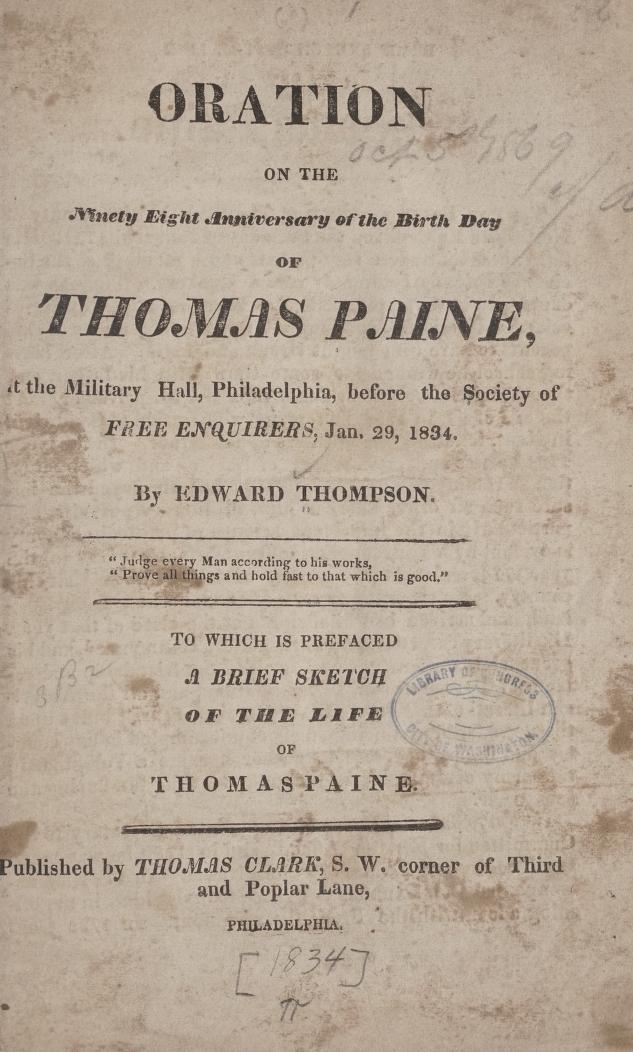
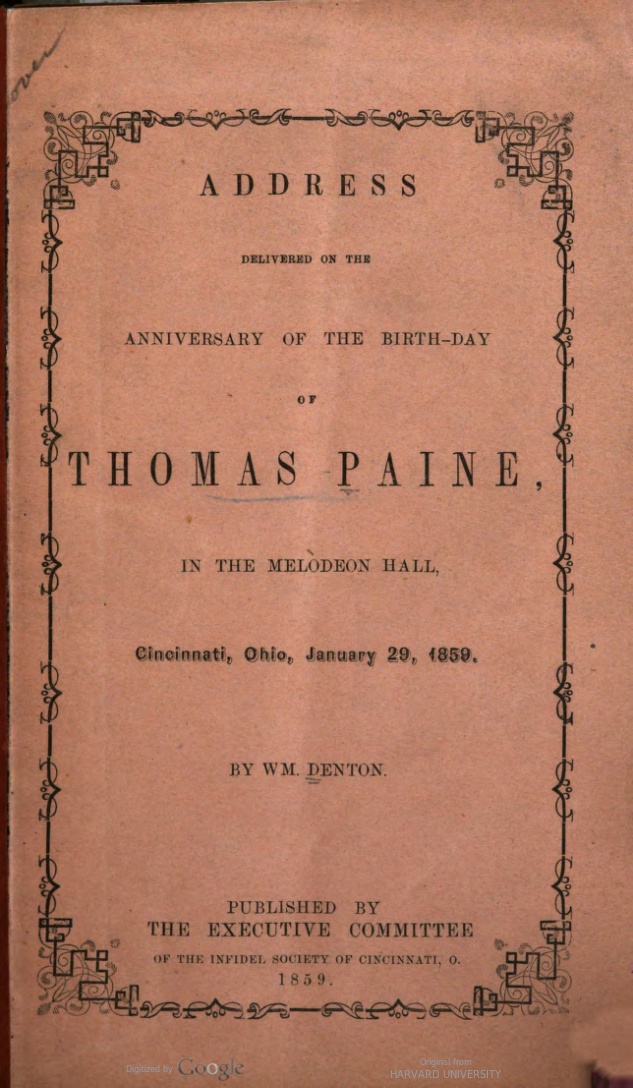
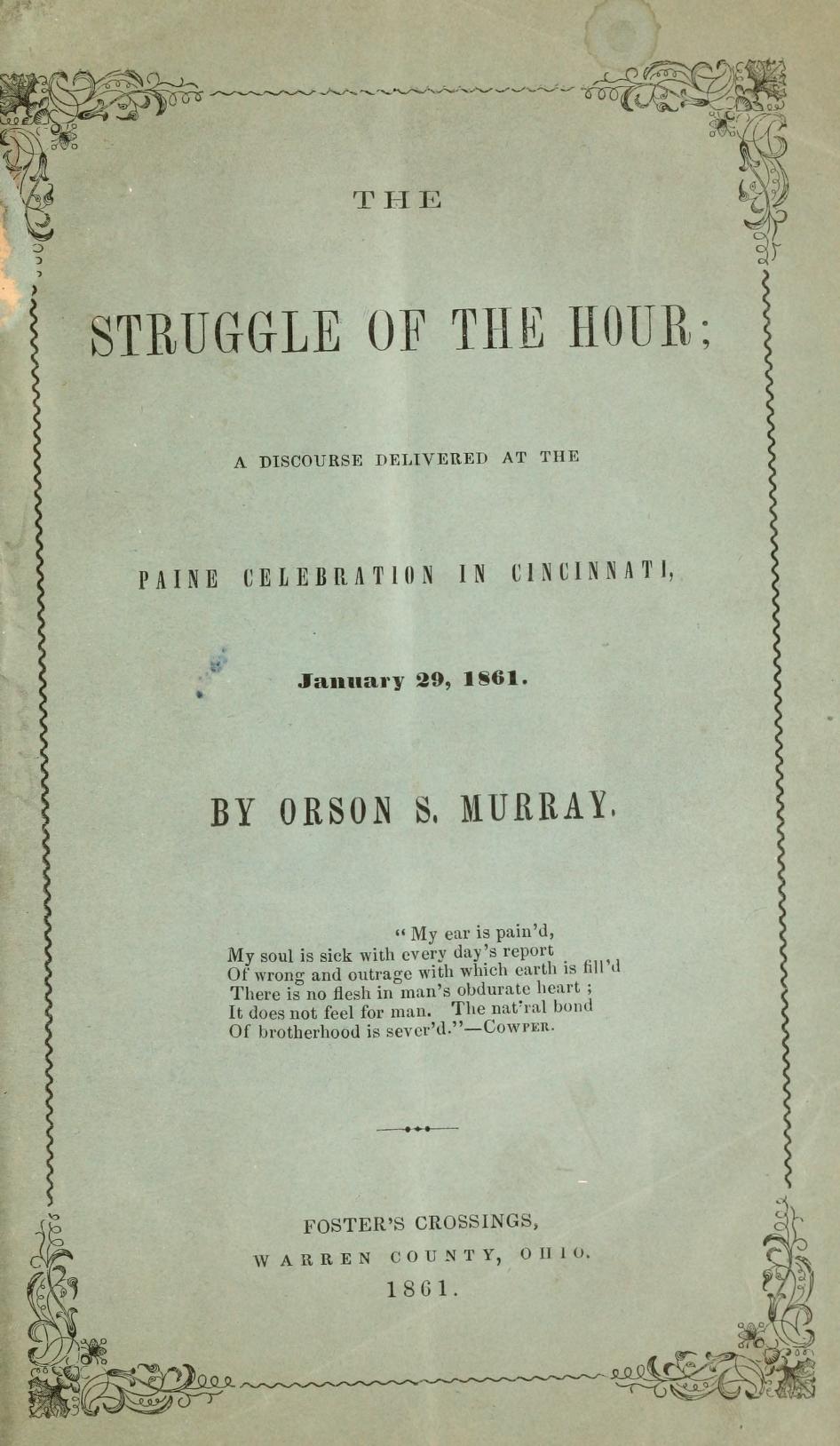
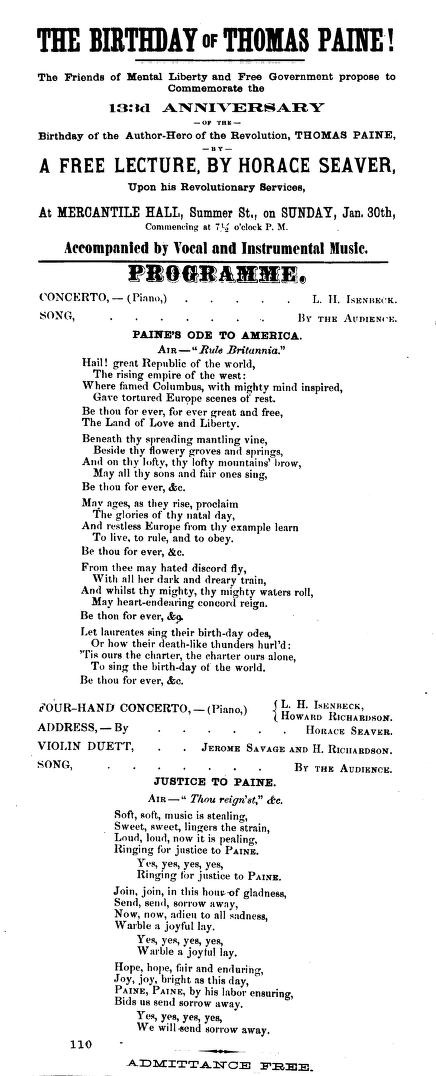
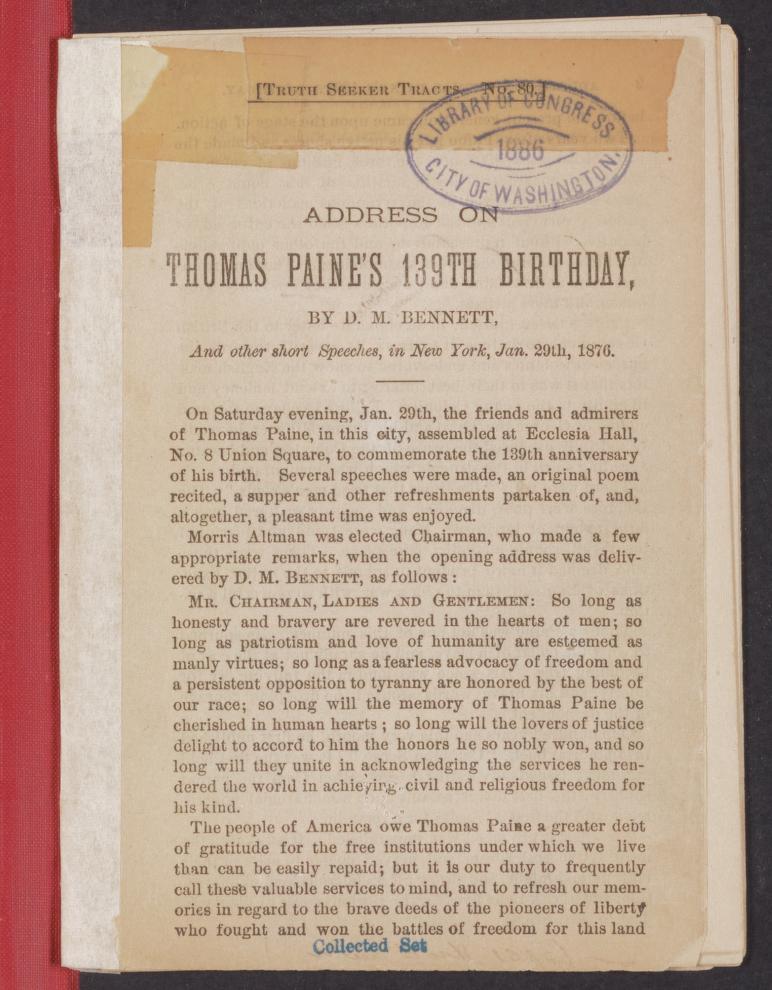
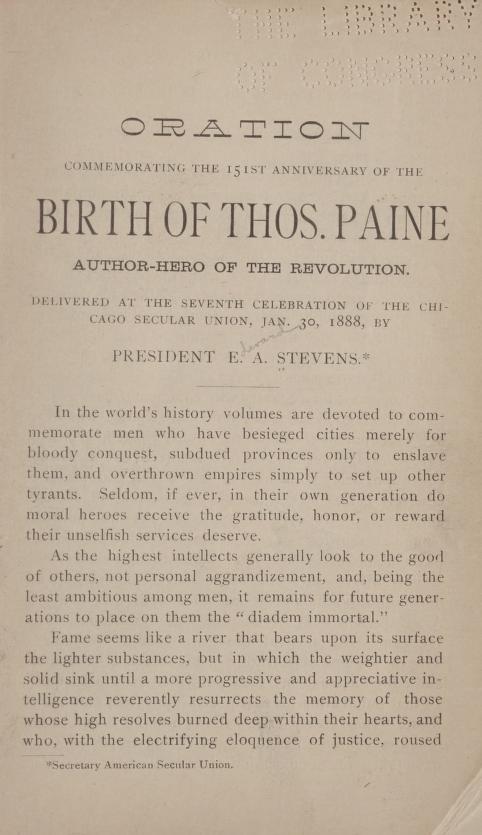
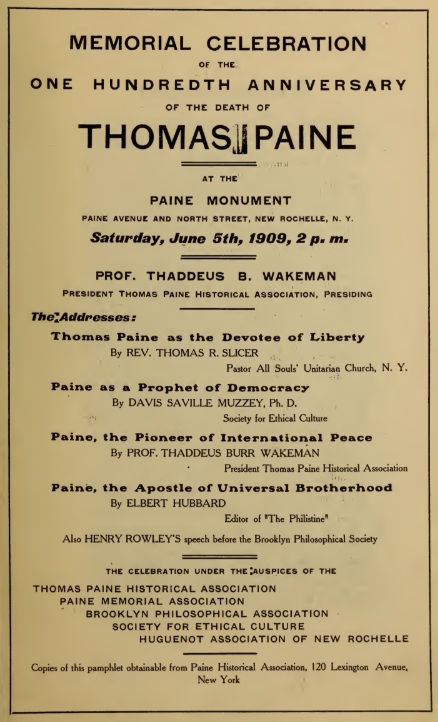
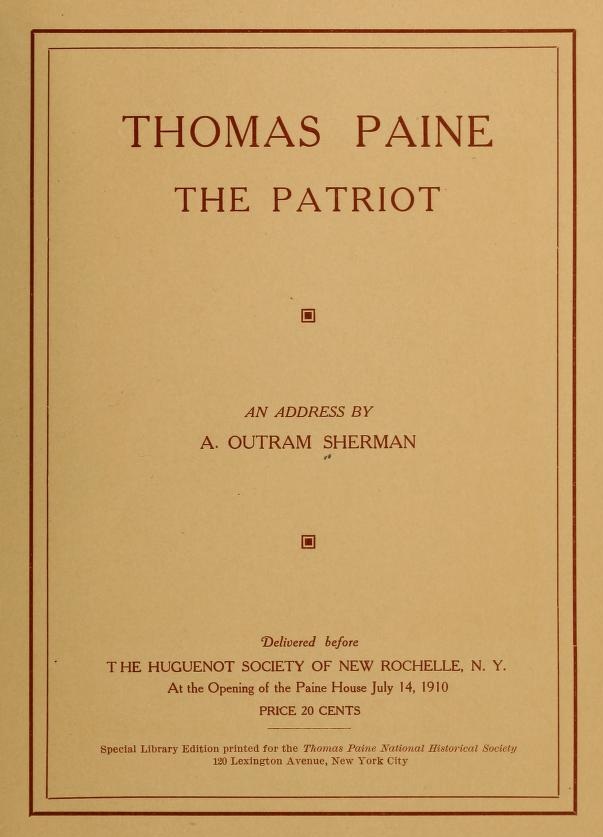
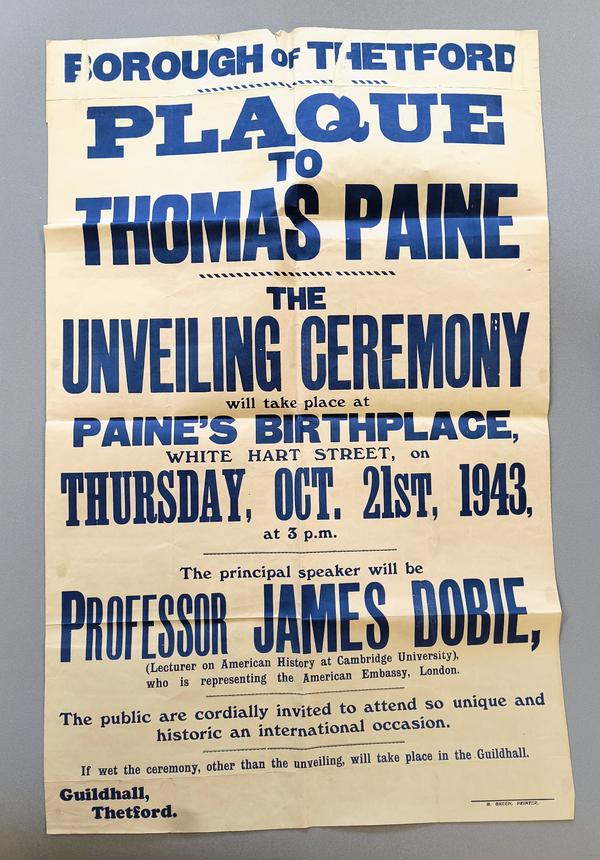
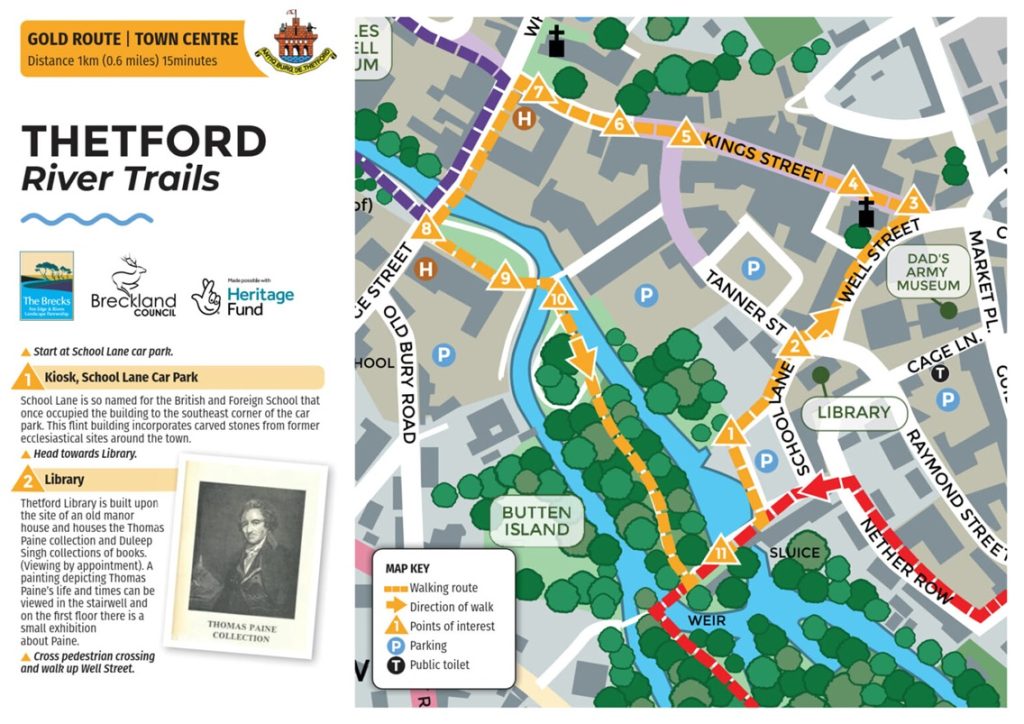
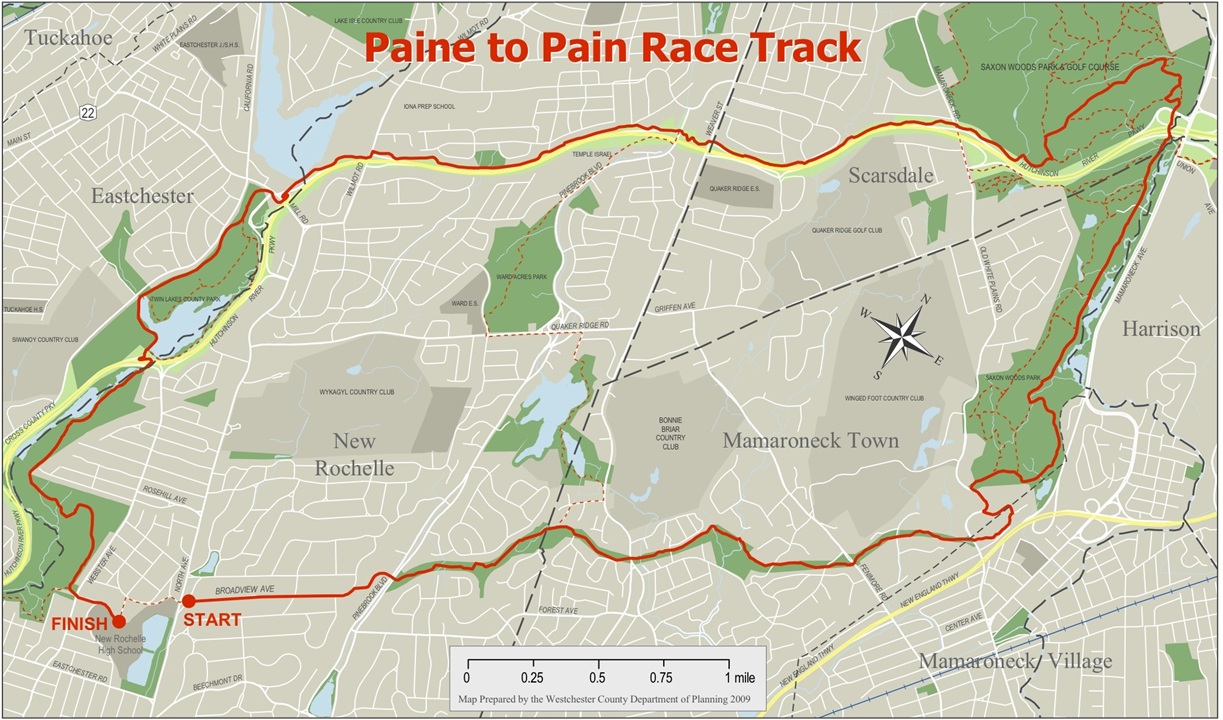
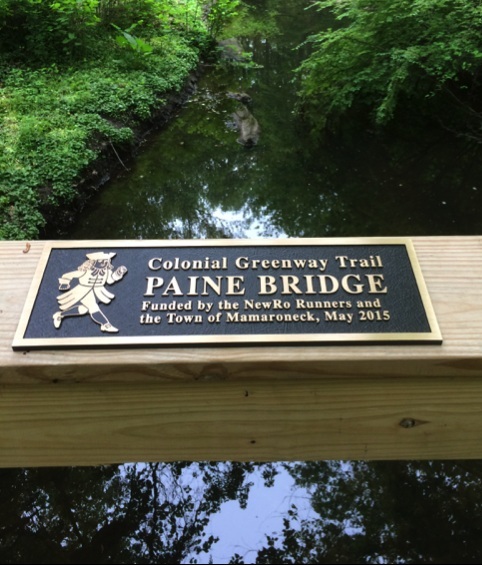
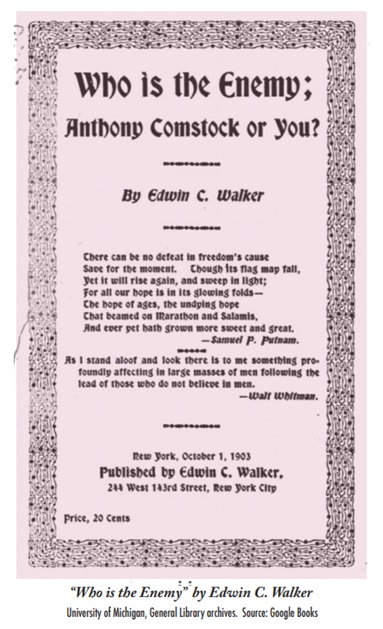
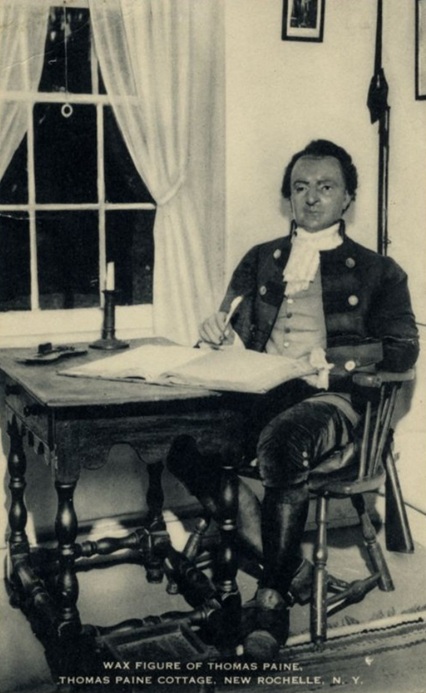
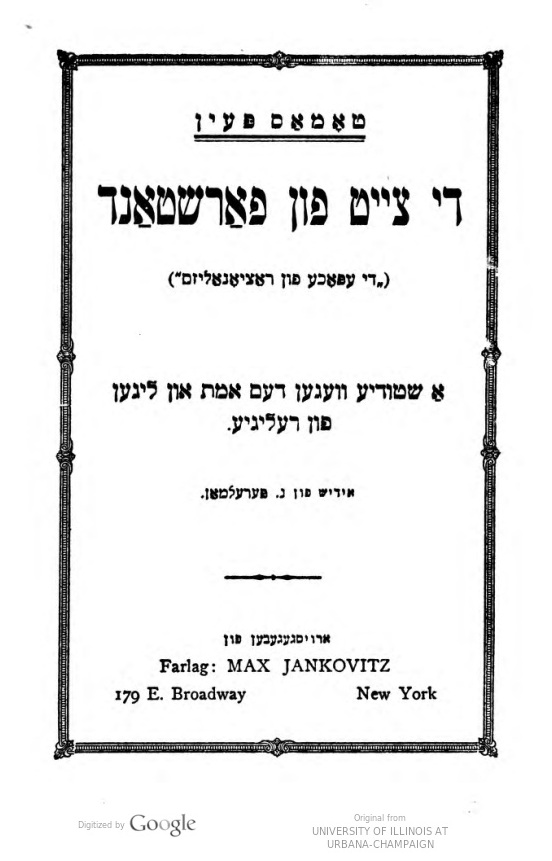
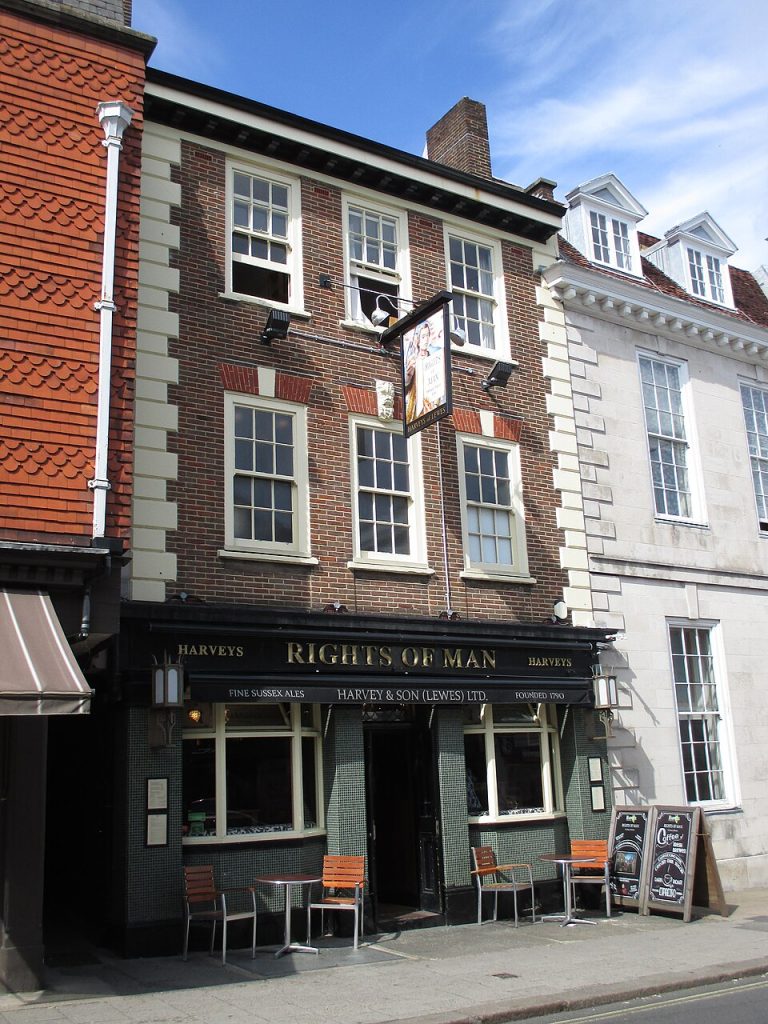
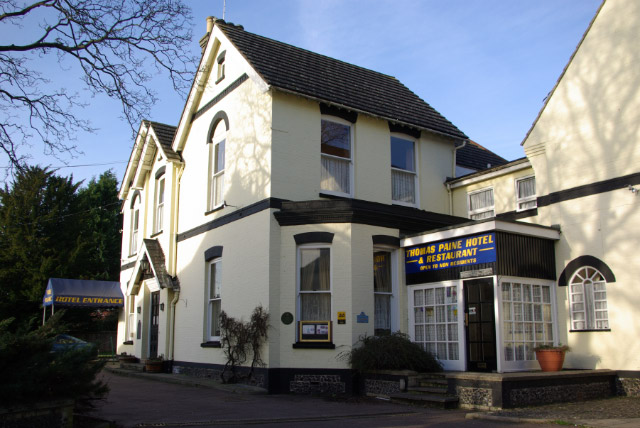
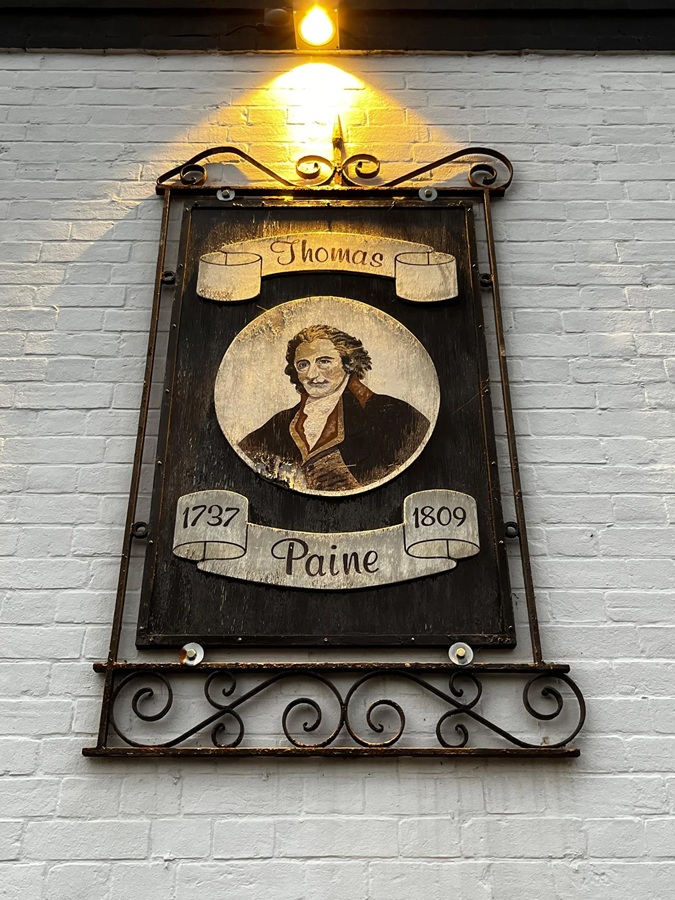
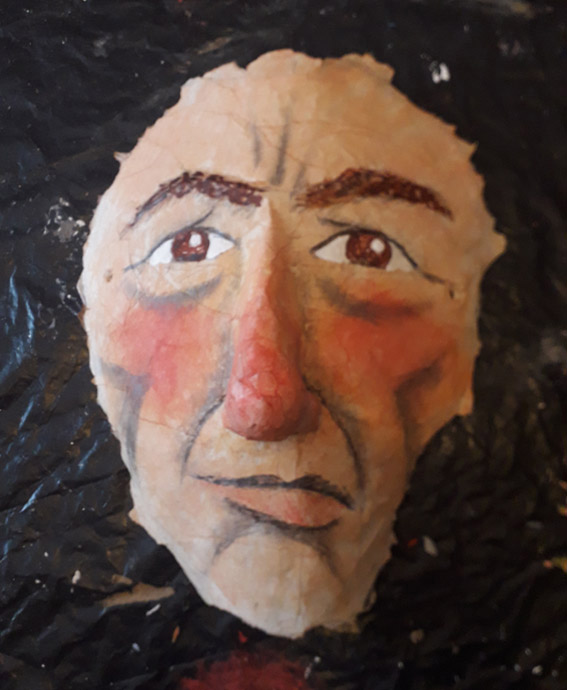
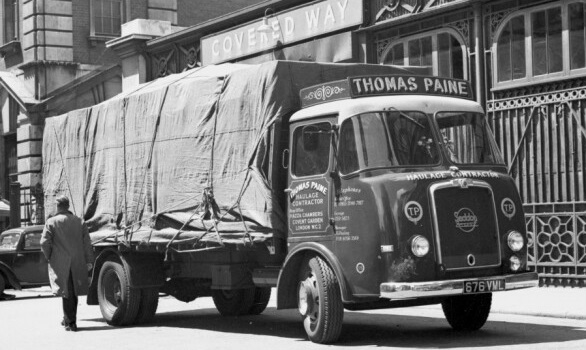
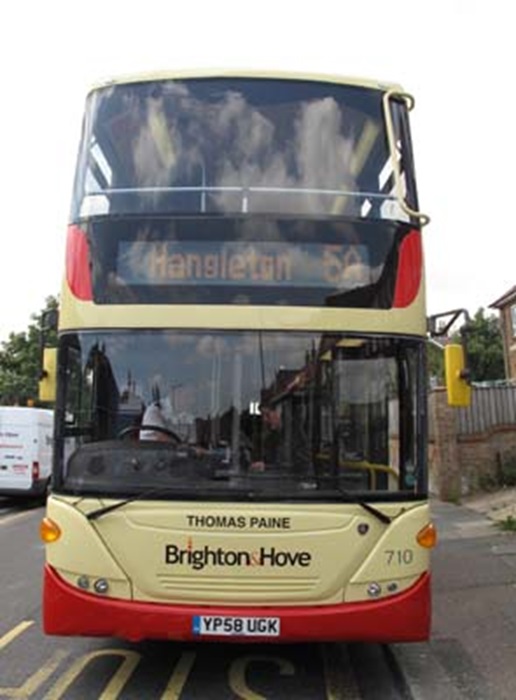
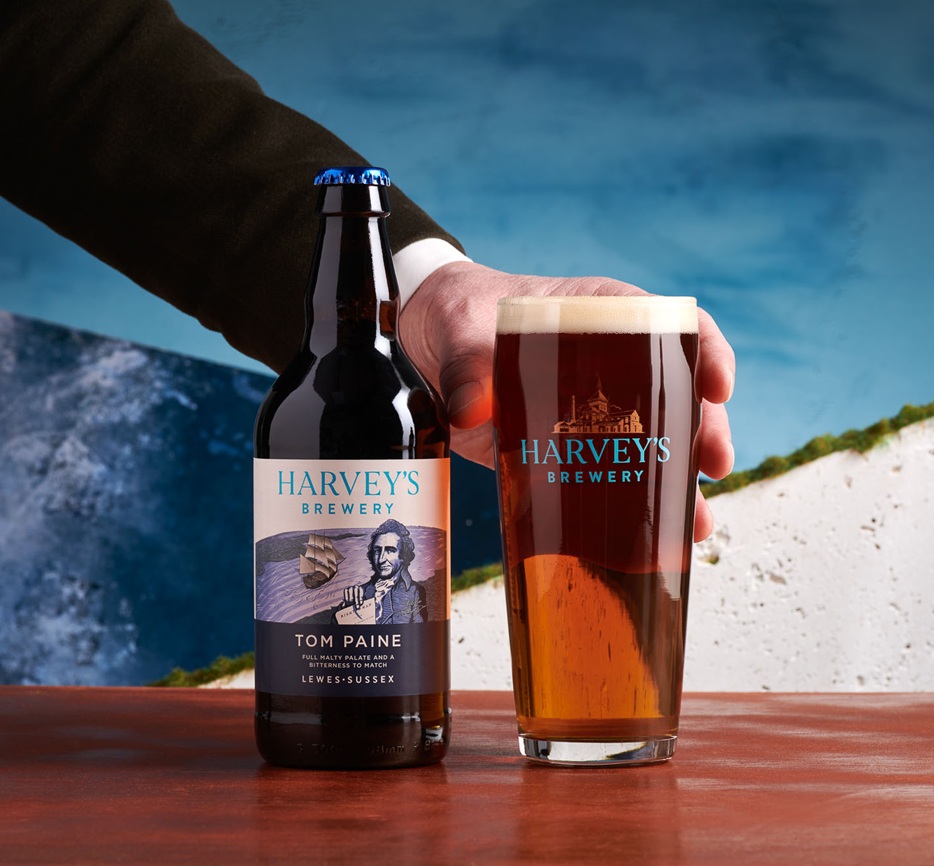
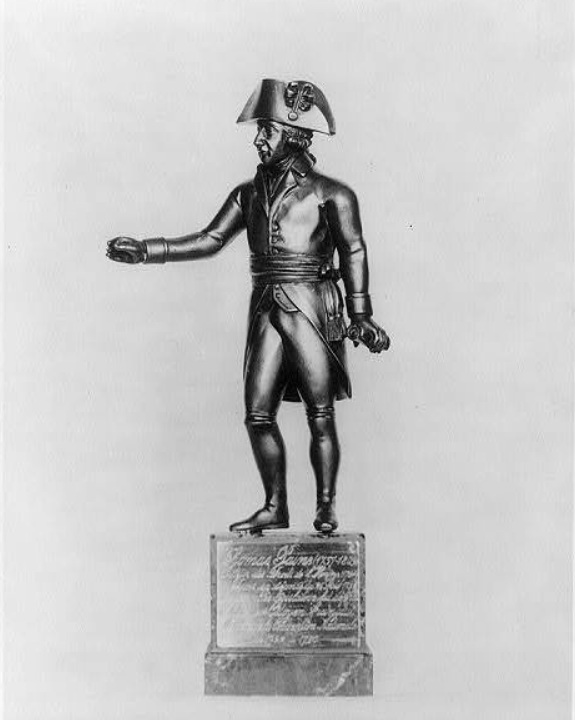
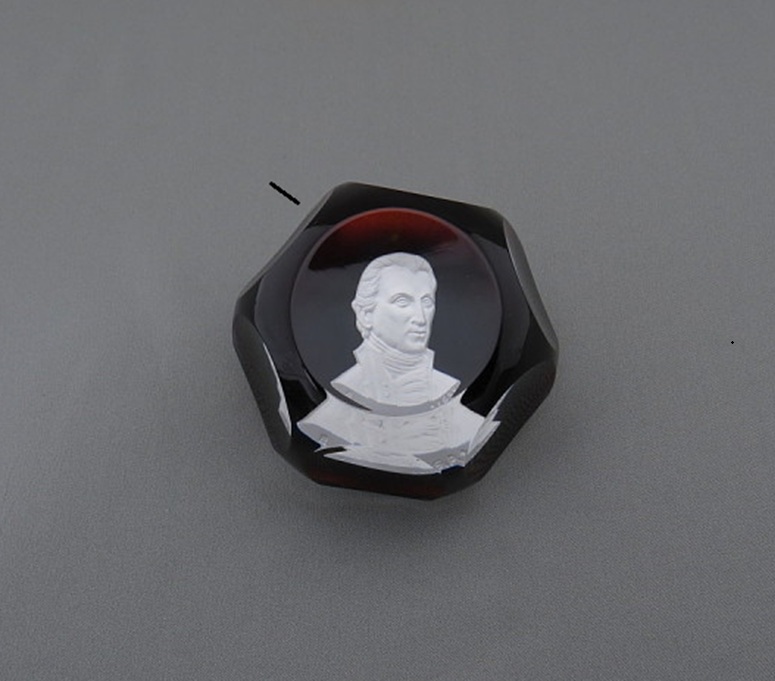
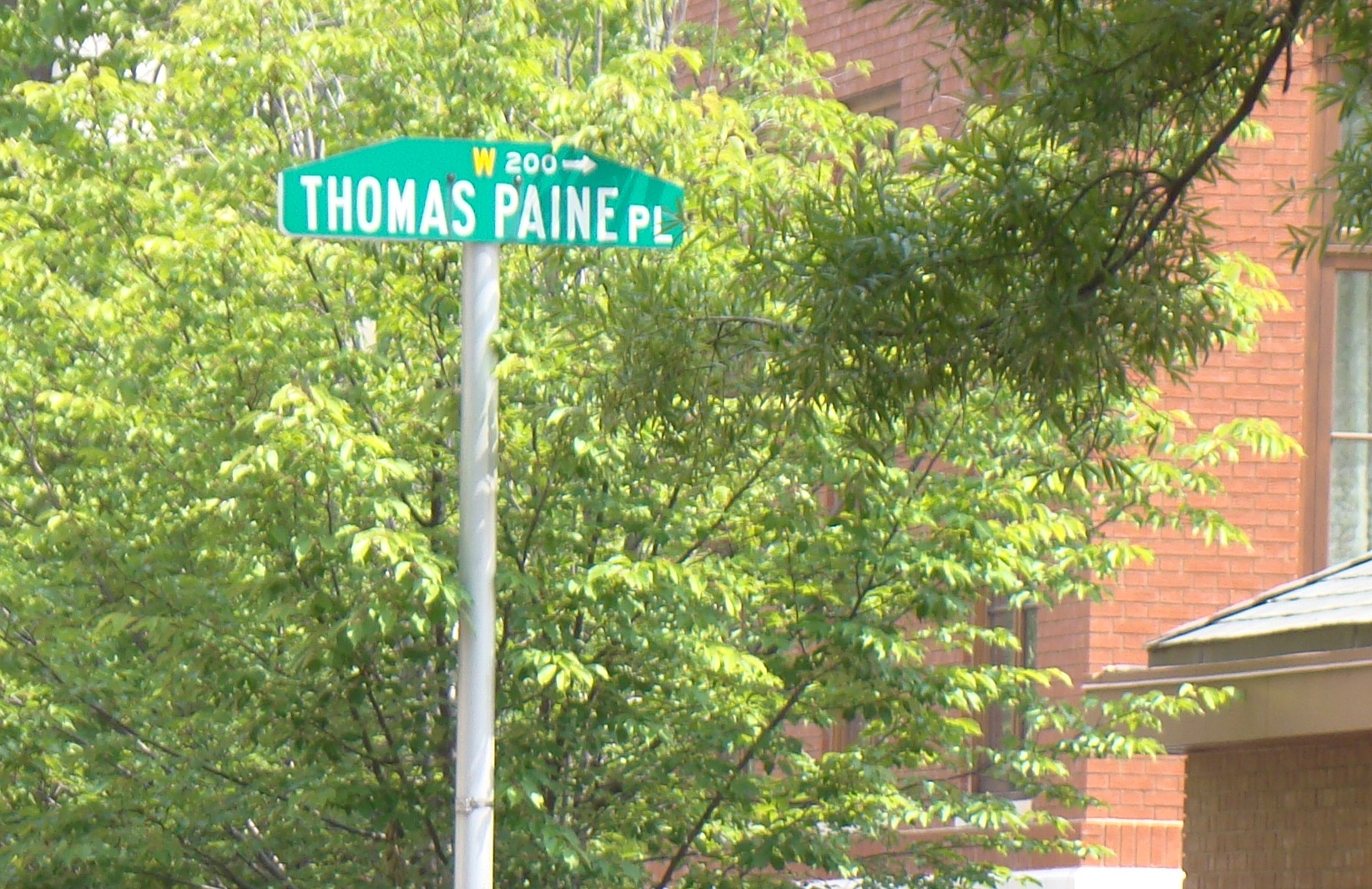
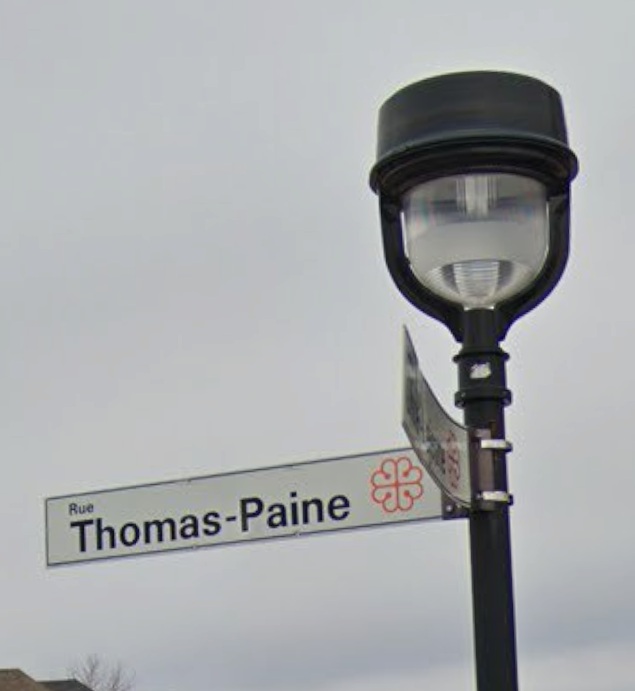
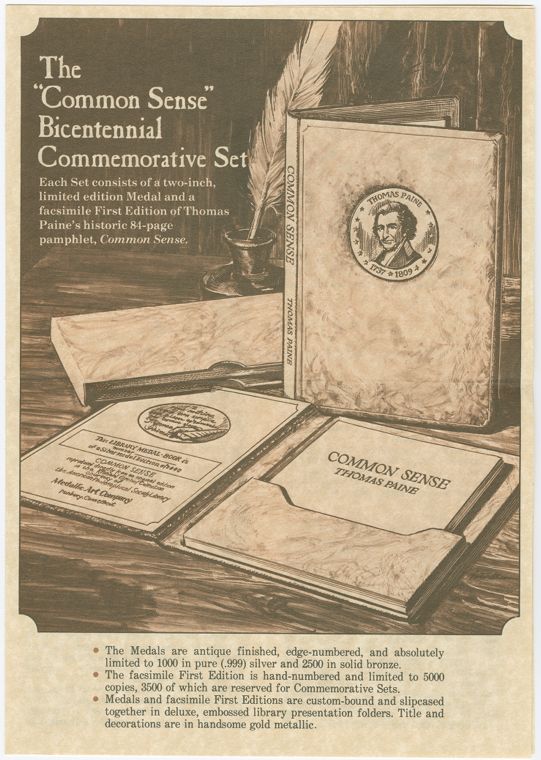
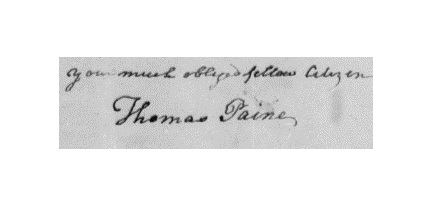
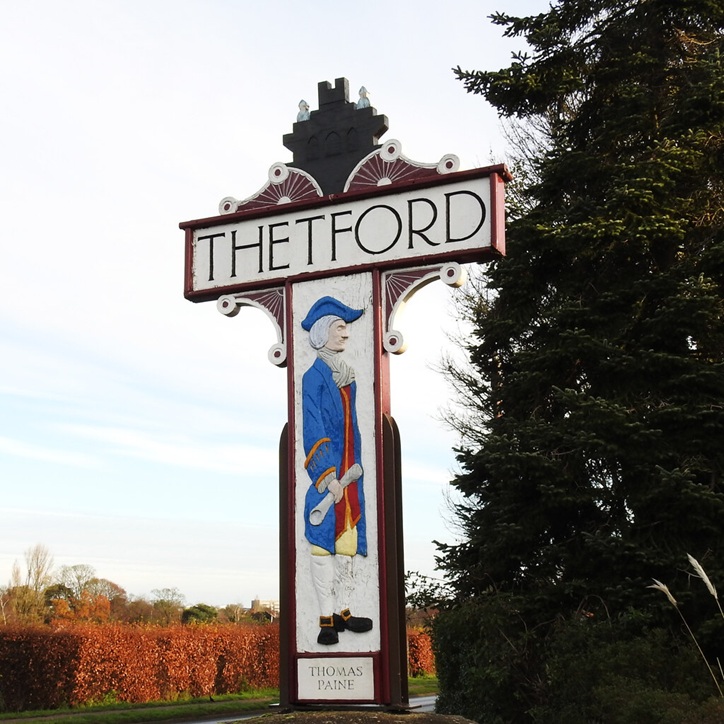
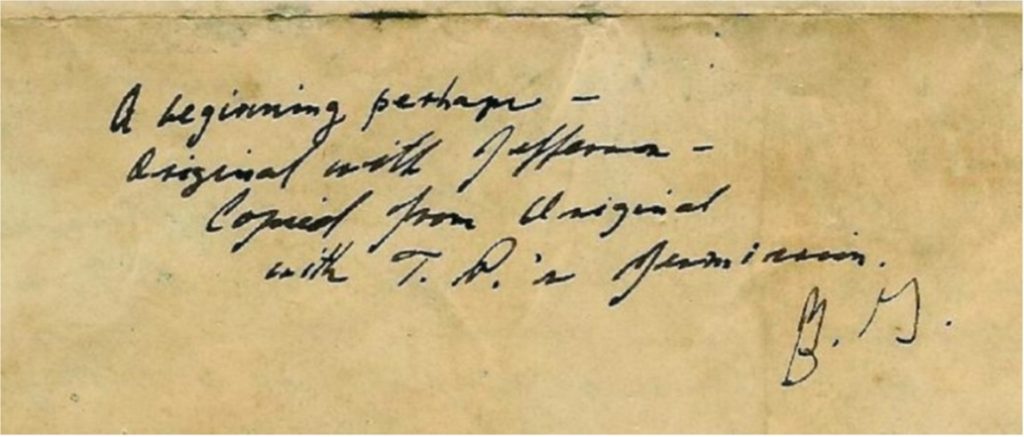
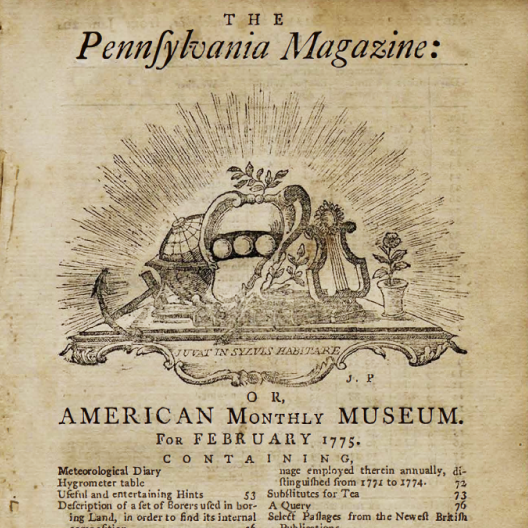
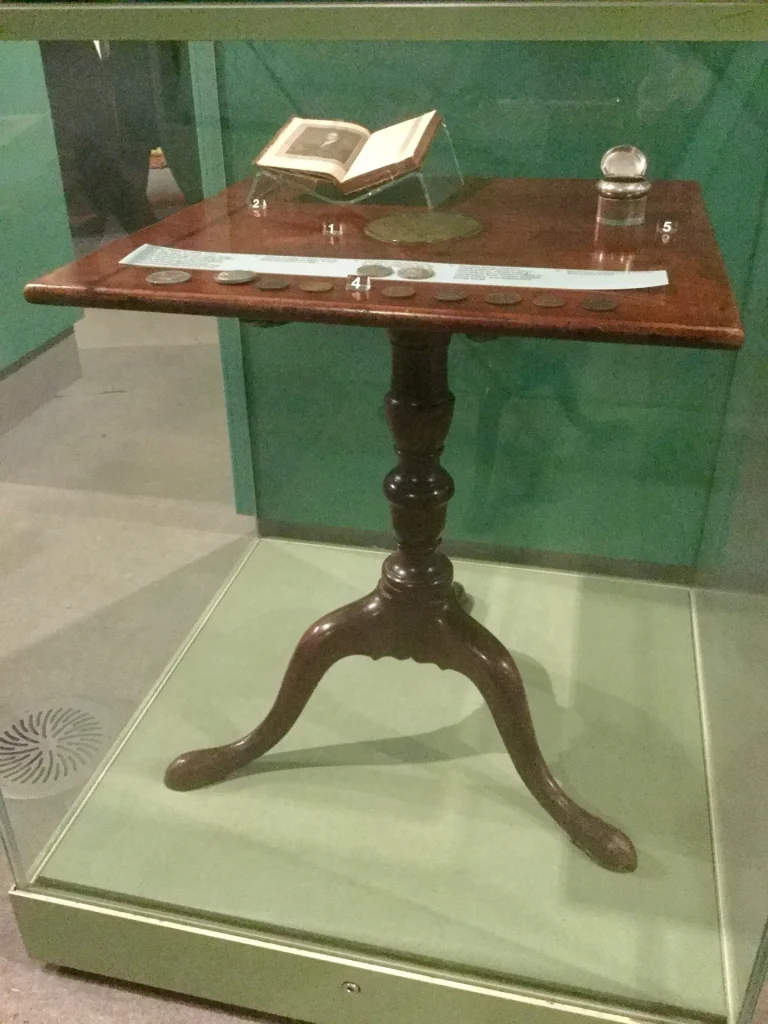
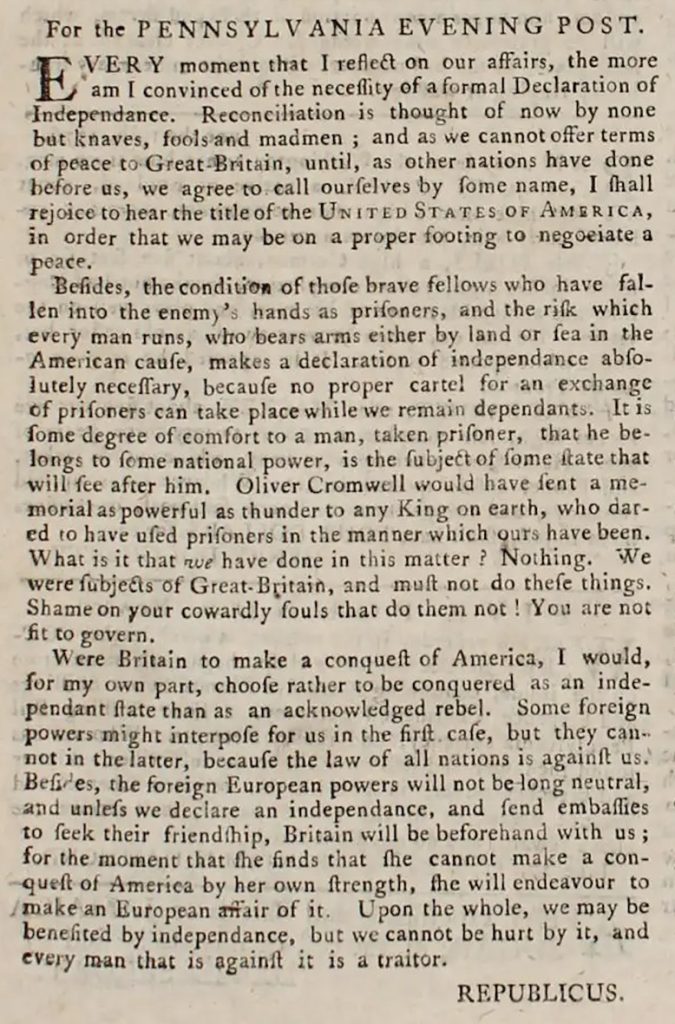
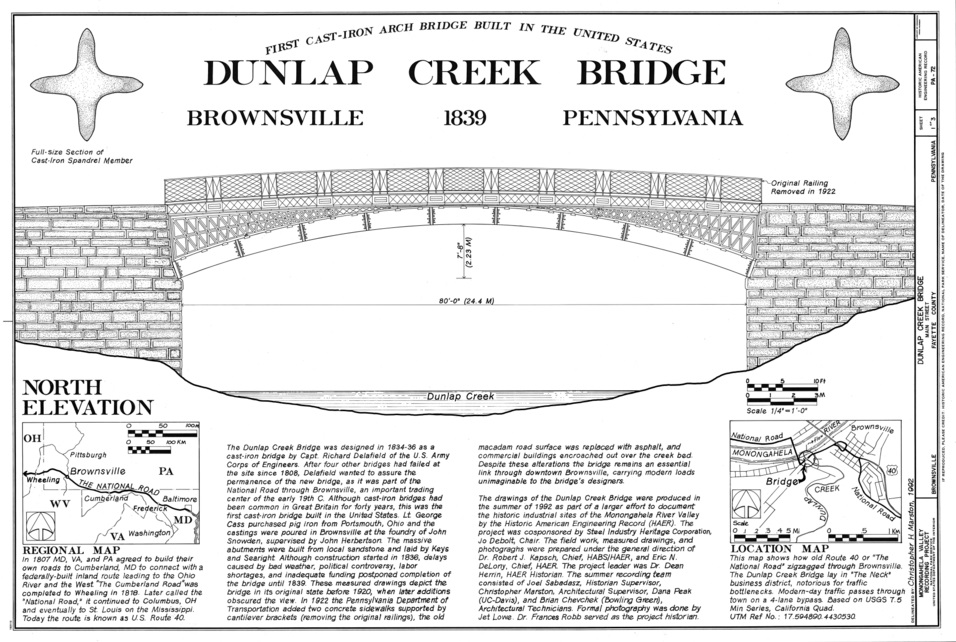
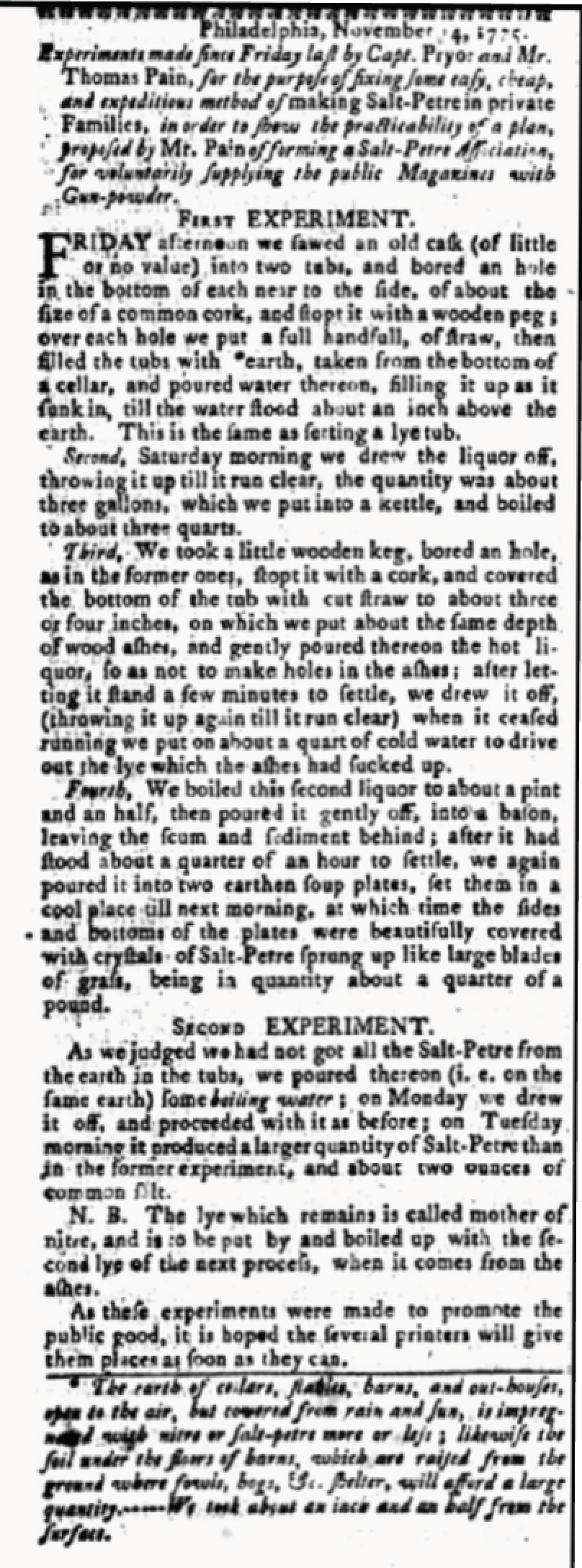
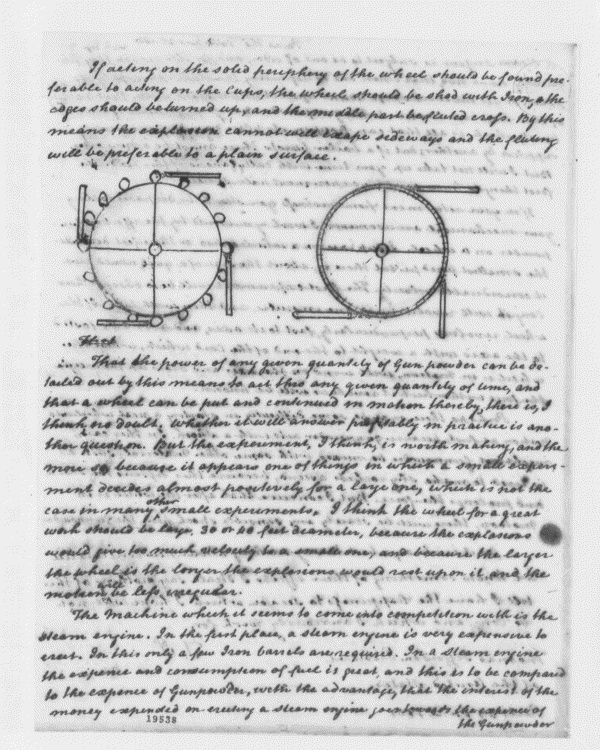
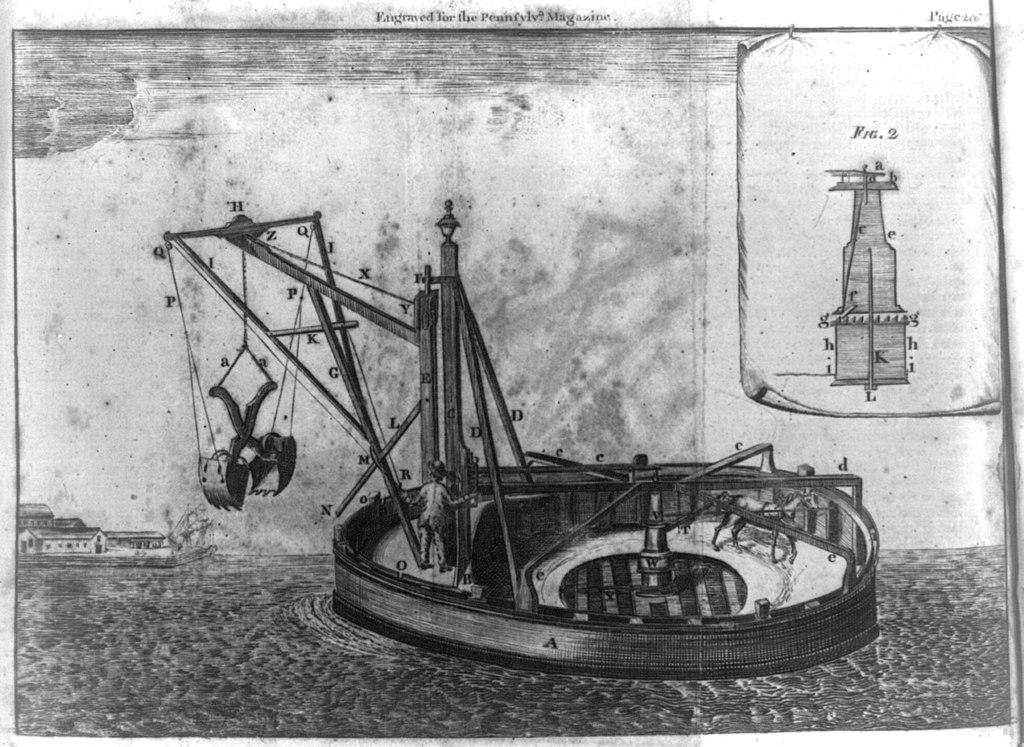
Thetford’s town sign portrays two personalities including King of Denmark Swein Forkbeard, on one side, and Thomas Paine, who was born in Thetford, on the other side – National Museum of the U.S. Navy An inscription on Roger Sherman’s draft copy of the Declaration of Independence that potentially demonstrates Thomas Paine’s direct influence and involvement in its creation. The inscription reads, “A beginning, perhaps—original with Jefferson—copied from the original with T.P.’s permission” – Read our article on the Sherman Copy Paine was one of the nine drafters of the French Constitution of 1793 with sweeping plans for democratization and wealth redistribution. This chart outlines the basic mechanisms of the Constitution that was unfortunately never implemented – Wikimedia This advertisement published in the British Newcastle Courant on October 9, 1756 is for a job as a privateer on a ship called “the Terrible” led by a man named Captain Death. 16 year old Thomas Paine tried to join but his father stopped him. The ship was nearly destroyed soon after with most crew killed, including Captain Death. Hired by printer Robert Aitken, Paine was the editor and a major contributor to The Pennsylvania Magazine, or American Monthly Museum, a significant colonial publication from 1775-1776, where he published revolutionary essays, scientific articles, and poetry – Library of Congress Thomas Paine’s writing table where he wrote Rights of Man (Part Two) A Letter to the Addressers People’s History Museum Ordinary Philosophy An article in the Pennsylvania Evening Post where Paine discusses the need for American independence from the British Empire. The letter is signed ‘Republicus’ one of the many aliases used by Paine – Archive.org The first Wearmouth Bridge was a bridge across the River Wear in Sunderland, England and the second major bridge to be made from cast iron. Paine patented the bridge design here after being inspired by strength of “the figure of a spider’s circular web” – King’s Topographical Collection, British Library Dunlap’s Creek Bridge is the first arch bridge in the United States built of cast iron, constructed in 1839. It still stands in 2025 and was built applying principles advocated by Paine – Library of Congress While writing Common Sense, Paine addressed a shortage of US gunpowder during the start of the revolution. He and a colleague conducted experiments on how families could make gunpowder from commonly available materials, with the results being printed in newspapers across the colonies. One of Paine’s scientific interests, which probably followed from his research into the manufacture of saltpeter, was testing the explosive power of gunpowder harnessed to an engine designed to drive paddles on a boat. This ‘internal combustion engine’ was not a success but represents Paine’s contribution to engine development in the early Industrial Revolution. Invented by Arthur Donaldson in 1773, this historical dredging machine was described in detail in the May 1775 edition of The Pennsylvania Magazine, which featured this etching of the machine and an article written by Thomas Paine – King’s Topographical Collection, British Library The separation agreement ending the Paine’s second marriage between him and Elizabeth Ollive. They married in March 1771 but separated in June 1774 after Paine was forced into bankruptcy. Paine’s long absences stemming from his work as an exciseman also played a role in the separation – East Sussex Library The Earl of Dartmouth wrote this letter to the King of England complaining about Paine’s ‘The Crisis ‘. He says in part, “I have the honor to inclose to your Lordship two Publications circulated by the Rebels. One of them, the Crisis, is written by a Mr. Paine, who was brought over hither, some years ago, by Dr. [Benjamin] Franklin, and has been chiefly employed by him, in one Pursuit or another, eversince. He was a Grub-street Writer in London, when he fell into the Doctor’s Way, and, by falling into his Principles, was enabled by him to emerge from Obscurity, and to meet with considerable Attentions in this Country. He has nothing to lose, and everything to hope, from the Establishment of the present rebellions System”. A 1780 order signed by Paine during the during the American Revolution while he was the Clerk of the Pennsylvania General Assembly, the legislature of the Commonwealth of Pennsylvania formed under the terms of the 1776 Pennsylvania Constitution. A record of the December 18, 1792 trial in-absentia at the Court of King’s Bench that accused Paine of seditious libel due to the criticism of the king contained in Rights of Man Part II answered the sedition and libel charges by saying, “If, to expose the fraud and imposition of monarchy … to promote universal peace, civilization, and commerce, and to break the chains of political superstition, and raise degraded man to his proper rank; — if these things be libellous, let me live the life of a Libeller, and let the name of LIBELLER be engraven on my tomb” – The Ohio State University The Constitution Française 1793 (French Constitution of 1793) was the second constitution ratified for use during the French Revolution under the First Republic. Paine was one of the nine drafters of its sweeping plans for democratization and wealth redistribution that were unfortunately never implemented – National Library of France The London Corresponding Society’s 1794 letter to the members of the French Revolution’s Committee of Public Safety appealing to the committee and its unofficial leader Maximilien Robespierre to release Paine from prison – American Philosophical Society A plaque marking the way to the tombstone of General John Cadwalader, the American Revolutionary commander of Pennsylvania troops who served at the battles of Brandywine, Germantown and Monmouth. As the plaque indicates, his glowing epitaph was written by Thomas Paine, which reads in part, “His early and inflexible patriotism will endear his memory to all true friends of the American Revolution. It may with strictest justice be said of him, that he possessed a heart incapable of deceiving. His manners were formed on the nicest sense of honor and the whole tenor of his life was governed by this principle” – King’s Topographical Collection, British Library The SS Thomas Paine was a 10,000-ton freighter, part of an armada that was mass produced for the American ‘Liberty Ship’ intiative to deliver arms and vital food supplies to the war front during World War II. This scene is Los Angeles, California, and the vessels include, (left to right), SS John C. Fremont, SS Thomas Paine and the SS Benjamin Franklin – National Museum of the U.S. Navy Airmen of the 388th Bomb Group climb aboard their B-17 Flying Fortress (serial number 42-30793) nicknamed “Tom Paine” before a mission – Wikimedia Commons An 1826 sketch by Charlotte Bonaparte purporting to show a poplar tree planted by Thomas Paine near Bordentown, New Jersey where Paine bought a house in 1783 – The Metropolitan Museum of Art Grave of Thomas Ollive and his sister Elizabeth Paine, who Paine had married in March 1771. Elizabeth died in Cranbrook on 17 July, 1808, and lies buried in the churchyard of St. Dunstan’s – Image from Thomas Paine Society UK Bulletin, 1999. Vol.4. No.2. 1875 lithograph by J.H. Bufford’s Sons of the Paine Memorial Building that was also the home of the liberal Boston Investigator newspaper. It was built in commemoration of Thomas Paine by San Francisco millionaire, James Lick. The building burned down on January 9, 1940 – Boston Public Library Spanish edition of Paine’s ‘Rights of Man’ published in 1821 by Carey Filadelfia – Harvard University Due to the limitations of early cameras, this is the only known image of American orator Robert G. Ingersoll before an audience on May 30th, 1894. Behind him is a sign saying in part “Thomas Paine Author Hero of the American Revolution” – Wikipedia Bust of Thomas Paine looking out from Library Hall of the American Philosophical Society. Paine was a member of the APS for a brief period where he had many contacts including his closest friend and ally of 30 years, Benjamin Franklin – Wikimedia Commons Top: American singer-songwriter Bob Dylan accepting the Tom Paine Award for Civil Rights from the Emergency Civil Liberties Committee in December, 1963. Bottom: Dylan in his office with the picture of Paine. A theatrical poster for a Paul Foster play “Tom Paine” performed by La Mama troupe at Stage 73 in New York – American Philosophical Society Actor Ian Ruskin portrays Paine in his play, “To Begin the World Over Again: the Life of Thomas Paine” – Ruskin Productions Thomas Alva Edison’s letter to American photojournalist William Manley Van Der Weyde from 1921. Edison writes “The truth sometimes takes centuries to come forth, but it always does come forth. Paine was one of the greatest men of all time” – American Philosophical Society A January 12, 1987 letter was sent from President Ronald Reagan to the Thomas Paine National Historical Association on the 250th anniversary of the birth of Thomas Paine. Camp Thomas Paine was a Squatters Colony, a “Hooverville” shantytown, in New York City during the Great Depression located in Riverside Park of Manhattan along the Hudson River. This camp was specifically for World War I veterans and was photographed by Percy Loomis Sperr – New York Public Library A record of the January 29th, 1821 address at an “anniversary dinner to commemorate the birth-day of Thomas Paine” in London with a transcript of the ketnote speech by J.W. Dunstone. The manuscript was printed by Thomas Clio Rickman, Paine’s close friend, in London – American Philosophical Society A record of the January 29th, 1834 Paine birthday anniversary celebration at the Military Hall in Philadelphia with a transcript of the ketnote speech by Edward Thompson before the Society of Free Enquirers – Library of Congress A record from the January 29th, 1859 Paine birthday anniversary celebration in Cincinnati’s Melodeon Hall hosted by the Infidel Society of Cincinnati with a transcript of the ketnote speech by W.M. Denton (1823-1883) – Harvard University A record from the January 29th, 1861 “Paine Celebration in Cincinnati” in honor of Paine’s birthday with a transcript of the ketnote speech by Orson S. Murray – Library of Congress A record from the January 30th, 1870 Paine birthday anniversary celebration hosted by The Friends of Mental Liberty and Free Government at the Mercantile Hall in Boston with a transcript of the ketnote speech by Horace Seaver. The lyrics of songs sung in Paine’s honor can also be seen – Library of Congress A record of the January 29th, 1876 Paine birthday anniversary celebration in New York with transcripts of the ketnote speech by DM Bennett (1818-1882) and other speeches. Bennett was a nineteenth-century American publisher and free-speech martyr who founded Truth Seeker periodical and is deeply connected to the 1884 founding of the Thomas Paine Historical Association – Library of Congress A record from the January 30th, 1888 Paine birthday anniversary celebration hosted by Chicago Secular Union with a transcript of the ketnote speech by Secretary of the American Secular Union E.A. Stevens – Library of Congress An advertisement for the June 5, 1909 memorial celebration on the 100th anniversary of Paine’s death at the Paine Monument in New Rochelle, NY presided by Thomas Paine Historical Association President Thaddeus B. Wakeman. The Huguenot Association of New Rochelle and the Paine Memorial Association are listed as contributors. A record from a Special Library Edition printed for the Thomas Paine National Historical Society for the July 14th, 1910 “opening of the Paine House”, meaning Paine’s Cottage in New Rochelle. The event was hosted by the Huguenot Society of New Rochelle, N.Y. with a ketnote speech by A. Outram Sherman – Library of Congress A record from the 1943 unveiling ceremony for a Paine plaque at his birthplace in on White Hart Street in Thetford, UK. There was a ketnote speech by Cambridge University Professor James Dobie representing the American embassy in London – © Norfolk Museums Service The Thetford River Trails Gold Route guides visitors on a path around the town that includes multiple Paine related locations including a gold statue of Paine, the site of the quaker meeting house where Paine’s father would have attended, the Thomas Paine Hotel, and the Thetford Library that has a collection of his works – Thetford Town Council The Tom Paine Trail guides visitors to various sights around Lewes, England many of which are related to Paine’s life in Lewes – Lewes District Council The Paine to Pain Trail Half-Marathon is a “single loop through the woods and trails of five parks in Westchester County. It starts and ends in New Rochelle, New York.” The marathon’s staging area is at New Rochelle’s Thomas Paine Cottage – Paine to Pain Trail Half-Marathon In 2015, the Colonial Greenway trail through Westchester County added the “Paine Bridge” to provide a crossing over the Sheldrake River in the Town of Mamaroneck – The Larchmont Loup The Comstock Act of 1873 for the “Suppression of Trade in, and Circulation of, Obscene Literature and Articles of Immoral Use” was used to target freethinkers, anti-religious organizations, free speech advocates, and women’s rights groups. Many were arrested and jailed under the Comstock Act. It was in the wake of this political struggle that TPNHA was formed and led by its leading organizer Thaddeus Wakeman to take a stand against the Comstock Act and its enforcement. A wax figure of Paine at the Thomas Paine Cottage in New Rochelle, N.Y. – American Philosophical Society Copy of a 1920 Yiddish edition of the Age of Reason University of Illinois at Urbana-Champaign The Rights of Man, a pub at 179 High Street, Lewes, East Sussex, named in honor of the famous book by Paine, a former Lewes resident – Wikipedia The Thomas Paine Hotel and Restaurant built on the site of Thomas Paine’s birthplace in Thetford, UK – Photo by Graham Chandler A mural at the Thomas Paine Hotel in Thetford, UK – Image courtesy of the Thomas Paine Hotel An effigy of Paine created by the artist ‘Polyp’ in the style of those burned in 1800s England- link Thomas Paine Ltd was a large varied haulage business in London during the 1960s – Truck Net UK Brighton and Hove, UK had a 710 Scania Omnicity bus that carried the name “Thomas Paine” since delivery in January 2009. It was repainted into standard livery on July 2013. – Brighton & Hove Bus and Coach Company Ltd The ‘Tom Paine’ beer is from Harvey’s Brewery, the oldest independent brewery in Sussex, UK. It is advertised as “a dry hopped, robust pale ale with a full, malty palate. Strong and well balanced, with hints of impending revolution” – Harvey’s Brewery A full-length sculpture of Thomas Paine shows him wearing a military uniform with an inscription on base of statue in French – Library of Congress The Thomas Paine Portrait Paperweight was created in 1955 by Baccarat, a French luxury house and manufacturer of fine crystal, as a limited edition collectible. It is made of made of high-quality crystal – American History Museum A road named Thomas Paine Place in Philadelphia, Pennsylvania – Photo by J. J. Prats A road named Ru Thomas Paine in Montreal, Canada – Google The ‘Common Sense’ Bicentennial Commerative Set sold by the Medallic Art Company. It included a two-inch limited-edition medal and a facsimile First Edition of the Common Sense pamphlet – New York Public Library Thomas Paine’s signature. It is addressed with the message being from “your much obliged fellow citizen”.





_rivers_LCCN2004671566.jpg)