
Blue-grass blade (Lexington, Ky.), July 4, 1909
WESTERN TRIBUTE TO THOMAS PAINE
Synopsis of an Address Delivered at a San Francisco Celebration of the Paine Centennial
By Augustus Seymore — “The Iconoclast.”
The following tribute was delivered by Mr. Seymore before the Materialist Association of San Francisco, June the 8th, 1909
Ladies and Gentlemen:
It is difficult for me to conceive how a glow worm can add to the lustre of the noon-day sun; however, we are met here for the purpose of honoring the memory of Thomas Paine, defender of the faith of “The Rights of Man.”
In the words of the great Emancipator, let me say: “It is altogether proper and fitting that we should do this, but in a larger sense, it is rather us the living, who honor ourselves by meeting here in his name, since we can neither add nor detract from the honor, glory and fame which is his. The world will little note, nor long remember what we say here but it can never forget what Thomas Paine did.”
Like Abraham Lincoln, Tom Paine knew the bitterness of poverty. Unlike Voltaire he never did accumulate much wealth. Like Ingersoll he drank heavy and deep at wisdom’s purest source. He had more brains than books; he filled the world with light. Confined as he was behind the gloomy prison walls of St. Lazaire, he wrote his Age of Reason, without the “sacred book,” in the immediate prospect of violence and death. His name was on the list of the condemned; had Robespierre lived but three more days Tom Paine would surely have lost his head and liberty its champion.
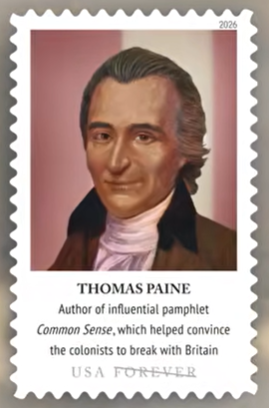
This great and gifted man whose soul was oak, whose will was steel and flint—was barren of all fear. He did not fear to stand alone. His mighty quill was wet with ink in freedom’s holy cause, while cruel priests did stain their hands with human blood, until the holy cross became the pioneer of sword and stake, the symbol of the iron boot and molten lead.
He saw oppression and injustice like giant twins, walk hand in hand. Venality on the bench. Hypocrisy kneeling at the altar. Labor crawling in the dust. Honesty begging for a crust. Truth assassinated. Rascality wearing the purple; the strong enslaving the weak, and the few spending the profit and the substance of the many, until his soul revolted and gave the world his three great books: “Common Sense,” “Age of Reason,” and “Rights of Man,” and these three books made gods and popes and kings look sick and pale and tremble for their crumbling thrones and falling crowns.
These three great books opened the eyes of a sleepy world and form today the foundation of that mental liberty which you and I enjoy. In the days of Thomas Paine red hats walked in the open street, while men of science met under cover of darkness. To give to the world your honest opinion was fraught with danger. In the folds of his dress the priest carried a dagger. Thomas Paine knew this but unmindful of his own safety he wrote and spoke and fought with pen and ink, with brain and book, for freedoms’ brilliant star and won.
He lived to sign the Declaration of Independence. The whole declaration glitters with his genius and his thought. Take from us the word liberty and the world becomes a damp, dark, dreary, dismal prison cell, where crawl the slimy beasts of mental slavery.
Tom Paine was great; his heart was with the slave; he ate the bitter bread of sorrow as his share while giving to the world the “Rights of Man.” “He made two ears of corn grow where formerly there grew but one.” He looked on sin as stumblings of the blind, and knew that in the heart of every man there is a longing for the good and honest upright things to do.
He knew that man is but a plant, a part of nature; self a feeble fragile, pliant plant, limited in power, harassed by passion’s storm; that life, at best, is but a narrow, winding path midst sin and sorrow, tears and thorns—a mere flash of light upon a dark and clouded midnight sky.
Acquainted with lifes bitterness, its fears and faiths its joy and folly, this great and loving man—now dust these hundred years today wearied with the toil and strife of a long and useful life, using his burdens and his grief for a pillow laid down by lifes wayside for a brief and needed rest—but fell into the everlasting sleep.
Thus passed this soul from this seat of iniquity and sin to the great unknown, hissed by the unclean birds of Christendom. His name is a jewel fit for any nation’s crown, torch and starlight of his age. The world will little note nor long remember what we say here but it can never forget the name of one who placed upon a nation’s brow these stars of hope: Liberty, Equality and Fraternity, greater words than ever issued from Jehovah’s shrivelled lips.
I hope the name of Thomas Paine will ever live within the hearts and memory of every thankful citizen.