
The Bennington banner (Bennington, Vt.), May 3, 1888
Troy Press.
Well now, times have changed, surely in the last hundred years or so: but whether for the better or worse, in some particulars, we leave our readers to decide for themselves.
The Legislature of the State of New York has invited Col. Robert G. Ingersoll to deliver an address on Roscoe Conkling’s public and private character.
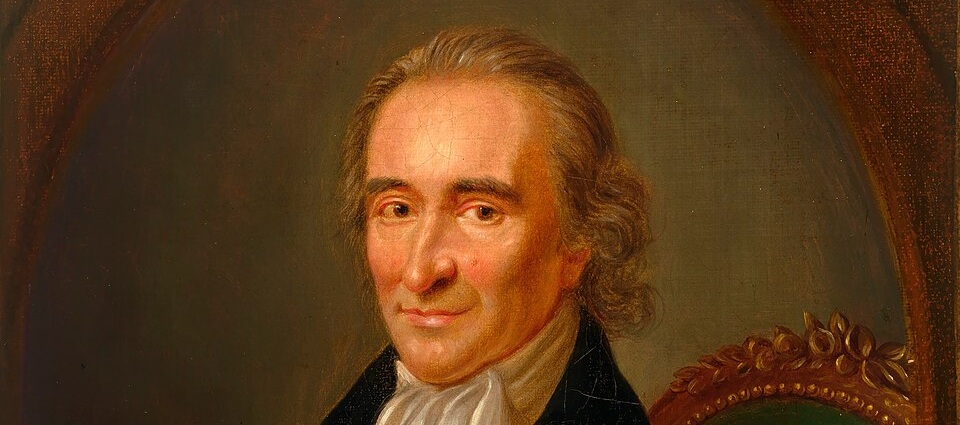
When George Washington died in 1799 the Congress would have given a terrible shock to the people if that body had invited Thomas Paine, who was then at the height of his limited degree of popularity, to deliver the formal address on the great and good Washington.
There are several analogies that are apparent to all. Washington was a great man and esteemed for his integrity. So, too, was Mr. Conkling. There was no money taint upon the hands of either. We do not know that there was any other taint. Both go into history as men of correct lives, and as able statesmen.
Thomas Paine was an able man, and was of great service to our country during the war of the revolution. He was a friend of Dr. Benjamin Franklin, and brought a letter of recommendation from Franklin when he came to this country. Paine was what is technically known as a deist. His infidelity was not of the fundamental, sweeping character of Col. Ingersoll’s. Paine believed in God; Ingersoll believes in nothing that he cannot see, or weigh, or estimate. Col. Ingersoll was a useful patriot during the rebellion, and so was Mr. Conkling, as Washington and Paine were during the Revolution.
We believe it is admitted by everybody that Col. Ingersoll’s private life is pure and wholesome in all respects. His contemporaries testified to the general correctness of Paine’s life, though some say, and probably it cannot be disproved, that late in life Paine became dissolute and intemperate.
However these things may be, it is clear that Congress would not have dared to invite Thomas Paine to deliver the eulogy upon Washington. Paine was living in Paris when Washington died, but if he had been living in this country, as he had been for many years before, and as he did a few years later, Congress would not have thought of giving such an invitation, and the people would have risen up in indignation if such an invitation had been given. Nevertheless, few men could have pronounced an abler address upon Washington and the great events through which he passed than Thomas Paine, and few men could be found better fitted than Col. Ingersoll to perform a like office for Roscoe Conkling.
Are the American people becoming less religious? Or, are they more disposed to let secular matters stand upon their secular bottoms? Or have they less narrowness and cant than formerly? Or what is it that has made possible the selection of Col. Ingersoll for a service such as nobody would have thought of having Thomas Paine perform?
Our readers will decide these questions in several ways, we presume, according to their beliefs, or prejudices, or whatever else may operate upon their judgment. It is their right, as American citizens, to decide for themselves.