Evening star (Washington, D.C.), February 1, 1904
ANNIVERSARY SERVICES
Tributes to Thomas Paine, Robert G. Ingersoll and Herbert Spencer
A large audience attended the exercises held by the Secular League Sunday afternoon in tribute to the memory of Thomas Paine at Schmidt’s Hall, which was tastefully decorated for the occasion with the American flag, roses and palms. The exercises included eulogies on Robert G. Ingersoll and Herbert Spencer.
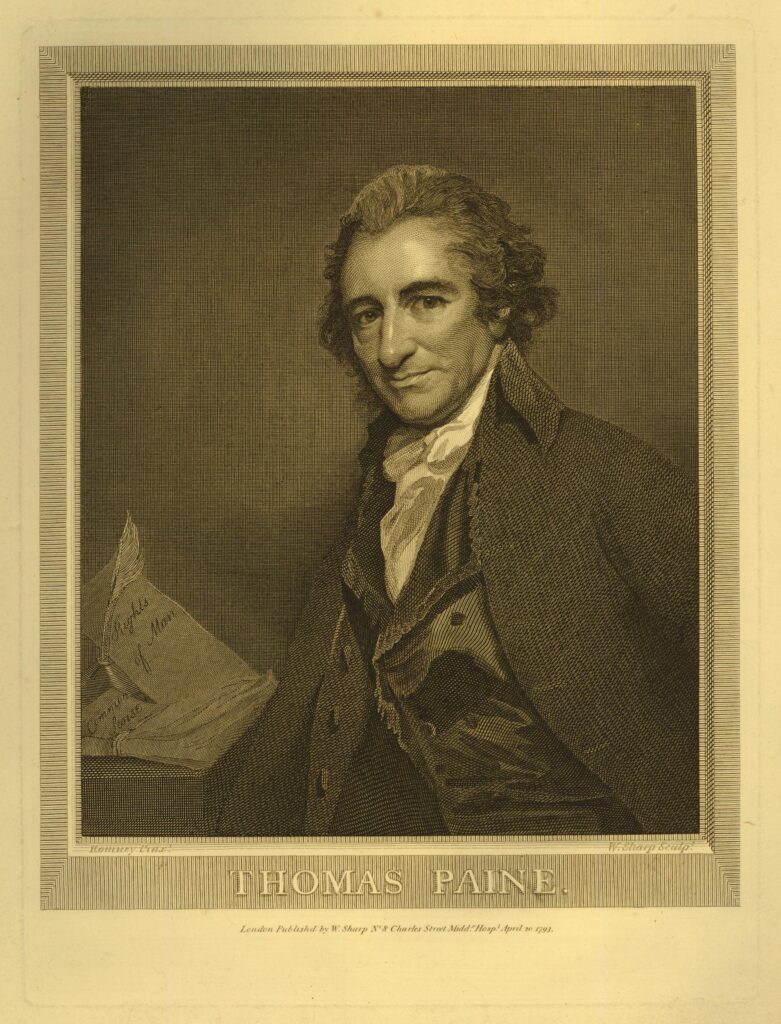
After a tenor solo by Dr. Kemball, Mrs. M. W. Lang read a paper in which she paid a glowing and poetic tribute to the life and character of Paine. She quoted his well-known statement of his belief in one God and his hope of happiness beyond the grave and his famous creed, “The world is my country; to do good my religion.” She pictured him as the moving spirit in the American Revolution, “the time that tried men’s souls.”
Mr. C. C. Carter told the story of the bust of Thomas Paine which occupied the place of honor on the speaker’s desk. The bust came into Mr. Carter’s possession as an heirloom from Mr. Samuel Baldwin, a former resident of this city.
Major Maurice Pechin compared the teachings of Paine, Spencer and Ingersoll. He referred to the constructive work of Ingersoll, showing that his real aim was to improve Christianity, and praised his attitude toward prison reform and the rights of woman.
Mr. Selah said that the lives of these three men should be an inspiration to humanity, pointing the way to “help for the living and hope for the dead.”
Mrs. Murilla Ricker of New Hampshire read a paper on Ingersoll, whom she had personally known. She spoke of him as “the man who came to champion the liberty of body, mind and soul.” She spoke of his great generosity and said he sacrificed political preferment to mental integrity.
Mr. David Eccles followed with a portrayal of the life and intellectual services of Herbert Spencer, showing how he had developed the theory of evolution as a universal principle, working through nature, life, mind and social institutions.
Dr. Herman E. Kittridge read a paper on Colonel Ingersoll as artist and idealist. Back of Ingersoll’s every expression, he said, was the ideal. His art was supreme. More than any other speaker or writer he put his personality into his work, and his style. In Ingersoll the orator were blended all of nature’s finest gifts. He voiced all human sentiments and passions and he left in his writings nothing that was commonplace.
Prof. Hyland C. Kirk closed the program with a short historical paper showing some of the reasons for the popular misconceptions concerning Paine’s character and beliefs.
The chairman of the meeting, Dr. J. J. Shirley, announced that Rev. S. S. Laws, D.D., would give an address next Sunday on “Ethics and Christianity.”