
The States and Union (Ashland, Ohio), June 28, 1871
N. Y. Ledger
BY JAMES PARTON
During the recurrence of the yellow fever in Philadelphia, in 1793, all who were able fled, leaving the city to the poor, the sick and the heroic few who devoted themselves to the service of the afflicted.
Among the latter, Joseph Gales, then twenty-nine years of age, was conspicuous for his energy and fearlessness. He remained in the city through the whole period of the pestilence, assisting the sick, distributing relief, and comforting the dying. At the risk of his own life he was constantly engaged in works of humanity. The disease had broken out suddenly, before the people knew the nature of the visitation, and before the physicians had learned the proper treatment of the malady. The mortality was therefore terrible. Yet Gales never faltered in the discharge of what he regarded as his duty.
The recurrence of the yellow fever in Philadelphia, in 1798, caused him, in 1799, to remove to Raleigh, where he established the Raleigh Register, a sound and moderate republican journal, and conducted it with success and honor for thirty-four years.
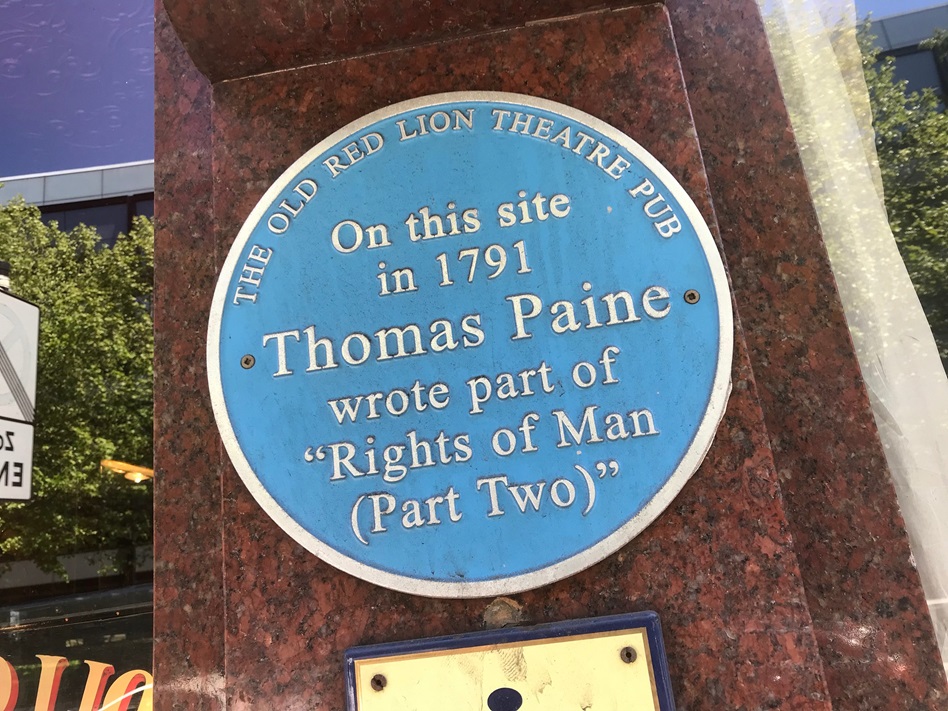
Joseph Gales, for forty-eight years the senior editor of the National Intelligencer, would never have seen this continent, in all probability, if thought had been free in his own country. We owe the transplanting of his valuable family, as we owe so many other blessings, to the ignorance and arrogance of George the Third. Edmund Burke wrote his celebrated pamphlet entitled “Reflections on the Revolution in France,” in which the conduct of the revolutionists was denounced with the matchless eloquence of which that great genius was master. Paine replied in his “Rights of Man.” Ten of thousands of copies of both pamphlets were sold. Joseph Gales printed and sold vast numbers of Paine’s work.
Strengthened by the melancholy defection of Burke, the government at length resolved to suppress the agitation by force. Many conspicuous leaders of the liberal movement were arrested, prosecuted and condemned. One day, in 1792, Joseph Gales was absent in London. An American of distinction, named Thomas Digges, called at his shop, and asked for Mrs. Gales. This gentleman had frequently been in the shop before, where his frank demeanor and interesting details of American life had captivated every eye, and given the family their first impulse toward the young republic. On this occasion Mr. Digges took the lady aside, and asked her with a serious and anxious countenance:
“Have you any of Paine’s works in the shop?”
“Yes,” she replied, “a great many.”
“Let me then,” said he, “as a true friend, entreat you to put them all carefully aside, and, if inquired for, deny the possession of a single copy. I have indisputable authority for saying that to disregard my advice will be productive of positive danger.”
It added to the weight of these friendly words, that Mr. Digges was visiting at the time the Duke of Norfolk, and had other means of knowing the intentions of the government.
Mrs. Gales acted upon his advice, and put away the books; but her husband was absent from the shop when Thomas Paine was indicted, tried, and convicted. The printers of every newspaper in England were hunted down, the circulation of Paine’s work was attempted to be suppressed, and many of the members of the reform societies arrested.
Joseph Gales, in common with other friends of freedom, was compelled to leave England. He escaped to America, however, and reached the United States in safety. Here he found liberty and peace. And he founded a family of journalists whose descendants have earned again and again the unstinted gratitude of their country. His eldest son, Joseph Gales, became one of the first editors of the United States.
Seven years passed. Joseph Gales, the younger, had become an accomplished man and skillful editor under his father’s eye, being proficient also in shorthand. The elder Gales, in 1807, offered his son to the National Intelligencer as a reporter; and when the offer was accepted, there came with the young man to Washington the benefit of his own experience at shorthand. The verbatim reports of the younger Gales astonished the people of Washington as much as those of the father had amazed the people of Philadelphia. The paper was seized every morning by members and their friends with the greatest eagerness, and sent off in ever increasing numbers to their constituents. Joseph Gales, Junior, was the man wanted. He infused into the paper such vigor and variety that the proprietor felt that he was indispensable, and took him into partnership. Five years later, in 1812, a partnership was formed between Joseph Gales and William Seaton, in the conduct of the Intelligencer.
Few partnerships have been so happy or so fortunate. Colonel Seaton, one of the handsomest and most elegant men of his time, a writer fluent and ornate, was the ornamental personage of the establishment. Mr. Gales, a plainer and solid man, furnished the stamina and the plod. They understood and appreciated one another perfectly, each valuing in the other those qualities in which himself was wanting. During the forty-eight years of their partnership there never was any settlement of accounts between them, nor ever a misunderstanding which a few moments’ conversation did not reconcile. As the name of Gales occurred first in the firm, he was frequently annoyed to discover that the public attributed to him articles written by his partner.
“My Lord Duke,” said he one day to a friend, pointing out a paragraph in a newspaper, “This paper, praising our late masterly series of articles, says they were written by me. It is false. Every one of them was written by Mr. Seaton, and I never could write as well as he does.”
There was so much resemblance between them that many persons supposed that Dickens had them in his mind when he drew the portraits of the Cheeryble brothers. Dickens himself, during his first visit to this country, became warmly attached to them.
Unfortunately, however, for this conjecture, the novel in which the brothers figure so pleasantly was written before Dickens ever saw Gales and Seaton.
Joseph Gales was fortunate in the time of his death. For many years the position of the Intelligencer, with the growing estrangement of North and South, had become more and more difficult. Both its editors were men too enlightened and able to support unreservedly the lifelong political connections to which their early friendships inclined them. As in the case of so many thousands of others, their heads and their hearts were divided; and their paper strove for a compromise, which the best men on both sides knew to be impossible. Happily he died before the controversy had issued in conflict. He died in August, 1860, at a good old age, while he could still hope for a peaceful ending to the war of words that was raging around him.
He belonged to the journalism of the past. A successful daily paper can never again be so formal and so impersonal as the one to which he contributed. What the press needs now is to add to its liveliness and spirit the high principle and sincerity that characterized the old National Intelligencer.