
By Gary Berton
In 1965, a noted historian, Forest MacDonald, wrote a textbook on the creation of the Republic, E Pluribus Unum. He is known for his rationalizing of slavery, ultra-conservatism, and apologist for all things Southern. But he got one thing right:
“Sometimes in the course of human events, as the Declaration of Independence had proclaimed, it becomes necessary for people to dissolve political bonds….The American Revolution was only the beginning in teaching men the process, but once it was done – once the vulgar overstepped the bounds of propriety and got away with it – there was no logical stopping place. Common Sense led unerringly to Valmy, and Valmy to Napoleon, and Napoleon to the Revolution of 1830, and that to the Revolutions of 1848, and those to the Paris Commune of 1871, and that to the Bolshevik Revolution, and that to the African and Asian Revolutions in Expectations, and those to eternity.”
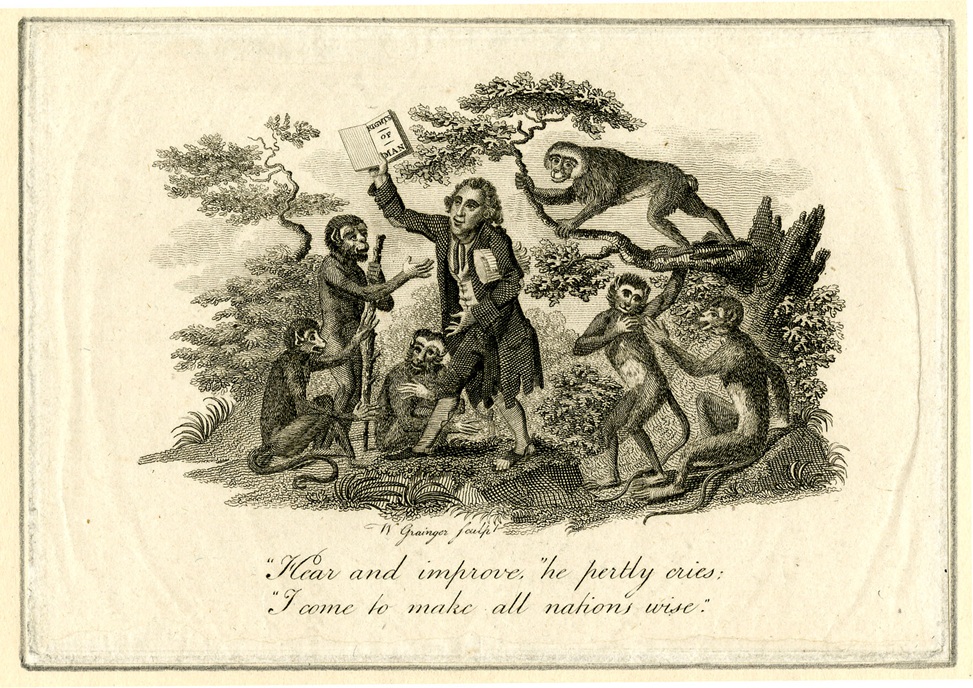
What he got right was that Thomas Paine started the age of Revolutions, by introducing that hated process of democracy. To MacDonald, democratizing the world (“overstep the bounds of propriety” by the “vulgar”) led to the listed upheavals starting with the American Revolution. He ignores the history of brutal oppression which created the need for revolutions, known as “propriety”. It was the reaction against the movement towards the rights and equality of people that caused the atrocities and squelched the “Expectations” of peoples. But the “process” is in place, thanks to Paine, and the world can evolve.
The hatred of Paine by some historians can be well-documented, and this is why many historians are propagandists ahead of documenting all history. As E. H. Carr (an objective historian) said: “Study the historian before you begin to study the facts.” And “By and large, the historian will get the kind of facts he wants.”