
The Beacon is the Thomas Paine Historical Association’s bi-monthly journal that touches upon topics that are relevant to today’s ever-changing political climate. Studies in Thomas Paine is a peer-reviewed publication that focuses on one specific topic and is written by a leading historian in the field. The Thomas Paine Society, UK
THE BEACON NEWSLETTER
STUDIES IN THOMAS PAINE
THOMAS PAINE SOCIETY, UK
- From Humble Servant to Friend
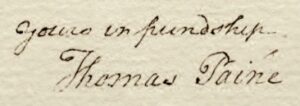 Like many other writers in 18th-century England, Thomas Paine used the familiar valediction “Your humble and obedientservant,” or some variation thereof.
 - Thomas Paine at 250: Insights from a Conference in Lewes, England
 The enthusiasm and engagement of younger scholars in Lewes suggests that scholarship about Thomas Paine and exploration of the context and impact of his work will continue to yield new insights well into the future.
 - Poison Pens: Turning the Corner from Damnation to Praise
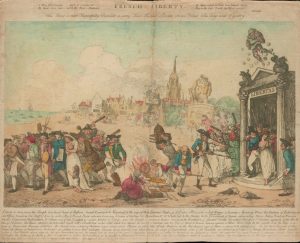
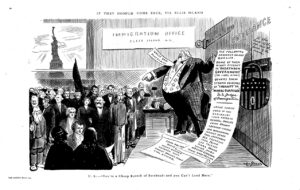 The TPHA Cartoon collection offers viewers a vivid journey of how Paine’s public image has… Read more: Poison Pens: Turning the Corner from Damnation to Praise
 - The Lewes Railway Project
 The Lewes Railway posters were hung in late December 2025, badged as a Thomas Paine Historical Association project with my having recently joined its Board.
 - A Sign for the Times: The Many Sides of the Paine Monument
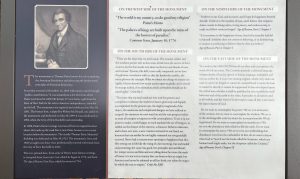 In celebration of the 250th anniversary, a historic marker was recently placed at the Paine Monument adjacent to the TPHA Headquarters on North Avenue in New Rochelle, NY.
- Ink, Imagination and Algorithm: Returning to Common Sense
![Marker in Philadelphia, Pennsylvania with the inscription, ‘At his print shop here, Robert Bell published the first edition of Thomas Paine’s revolutionary pamphlet [Common Sense] in January 1776. Arguing for a republican form of government under a written constitution, it played a key role in rallying American support for independence.’ Erected in 1993 by the Pennsylvania Historical and Museum Commission – Photo by J. J. Prats](https://thomaspaine.org/wp-content/uploads/2025/12/thomas-paine-common-sense-231x300.jpg) How do we recall a voice whose power lies precisely in its circulation, its instability, its capacity to pass from body to body, rather than in its fixation as an object or an authorial figure?
How do we recall a voice whose power lies precisely in its circulation, its instability, its capacity to pass from body to body, rather than in its fixation as an object or an authorial figure? - The Bonnevilles: Thomas Paine’s “Family” Part One:
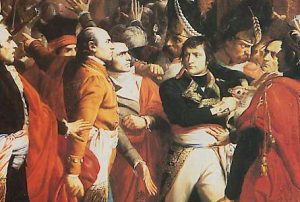 Paine’s deep relationship with the Bonnevilles lasted for more than 15 years. This essay studies Paine’s time with the Bonnevilles in Paris during the six years he lived with them, from 1797 to 1802, as Napoleon Bonaparte began his ascent to power and U.S.-France relationships floundered.
 - Elihu Palmer: A Forgotten Voice of Deism
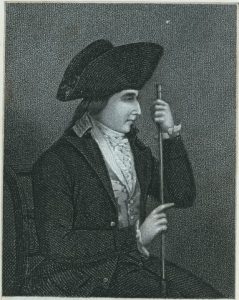 Elihu Palmer (1764-1806) was a little-known freethinker who, even after losing his vision, remained active in the intellectual debates of his time. Palmer emerged as one of the leading exponents of deism in the First American Republic. Drawing upon thinkers such as Locke, Hume, Rousseau, and Jefferson.
 - Thomas Paine and the French Revolution
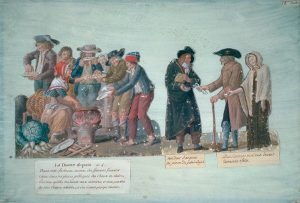 Paine—as an English revolutionary and an actor, witness, and interpreter of the Age of Revolutions—developed a democratic vision during the period of the Convention initiated on 9 Thermidor (1794-1795) that distanced him from both Jacobin formulations and practices, and from legislations and speeches by Thermidorian deputies.
 - The Author Attribution of “African Slavery in America”
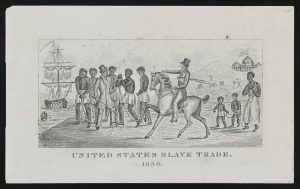 It is most probable that Paine did not write “African Slavery in America” based on a lack of evidence, on the language used in the essay, and on our computer analysis of the text.
 - The Mysteries of Paine’s Beliefs in Providence
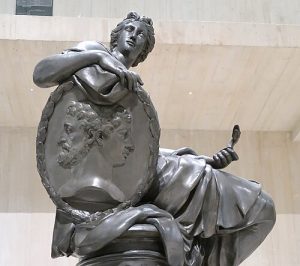 In Paine’s view, organized religions marketed unreliable hearsay piled on hearsay as “revelations” that are, by definition, based on faith rather than evidence. Carefully observing nature, he rejected nearly everything propounded by organized religions as antithetical to rational analysis, retaining from Biblical accounts only what was discernable through observation.
- BOOK REVIEW: A Political Biography Of Thomas Paine
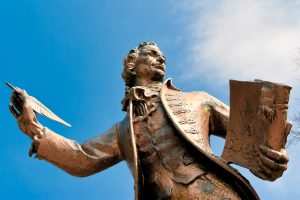 Naturally this book invites comparison with previous biographical studies, in particular the most recent. It bears out well in relationship to them. What stands out in this new work is its detailed coverage of Paine’s career and his comprehensive treatment of the controversies and issues Paine addressed.
 - Thomas Paine, the Rights of Man and the Rights of the Freeborn Englishman
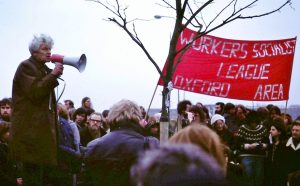 Thompson’s interpretation underlined Paine’s importance in what was labelled by historians as the ‘Atlantic-Democratic Revolution’. In the 1960s, my undergraduate days, this exercise in comparative history breaking through the constraints of nation state historiography was as fashionable as Thompson’s history from below.
 - Thomas Paine’s Maternal Grandmother
 My conclusion is that the Hustler grandmother referred to by Paine is Frances (or Elizabeth) Hustler, the daughter of Thomas Hustler and granddaughter of Samuel Hustler, both of whom were involved in local politics. It is easy to imagine this familial taste for political affairs having some influence on Paine.
 - BOOK REVIEW: La Pensee Politique de Thomas Paine en Contexte: Theorie at Pratique
 This fundamental contribution to Paine’s political thought, based on a Ph. D thesis at the Sorbonne, deserves to be translated into English so that it becomes available to all Anglophones interested in the subject.
 - Thomas Paine’s Astronomy
 In the first part of The Age of Reason, written during the French Revolution and completed we are told only a matter of hours before his arrest, Paine devotes some pages to a general account of astronomy as an introduction to his ideas on Christian theology.
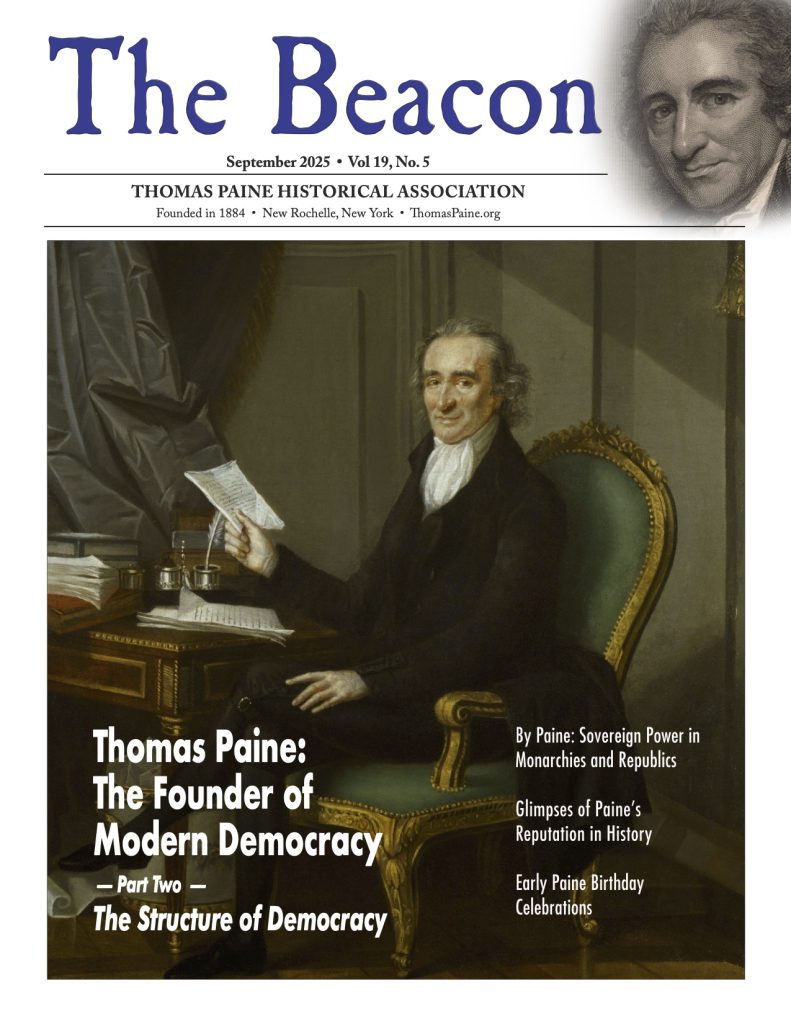
The latest Beacon newsletter:
The latest Studies in TP: