
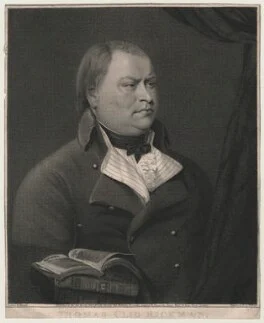
Thomas Paine lived in London from 1791 to 1792, residing mainly at No. 7 Upper Marylebone Street, the home of his longtime friend from his days in Lewes, Thomas Clio Rickman and his wife. Paine wrote Rights Of Man: Part the Second and published Letter Addressed To The Addressers from that house. But where exactly was the house? Is it still there?
What is agreed is that the street numbering has changed since 1792. Barb Jacobson, former secretary of the Thomas Paine Society UK, wrote an excellent article about this topic in 2010, isolating the site to an apartment block at 148 New Cavendish Street. Jacobson wrote that earlier writers who claimed the house was located at 154 New Cavendish Street were in error, unfortunately so because 154 is one of the few 18th century houses remaining.
A FAMILY MEMORY
While doing a bit of family genealogy, I entered the fray. About 125 years after Thomas Paine lived at No. 7, my grandparents and uncles moved to No. 4 Upper Marylebone Street. My father was born in that house in 1919. As a child, I remember my father pointing out the Rickman house. When I saw Barb Jacobson’s article and resolved to visit New Cavendish Street for the first time in 50 years, eyeball logic, combined with my limited knowledge of 1937’s renaming and renumbering, suggested that 154 was correct—148 was an error.
Searching the electoral rolls from 1935 and 1939 offered proof of renaming and renumbering. Almost every house had occupants who spanned the changes. The confusion stemmed from The Horwood Plan, a series of 1790s maps. The relevant map shows three unlabelled units at the eastern end of the block, placing No. 7 at 148 New Cavendish Street. But it is clear from the renaming and renumbering in the 1930s that the three houses Horwood left un-numbered were actually 1, 2 and 3 Upper Marylebone Street. An early 19th century walking guide was in accord with my numbering.
Next, I investigated the archive of Howard de Walden Estate, a property estate that dates from 1715. Their archive contained documents that including plans drawn up circa 1800, as the basis of lease books. That numbering accords with my hypothesis.
The mystery truly started to unravel when I found an article in the October 26, 1926 Worthing Herald republishing a historical extract from the paper’s June/July 1791 edition. Not No. 7, but No. 4. Something twigged in my memory. I’d seen reference to Rickman at No. 4 before.
A Poet’s Advertisement (July 4th 1791),
THOMAS CLIO RICKMAN
Takes this method, respectfully to inform his numerous
friends, acquaintances and the public that he hasentered
into business, and to hand them his card…
….No. 4, Upper Marylebone-Street, London, Thomas
Clio Rickman, Bookseller and Stationer…
In Jacobson’s 2010 article, her perceived misidentification was a letter from Rickman to Joshua Reynolds: From Thomas Rickman, No. 4 Upper Marylebone Street, July 19 – 1791. Both of the No 4 Upper Marylebone Street references were in July 1791. All subsequent written references to the exact address (October 1792 being the earliest) say No. 7. I took a deeper look at the history of the Horwood Plan. The first page of the Horwood Plan, including Upper Marylebone Street, was mapped between October 1790 and June 1792. Horwood had not made a mistake, but a diligent record of the state of affairs at that time. The three un-numbered units on the north-east corner of that street were presumably still under construction. A visit to the Westminster Archive to examine the rates books for the Parish of St. Marylebone confirmed my theory, reflecting the yearly changes as the property moved from not listed, to being labelled No. 4 and finally as No. 7.
So there you have it. Evidence that the house was briefly No. 4 but soon became No. 7 Upper Marylebone Street, before finally becoming 154 New Cavendish Street in the 1930s. Today, it is a coffee shop. Paine probably would have liked that.
In July 2025, I wrote an open letter to the TPHA and English Heritage advocating an English Heritage Blue Plaque at 154 New Cavendish Street. English Heritage, the group that manages historic monuments in England, are very receptive and are investigating the evidence. With any luck, there will soon be a new monument to the life and works of Thomas Paine in London.
Also see my July 30, 2025 blog piece, Thomas Paine Lived & Wrote At 154 New Cavendish Street: Evidenced.
Ian Harris is a London-based writer and amateur historian.