
The Columbian (Bloomsburg, Pa.), October 19, 1905
TOM PAINE AS A PATRIOT
After Thirty Years of Obscurity His Bust Accepted.
HIS INFLUENCE FOR GOOD.
He was Grossly Misunderstood, Called a Free Thinker and Scoffer Against Religion—His Hatred of Oppression in Any Form and Sympathy With the People.
New York Times
The bust of Thomas Paine, presented to Memorial Hall and not accepted, has finally found a resting place in Independence Hall, Philadelphia.
It is safe to say that had Paine never written the “Age of Reason” or the “Rights of Man” he would have enjoyed a very different reputation, and instead of being shuddered at by pious persons, would have been lauded for the part he took in effecting American Independence. As it is, he is known mainly as a free thinker and a scoffer against religion.
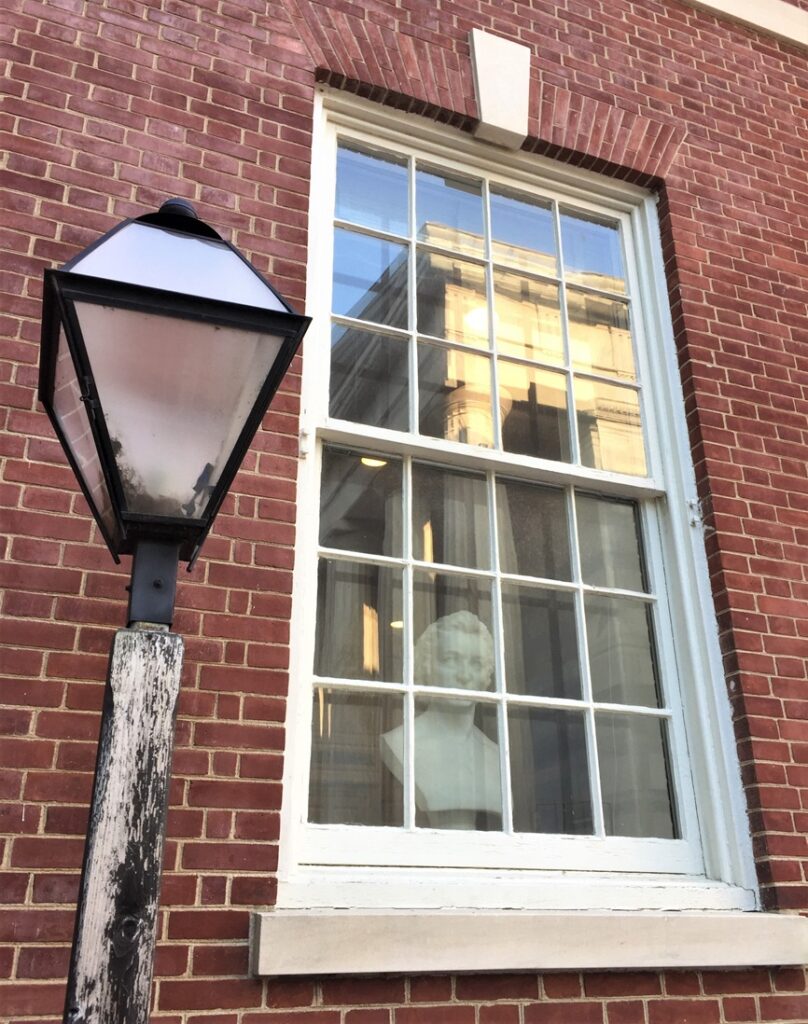
But whatever Paine’s religion or irreligion may have been, he deserves well of all who believe in the Declaration of Independence, all who believe that in 1776 the time had come for America and England to part company. In the autumn of 1775 there were few, even among the Whigs, who were ready to avow themselves in favor of independence. But the idea of permanent separation grew in favor during the winter and spring. Public opinion was gradually drifting toward independence when Paine’s pamphlet “Common Sense” made it a certainty. The effect of this pamphlet in preparing the popular mind for the Declaration of Independence cannot be overestimated. The bold were confirmed and the waverers emboldened. Everybody read it and 100,000 copies were at once taken. Before the demand ceased 500,000 copies were put out; in France especially its vogue was great.
When we reflect that Paine had lived in America less than two years when “Common Sense” appeared, his performance appears indeed remarkable. Shortly after his arrival in America he became the editor of the Pennsylvania Magazine. During eighteen months, says his biographer, Mr. Conway, there probably never was the same amount of good literary work done on a salary of £50 a year.
“Common Sense” was happily named. It is written straight from the shoulder and abounds in arguments which all could understand. It showed the inconvenience of subjection to a nation 3,000 miles distant, to say nothing of the humiliation and profitlessness of it. The time for the connection with England to cease was the date of the battle of Lexington; in short, Paine made what had been vaguely in men’s minds seem immediate and insistent. Says an eminent English historian: “He saw beyond precedents and statutes and constitutional facts or fictions, into the depths of human nature; and he knew that if men are to fight to the death it must be for reasons which all can understand.”
After the establishment of the American Republic, Paine, unfortunately for his reputation, decided to return to England and open the eyes of the people. He, of course, sympathized with the French Revolutionists, and aired his sentiments in “The Rights of Man,” written in reply to Burke’s “Reflections on the French Revolution.” For the work of a furious demagogue and incendiary, it is singularly temperate in tone. Having made England too hot for him he went to France, where, incurring the suspicion of Robespierre, he was thrown into prison. The first part of “The Age of Reason,” just written, was now published, and his reputation in the United States was at once destroyed. The indignation here was as great as in England, and general misapprehension concerning Paine, lasting to the present, has been the result. He returned to America in 1802 and lived under the cloud of popular disapprobation till his death in 1809.