
The Worcester spy (Worcester, Mass.), February 25, 1900
THOMAS PAINE
“Thomas Paine,” by Ellery Sedgwick. Published by Small, Maynard & Co. The Beacon Biographies, edited by M. A. DeWolfe Howe. 75 cents.
“Thomas Paine” is an American name. The man has been lost in the net of lies and fabrications formerly passing current as the biography of Paine. The author finds it necessary to say:
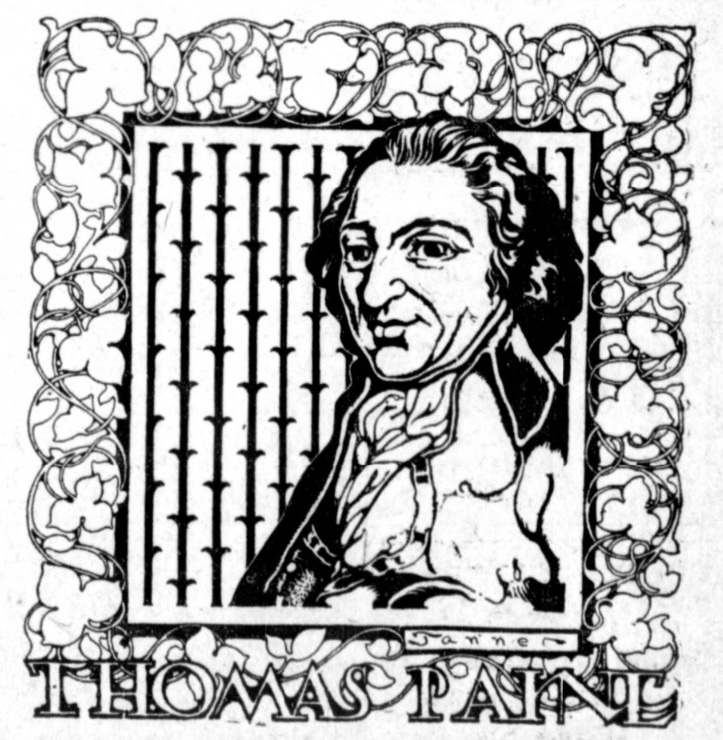
“Politics and religion have bred the best haters among men. Thomas Paine has been abhorred as a revolutionist and execrated as a heretic. He lived during the mightiest events of modern history at a time when no public man was safe from the bitterest assaults of rancor and of malice, but not one of his contemporaries has been slandered more relentlessly than he.
He attacked all who differed from him in the two most sensitive spots in human nature and richly has he paid the penalty. The literature which has grown up about Paine and his works bears this witness.
It is almost exclusively controversial. One writer assails; the next defends. Of dispassionate narrative there is very little. Paine’s earlier biographers, George Chalmers and James Cheetham, paused at no lies which could dirty their victim’s reputation.”
Their volumes became the basis of a mythology which cannot bear casual investigation. The writers who answered them were eulogists of Paine. It is difficult indeed, to write of Paine without enthusiasm for his genius and lively recognition of his great services to liberty.
Paine was born in England. He failed in his first attempt in business as a stay maker. Later he was an excise man and in 1770 was in the tobacco business, in which he failed in 1774. That year he sailed for America and in 1775 became known as the editor of the Pennsylvania Magazine. He published Common Sense in 1776. This pamphlet had a tremendous influence in fixing public opinion in the colonies. He assisted Jefferson in preparing the Declaration of Independence. He raised money for the conduct of the war. His Crisis assisted the colonies in maintaining their war.
He sailed for France in 1787. In 1791 he published the Rights of Man and became active in the French revolution. In 1803 he returned to America. He died in 1809 in New York; his later years were bitter and fruitless in contrast to the great activity and prominence he had gained in the two revolutions in which he was engaged. He was buried on the farm at New Rochelle, but later his bones were disinterred, transported to England and lost.
The author has handled his subject fairly. Paine’s life deserves some considerable study more than it has ever received. His skill as a writer on religious themes is a thing to be divorced from the efforts of his best years to create republics, to make government more liberal and humane.