
The Jewish advance (Chicago, Ill.), February 13, 1880
Address By Prof. Felix Adler
Prof. Felix Adler lectured recently before the New York Society of [Ethical] Culture on “Thomas Paine.” The hall was densely filled, and the speaker’s remarks received the closest attention.
“There are some men,” said Prof. Adler, “in whom the spirit of their age seems to have taken living form—men who are removed of all personal relations and who stand the embodiment of the living law. Such a man was Thomas Paine, to the memory of whom and to whose honor I raise up my voice to-day. His was not a perfect life. His was not the Christ nature which dwells with brooding gentleness over the wrongs in the world. His was the revolutionist’s nature. Utterly lacking the element of strength he fought against his [opponents] as [St. George] did against the Dragon. He seems to have been the embodiment of the spirit of rebellion and revolt against the time-honored traditions of the past.
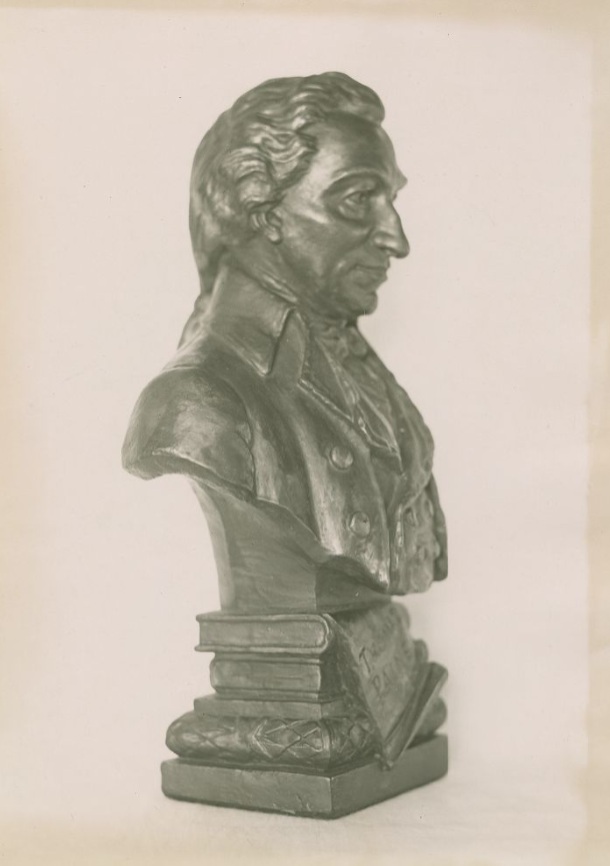
I do not need to dwell at length upon the incidents of his life, for they are well known to you. You know how he was born of humble parentage, how he worked in London as a staymaker, and how he was afterwards a dissenting preacher; how he was shopkeeper in an English town, and how his animosity against the English government grew more intense year by year. You know how when the struggle for freedom broke out in America Paine saw the chance to realize the hope for free popular government. You know how he came to this country, and became a tower of strength; how he irradiated the national heart by publications, and how he crystalized the vague ideas of the people, and made it clear to them that the [only] issue out of their struggle and [history] could only be their separation from Great Britain. You know how Jefferson, and Monroe, and Washington esteemed him, and how congress gave him a [vote] and an Endowment fund.
The day-star of liberty drew him to France; how he was returned to the national convention from Calais, how he suffered for France by imprisonment, and how he escaped an ignominious death only by an accident, shortly after the government of anarchy of Robespierre was overthrown, and Paris was liberated. Paine returned to America where he was welcomed by some and insulted by others. He retired to a farm in New Rochelle—the gift of the state of New York—where he died.
You know how his last days were troubled by those fanatics who claim that he made a death-bed repentance in those hours when the pulse is feeble, and when only incoherent stammerings escape his lips. Shame, I say, on a religion that takes a man at his lowest and mistakes the delirium of disease for truth.
(Applause.)
One can not express too strongly his indignation at the neglect of the American people toward Paine’s memory once his [life was ended]. They may shut out his statue from Independence Hall, as they have done, but they can not blot out the record of his signal services to the country. It is our disgrace, and not his.
But I am to speak more particularly to-day of Paine’s influence and of the development of his religious ideas. I shall treat him as critic rather than as eulogist. Thomas Paine marks the beginning of the liberal movement, and in studying the points in which we differ from him we shall learn how far we have progressed beyond him. In the “Age of Reason” Paine’s theological tenets are laid down. He was then in the Paris convention, and when told one day that his life was in danger he went home and wrote day and night. Six hours before the minions of Robespierre dragged him off to prison he gave the manuscript into the hands of a friend. In the Age of Reason he gave expression to the thoughts that filled him. He rebelled against the fetters. Yet we must condemn the harsh style and spirit of invective that characterize the book. One of the faults of liberal leaders is that they are more prone to the aggressive than to the constructive spirit. They don’t realize that harshness never heals. Of course it is easy to gain the applause of the multitude by ridiculing the sanctity of life; but the thing is wrong.
So I believe that Thomas Paine failed to impress the American people partly because of the acerbity of his terms. When a child he heard the scheme of Christian redemption, and his mind rebelled against it. Then, although ignorant of the bible, he rejected all of the elements of the Christian theory.
I wish, then, to call your attention to two points. I charge him first with dogmatism, and secondly with being not radical, [in] the sense [of] historical distinction, deep enough for me. He was superficial and did not see distinctly nor penetrate deep enough into the questions upon which he wrote. Paine argued that the existence of God was based on logic, because all animal and vegetable life—everything, in fact—must be traced to a first cause. He believed in a first cause because there was tenfold greater difficulty in not believing in the first cause. I maintain that reason leads to no such conclusion. Only a subordination of reason leads to this. Either the existence or the non-existence of a first cause is incomprehensible to the human mind. Then we must acknowledge the inability of reason to comprehend a first cause, and not select one of the two alternatives.
Paine, too, was dogmatic in adopting nature as a god, when he was unable to accept the God of revelation. We have Mill as our authority that there never was so inhuman a tyrant as nature.
Secondly, [his] charges against the Hebrew prophets, who [he] wrongly says were the allies of the priests, and were responsible for the excesses and excrescences of the times, shows how necessary it is to make an accurate study of a people if one would write intelligently and accurately about them. His criticisms are based on inadequate information. So, then, we have advanced beyond Paine in two regards: that we have striven to rid ourselves more fully than he did of dogmatism, and have done better justice to the men of the past than he did. Then let us not forget to do justice to Paine himself. He erred, but he erred in ignorance, for the knowledge of to-day was not within his grasp.”