
The Washington herald (Washington, D.C.), September 17, 1916
YOUR WEDDING DAY
And the Famous Men and Women Who Have Shared It.
September 17
Thomas Paine and Mary Lambert; John Thomas Serres and Olivia Wilmot.
By MARY MARSHALL
Neither of the two marriages that stand out on the calendar for September 17 could be called felicitous. But since every day is a lucky wedding day, if we would but make it so, this fact should not deter any one from choosing September 17 on which to begin his married life.
The fact that Mary Lambert was a serving maid was not the real reason that her marriage with Thomas Paine, the great Anglo-American free thinker, was not successful. For women who have begun their lives as servants have frequently proved the best sort of wives to men of quite as high intellect as Thomas Paine. At the time of the marriage one could hardly have said that Paine was marrying beneath his station, for he was but a staymaker, and save for the brilliant intellect that he possessed, he had no possessions and no prospects.
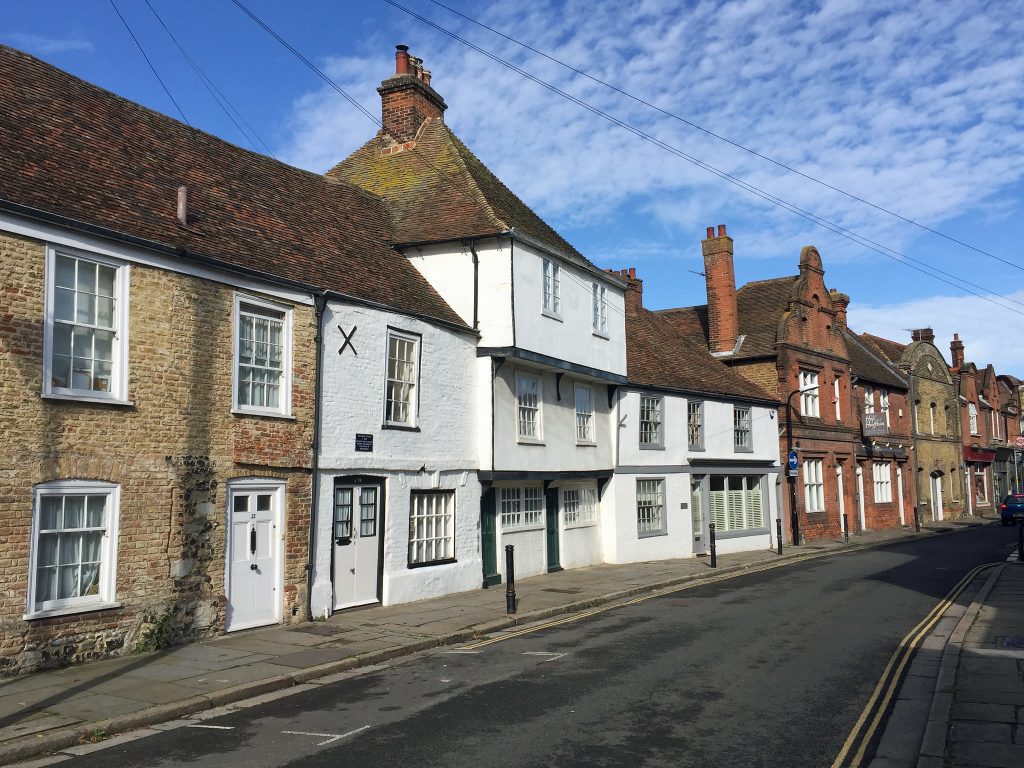
At 20 Paine, who was of humble English origin, was working for a staymaker in London. Later he set up in business for himself at Sandwich, and at 22 he married Mary Lambert, who was a servant in the employ of a woolen draper’s wife of that town. Mary was an orphan and possessed little to recommend her to the promising young man save her willing hands and a generous heart. The young couple set up housekeeping in a very humble way, but they were not congenial. Two years later, when Paine was 24, the wife died, and Paine realized too late the help that the young wife had really been to him.
The adventuress, Olivia Wilmot, was the cause of most of the unhappiness of the life of the English artist, John Thomas Serres. Her extravagance would have been enough to make any husband miserable, but her absurd pretensions actually ruined his reputation, which might have been much more brilliant as a painter had it not been for this unfortunate marriage.
A hundred years ago all England was talking about Mrs. Olivia Serres. Half of those who knew about her were in sympathy with her and the other half believed her to be the impostor that she really was. She was the daughter of a house painter and apparently the trade of house painting inclined her to aspirations toward painting of another kind. When still a very young girl she began taking painting lessons, her teacher being none other than the able artist John Thomas Serres, whose marine paintings later attracted very favorable notice. Olivia was a very attractive girl and the painter fell a victim to her charms. She was still under age but with the consent of her father they were married and for a very few months they lived in apparent happiness.
Then Olivia yearned for more excitement than the simple joys of married life. Wild as a riding young Amazon she became proficient in portrait painting herself, but this was not enough. Even when she was appointed portrait painter to the Prince of Wales she was not content. She longed to be a member of the royal family, to take a place among the most illustrious of the land. So she conceived her plan of claiming to be the Princess Olive of Cumberland and she gradually spun out a wonderful yarn, in which she claimed to have been exchanged in infancy for a daughter of her alleged father, Wilmot, and actually to have been the daughter of a secret marriage with a member of the royal family of England. To substantiate these claims it was necesary to have forged documents and this she did most successfully. Her husband was involved in the deceptions and after his death was discovered to have painted miniatures on ivory for which Olivia had posed and which she represented as portraits of herself and members of the royal family.
All this might have been regarded merely as harmless folly had it not been for the fact that Olivia went to law to establish her claims. Eventually the claims were disproved and she herself was imprisoned for debt. She died in 1834.