
By Brian W. Walker
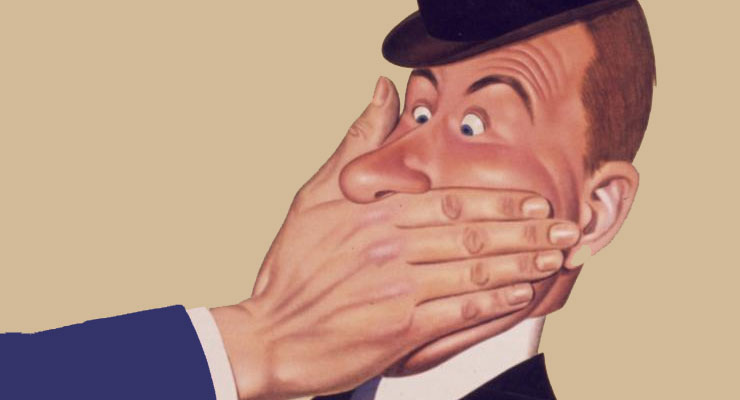
“Democracy? Not yet, perhaps never”. Joe Hanania. Published via limited auto edition as ISBN 978-2- 9532166-15, in June 2008, & priced at 20 euros.
This challenging book of 206 pages is printed in dear typescript of adequate size for those readers whose eyesight might be declining. Part one analyses the meaning of “democracy”, but the advice in small print at the head of its ‘Table of Contents’ that ‘The US, England and France are not democracies’ – gives a due as to its direction of travel. The author is an American who lived for 34 years in England but who now lives in France. He lists the copious friends and experts who inform his book.
Part one of Hanania’s book considers the confusion which surrounds the evolving meaning of democracy, and then examines in turn “direct democracy”, “indirect democracy”, and “elements of democracy”.
Part two considers the history of democracy, before narrowing down to a depressing analysis of democracy in America.
Part three questions whether modem democracy is °good”, or is “the best’ we have; then whether full democracy is ever likely to emerge; next the author identifies the parameters of global democracy with the U.N. getting low ratings; finally, he considers how democracy and human rights relate to each other.
An “Epilogue” identifies the lessons teamed and which key problems continue to challenge the emergence and growth of modem democracy
Some 13 valuable appendices are listed – ranging from definitions of democracy to a useful, but short, analysis of Thomas Paine’s writings.
The author apologises for any personal bias and for the complexity of his subject.
At first I found the book irritating, then useful, and by the end stimulating and intriguing.
Why “irritating”? Despite having an editor the text is full of typing errors and elementary spelling mistakes born start to finish. Such sloppiness makes for difficult reading thereby raising doubts as to the value of the thesis itself. The opening ‘dedication” of eight short lines contains one spelling mistake and one punctuation mistake. This pattern extends more or less throughout the book to the final half page which contains one spelling mistake. The author thanks his proof reading friends, but whilst in the body of the text spelling mistakes do diminish, the typing regime is distinctly off- putting. Spaces between words and sentences vary on most pages from one space between sentences to four spaces. Does this matter? It does because it impedes reading and pushes the reader from considering the substance of the text, towards sheer irritation at the layout. All errors could have been easily corrected.
There are other eccentricities. “Americans” for example are re- christened “USians”. This I found unnecessary and an impediment to the language flow. Similarly our own country which is properly called either the “United Kingdom” or “Great Britain and Northern Ireland” is reduced to “Great Britain”. This is likely to offend the people of Northern Ireland. By the same token authors of references are limited in the text to their initials — including the principal author himself. “TP”, of course, is Thomas Paine, but O.P. is listed simply as “an established retired Frenchman”, and P.J. turns out to be an ‘English Quaker of poor physic, but active in peace efforts”. (“physic” is another misspelling as it is the old English word for “medicine”. The word needed is “physique”). And so on…..This may be quaint, but it is not helpful to a discerning reader.
Once the reader is able to put to one side these impediments then the substance of the text is interesting, helpful, and worthwhile for anyone interested in war and peace, human rights, the role of the UN, the place of America in world history, and so on.
The chapter on “The history of democracy”, followed by “Democracy in America” which in turn analyses with alarming detail the “Myth of democracy in America*, is particularly good. The chapter “is democracy possible” will interest TPS members, as will the chapter on “Democracy and Human Rights”. Each of these is carefully analysed with pros and cons adjudged. The first appendix offers four useful definitions of democracy, followed by eight other definitions of key words including °citizen”,” communism”, “republic° and so on.
Appendices four and five analyse the work of America’s founding fathers including Thomas Paine. None emerges unscathed. Appendix eight usefully identifies the sixteen wars instituted, thus far, by the relatively short lived United States of America. However, I think that “sixteen” should read °twenty four” — China (twice), Korea. Guatemala (twice), Indonesia, Cuba, The Belgium Congo, Peru, Laos, Vietnam. Cambodia, Lebanon, Grenada, Libya, El Salvador, Nicaragua, Panama, Iraq (twice) Bosnia, Sudan, Yugoslavia, and Afghanistan.
If Joe Hanania decides to reprint I hope that he will consider in greater depth the value (danger?) of “the royal prerogative” to British democracy (and thereby to European democracy) – which is alive and kicking sufficiently to have allowed Prime Minister Blair to declare an illegal war on Iraq, and then to pursue his objective with armed violence against a largely civilian “enemy°. The issue is raised in the text in passing, but with little historic analysis, nor as to how the royal prerogative might be used in the future.
Finally, in defence of the UN system, whilst Joe Hanania’s criticisms are self-evidently correct, the recent surge dedicated to the further implementation of international humanitarian law, including the arraignment of political leaders like the late President Milosevic of Jugoslavia followed by President Karadzic and, hopefully, the soon to be arrested General Mladic, is a welcome development.
It all gives rise to much reflection and pause for thought.