
By Robert W. Morrell
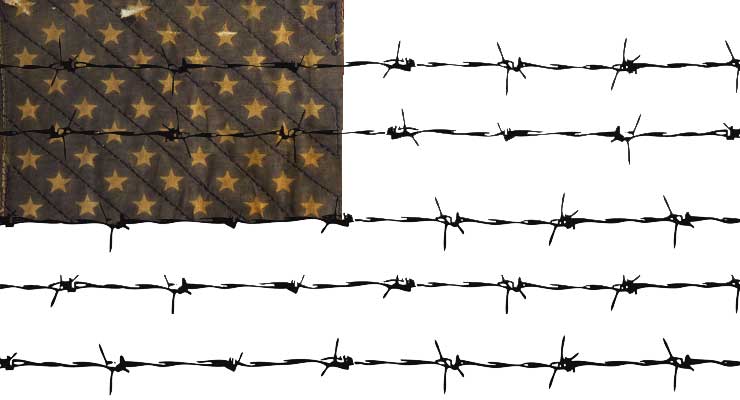
Where The USA Went Wrong, A Study Of The United States Empire. Joe Hanania. 176pp. Paperback. Privately Published in a limited edition, Nouic, 2011. ISBN 978-2- 9532166-3-9. Text in English. No price given Details from the author at 27, Beausejour, 87330 Nouic, France.
This perceptive study of political and social developments from the birth of the USA in 1776 up until the Bush administration is a challenging and controversial being an evaluation of the nation’s history and how, as the author sees it, it went wrong and departed from the ideals of some of its founding fathers.
A former American serviceman but now a French citizen, Joe Hanania has over several years delved deeply into his subject and come up with a work that certainly prompts one to think critically of US policies in the past and the motivation behind them, as also the manner they have impacted upon those currently pursued.
Thomas Paine looms large in the book, particularly in its first chapter that is devoted to the issues that culminated in the birth of the nation, and the controversies involved then and in the years following. The author shows how a few “leaders” manipulated matters in order to pursue their imperialistic aims in respect of the new born nation. He observes that while the proposed constitution of the USA “looks like a constitution for the people” (his italics), this depends on the interpretation placed upon the meaning of “people”. The authors of the constitution were basically the two dozen people who discussed and concocted it behind locked doors, while most of those who signed it were not even present at the Constitutional Convention, they simply passed it and signed on the dotted line, so to speak.
Mr. Hanania has harsh words to say of the attitudes prevailing amongst many in the new nation’s political leadership concerning the indigenous native population, the Red Indians, and tellingly cites Washington’s contention that they “have nothing human except the shape. The extension of our settlements will certainly cause the savage, as the wolf, to retire, both being beasts of prey though they differ in shape”. This view can, in fact, be traced back to the earliest British colonists who considered them to be sub-human, this despite the assistance rendered at times to the early settlers without which help they would not have survived. The problem with them as far as wealthy slave owning plantation owners like Washington was that the Indians would not readily allow themselves to be enslaved. In Mr. Hanania’s opinion, people such as Washington, Jefferson, Adams and others had a vision of an American empire in mind from the outset, differing here from that of Paine, and maintains that the constitutional convention was actually the beginning of what eventually has become “the US Empire”.
Where did the USA go wrong, the author asks? He answers this by saying it was when a handful of men were allowed to “pull off what was perhaps the greatest coup d’etat in modern history”. The implication here is that if those who absented themselves had participated in the deliberations what eventually transpired might have been dramatically different. Indeed, one wonders what would have occurred had Paine remained in America instead of allowing himself to be encouraged to leave the young nation for France then England. The people who had urged him to go for the most part detested his popular radicalism and feared his abilities, particularly as a pamphleteer. In the event, he remained in Europe far longer than he had planned and during which time he almost lost his life because of the inactivity to assist him on the part of the American minister in France, Gouvemeur Morris, a wealthy banker and supporter of Silas Deane, whose financial activities Paine had done much to expose, who hated Paine. But then, had he remained, would he ever have written Rights of Man or The Age of Reason, two of the most influential books in political history, and dare it be said, religion?
The author rounds off “Where the USA Went Wrong” with a biographical appendix on the development of his ideas and the clashes he had with the “powers that be”, particularly amongst the military. which was to lead to him re-evaluating his previous opinions, a process that led ultimately to this interesting and intriguing book.