
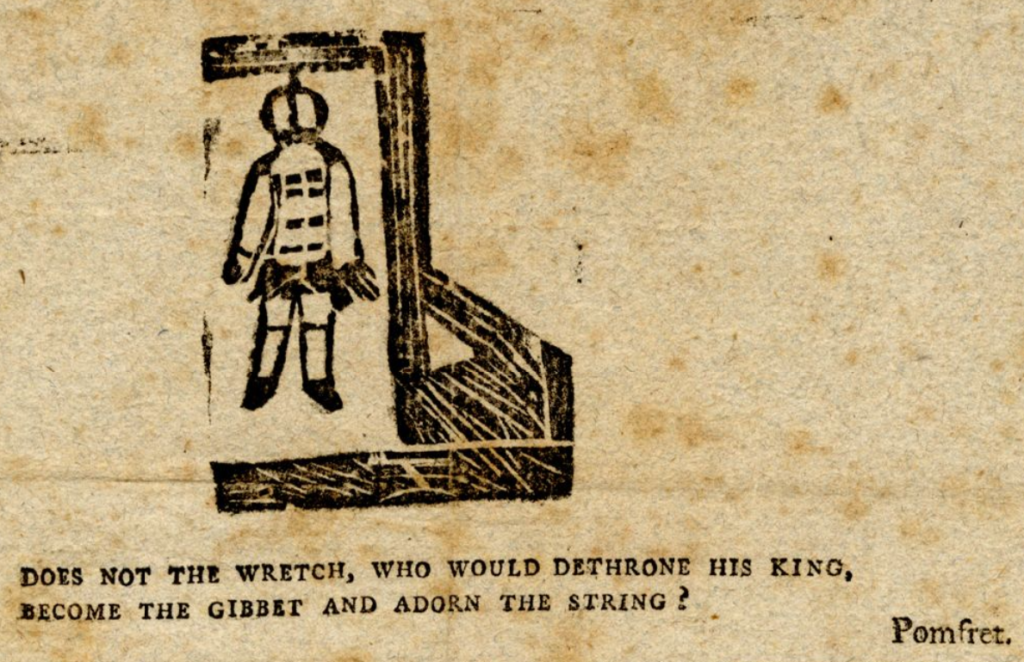
American watchman and Delaware advertiser (Wilmington, Del.), December 24, 1822
From the Lancaster Free Press
THOMAS PAINE
The famous Thomas Paine was one of the most indolent men. During our revolutionary struggles, he, with the celebrated Dr. Rittenhouse, were inmates of the family of the late Wm. Henry, Esq. of Lancaster, in whose house that patriotic work, the Crisis, was written. As an instance of his indolence, the Crisis, No. 5, is but a short political essay, to be sure of great skill in the composition, it must depend entirely upon frequent, long and anxious study, and a fund of solid reflection.
The reason we are thus able with certainty to state these things that matter of his life is, he has read the above during all the course of a week to wind up with one or four lines, and just as usual would unwind, quite as would have arisen. While that excellent man David Rittenhouse was employing his hours in the duties of his office for the benefit of the people, Paine would be snoring away his precious time in his easy chair: it was his daily habit to walk in the morning until 12 o’clock; he would then come in and take a most inordinate nap until 3 o’clock, he would then retire to his bed chamber, wrap a blanket around him, and in the favorite arm chair he lay of 3 or 4 hours, then up and down.—Mr. Henry frequently expressed his sorrow that a man of so exalted a genius as Thomas Paine should be possessed of those habits of indolence. A man of diligence and industry with the genius of Paine might have rendered himself immortal throughout the world.