
Springfield weekly Republican (Springfield, Mass.), February 10, 1893
Fresh Light Upon Their Characters With Reminiscences of Lafayette.
By Caroline Healey Dall
Washington, D. C., January 14, 1893
To the Editor of The Republican.
There are two men to whom this country has never done justice, Joel Barlow and Thomas Paine. Joel Barlow has always seemed to me to stand first among those whom we have not delighted to honor. Little as men think of Barlow’s poems to-day, they had a wide influence when they first appeared. “The Prospect of Peace,” the poem delivered by him when he graduated in 1778, was immediately demanded for the press. Driven by his love of country, he had armed himself as a volunteer during his college vacations and distinguished himself at the battle of White Plains. Chaplains were needed and after his graduation he was entreated to qualify himself for the office, and fired the hearts of his men by patriotic odes set to music. These continued to be popular long after the war ended and still longer in the recesses of New England’s hills. His translations of the Psalms were highly valued, and used until it was supposed that Barlow had become tinctured with atheism, when President Dwight prepared another volume.
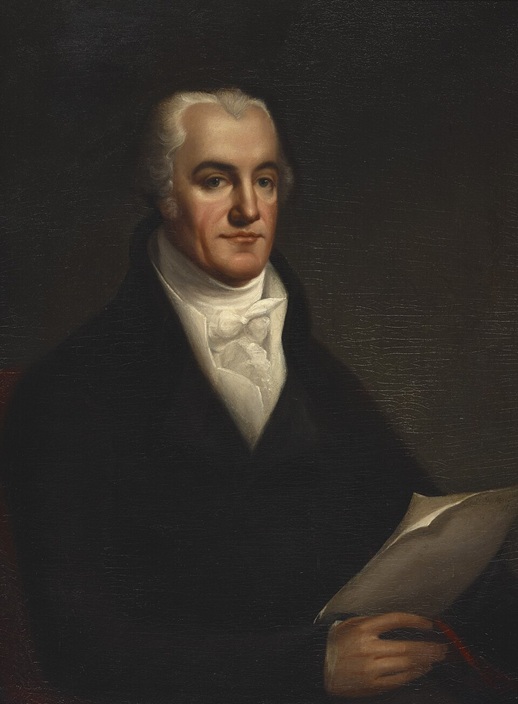

In 1781 Barlow married Ruth Baldwin of New Haven. The marriage was private and concealed for some time on account of Barlow’s poverty. The ceremony was performed while the parties were taking a country drive and finally discovered through the keen observation of a child three or four years old. Barlow went to England first, in 1788, as agent for the “Scioto land company.” He had gone in good faith, but finding himself in the employ of a gang of swindlers, threw up his position, relied for three or four years upon his pen for support, and came to great straits of poverty. But he made himself conspicuous by his “Advice to the Privileged Orders,” which Fox thought fit to eulogize in the House of Commons. He then began to interfere in French politics and like his friend Paine was received by the convention with distinguished honor and given the rights of citizenship. He soon established himself in Paris, wrote his famous “Hasty Pudding” and devoted himself to the spread of republican ideas. Although Barlow was ready to endure poverty in their defense, he was, as well, a good man of business, and seizing the opportunities offered to his neutral position made himself a man of substance.
The people of the United States were then suffering severely from the piracy of the Algerines, and in 1795 the government asked Barlow to go to Algiers. Few men could have been found, at that time willing to encounter the perils of the post. Barlow made the necessary pecuniary sacrifice, with his usual courageous cheerfulness. He went to encounter ignorant and lawless men, the intrigues of resident foreigners and the presence of the plague. His errand was to rescue his countrymen from captivity, to emancipate Americans held as slaves, to restore their property and send them safely home, while he encountered constant peril by attendance on the sick and dying. In two years he had accomplished this, and negotiated treaties with Algiers, Tunis, and Tripoli. In 1797 he was able to return to Paris.
There he gave the warmest welcome to struggling Americans. It was on the white walls of his chamber in Barlow’s house that Fulton first sketched his steamship. Clever men were Barlow’s delight, and to neither Volney nor Paine would he turn a cold shoulder.
In 1808 he returned to America and purchased the superb estate, which he called Kalorama, and which a senseless Washington syndicate has lately swept out of existence. But the District of Columbia owes a debt to Kalorama, which it would not be easy to pay. Its master had adopted the youngest sister of Mrs. Barlow, and Lafayette, after the death of his wife, persistently sought her in marriage, and was as persistently refused. He was too noble a man to resent her indifference, and after she married Col. Bomford and inherited Kalorama, he continued to send twice a year, rare plants and profitable farming stock to his unresponsive friend. Her generous soul shared every gift with her neighbors—and if Georgetown Heights continued to blossom with flowers fairer than the rose, it is to Lafayette’s love that we owe the sweetness and color of early spring. While Barlow occupied himself with planting and entertaining, Fulton showed his gratitude by furnishing such illustrations to the “Columbiad” as no American book had at that time been able to show.
From the well-earned delights of home Barlow once more turned at the request of Madison. He went as minister plenipotentiary to France. There he was to consider “French spoliations” and “The Berlin and Milan decrees.” At last, when patience was nearly exhausted he was summoned to Wilna by Napoleon. He had come to France with a great admiration of Napoleon but soon felt that he had mistaken the man. Overpowered by exposure, hunger and anxiety, he died at a small village near Gracow, before he had overtaken the emperor, but from his dying bed he dictated a poem, every line of which tingled with outraged feeling, and which it is a pity that Napoleon never saw. After Barlow’s death, his wife read for the first time a letter which he had written to her from Algiers during the prevalence of the plague. Every line of it bears witness to the noble and chivalrous character of the man, and few women, I should think, could read it without tears. His death was deeply felt upon the continent, for at that time the older civilizations knew best how to appreciate such a man.
All this I have written because the third edition of Conway’s “Life of Thomas Paine” is about to appear, a book full of interest. If it does more than justice, as has been charged, to one of Barlow’s friends, it does not show us Barlow himself, nor does any memoir of him hitherto published. That Thomas Paine should be persecuted alternately in England and France need not amaze us, for he was the incarnation of the republican spirit, destined within a few years to substitute constitutional for autocratic governments. As regards our own country, the charges against him were coarseness, infidelity and intemperance. As to coarseness and intemperance, were Barlow, William Blake and Benjamin Franklin likely to make a companion of the man who exceeded others in these respects? We forget what manner of men did the great work of the 18th century, and how few among them were like Washington and Lafayette, refined and temperate. It is not many years since the liquor case was on every sideboard, and if we condone Daniel Webster’s offenses on account of his intellectual gifts, might not the services and intellect of Thomas Paine offset an occasional transgression? Not that I believe this was needed. He was too busy a man to forget himself often.
As to religious matters, we can judge for ourselves. His opinions were those held by Jefferson, Franklin and the elder Adams, but they were more openly vaunted by Paine and more offensively expressed.
“I believe in one God, and I hope for happiness beyond this life.”
“I believe in the equality of man, and that religious duties consist in doing justly and loving mercy.”
“The word of God is the creation we behold. It cannot be forged. It cannot be suppressed. It preaches to all nations and reveals to man all that he need know of God.”
“I trouble myself not at all about the manner of a future existence. I believe that the power which gave me existence is able to continue it, as he pleases, with or without the body.”
These sentences, which I have greatly abbreviated, express in Paine’s own words his inmost faith. If we call him an agnostic, will it mend matters? In his last will he says: “I die in perfect composure and resignation to the will of my creator, God.”
On the 381st page of his second volume, Mr. Conway quotes a part of a letter from Paine to Joel Barlow, dated Broome street, N. Y., May 4, 1807. I am at a loss to guess where Mr. Conway found this letter, which may have been a first draft left among Paine’s own papers. Mr. Conway has omitted some portions of it as Barlow received it which seem to me essential to a right understanding of the writer’s relations. As received by Barlow the letter read as follows:
Old Friend: I will just explain the direct occasion of my writing this letter, and reserve means and terms to follow after. I have a law suit coming on in this state, the 20th of this month—May. The occasion of it is as follows: Four or five men who had lived within the British lines, in the Revolutionary war, got in to be inspectors of the election at New Rochelle where I lived on my farm. These men refused my vote, saying to me, “You are not an American citizen.” Upon my beginning to remonstrate with them, the chief of them (Ward, supervisor, whose father and all his brothers had joined the British, but himself not being then old enough to carry a musket stayed at home with his mother) got up and calling out for a constable, said to me: “I commit you to prison.” He chose, however, to sit down and go no farther with it. I have prosecuted the board of inspectors for disparaging me.
I have written to Mr Madison for copies of Mr Monroe’s letter to Mr Randolph in which Mr Monroe informs government of his having reclaimed me, and of my liberation in consequence of it, and of Mr Randolph’s answer, in which he says: “The president approves what you have done in the case of Mr Paine.” These (copies) are necessary in order to prove falsehood on the inspectors, for the ground they went upon was this: “Our minister at Paris, Gouverneur Morris, would not reclaim you, when you were imprisoned in the Luxembourg, and Gen Washington refused to do it.” Morris did reclaim me, but his reclamation did me no good, and the probability is that he did not intend it should. You and other Americans in Paris went in a body to the convention to reclaim me, and I want a certificate from you, properly attested of this fact.
From this point the letter proceeds exactly as Conway prints it. Conway says: “I am somewhat at a loss for the want of authentic intelligence.” As delivered to Barlow, for it is the letter he indorsed in Philadelphia that I have copied, it reads: “I am sometimes at a loss for the want of authentic information.” As printed in the “Life,” Paine goes on to speak of the ill-will of the priests and says: “Had the Christian religion done any good in the world, I would not have exposed it, however fabulous I might believe it to be.”
When we take this in connection with other utterances, it is obvious that Paine was talking of the Christian religion, so-called, which in his time was a theological erection, having no foundation in scripture, or so little that he, a narrow-minded man, may be excused for not finding it. Mr. Conway’s volumes, although sometimes sharply criticised, have been received with great favor on both sides of the Atlantic. Certainly they have been written in a candid spirit. The third edition of the “Life” will be published at the same time as the new edition of Paine’s works which the Putnams have in contemplation. This latter will consist of three octavo volumes, and will contain all the writings which entitle Paine to our gratitude and respect. Their contents are historic, for Paine’s life was punctuated by important national crises in three countries, and the influence of his words has not yet ceased. It is a comfort to turn back to the time when men said what they meant in plain words.