
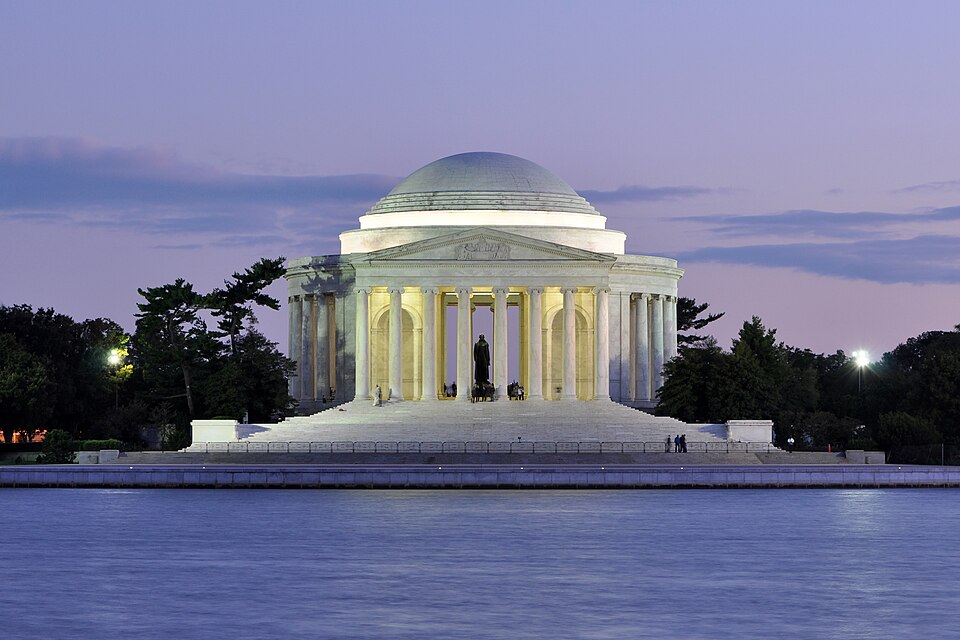

by Gary Berton, with Notes by Dr. Cazenave
2022 Thomas Paine Symposium Talk
Dr. Noel Cazenave, Professor of Sociology at University of Connecticut, has been researching for a book on Kindness Wars: The History and Political Economy of Human Caring. During his research of Enlightenment thinkers, he came to Thomas Paine, and was impressed by his orientation towards the well-being of humanity. He also came across Thomas Jefferson, and immediately formed an opposite opinion, that although he shared a lot of political goals with Paine, he also had no Kindness in his world view.
I was honored that he contacted me about Paine, and wanted to hear more. We decided we could collaborate on an article about the comparison between the two historical figures who influenced the world on this question of kindness. This is a very brief summary of where we are on this narrow topic.
In examining 21 Enlightenment thinkers, Dr. Cazenave separated them into 3 categories, British Conservatives, Christian Benevolents and Secular Progressives. Both Toms fit into the last. Class plays a major role: Paine from the lower classes, Jefferson from the inherited planter class.
Paine’s argument for independence was linked to the cause of humanity for justice and equality. “My country is the world; my religion is to do good.” He criticized Rousseau that although Rousseau possessed benevolent sentiments, but “having raised this animation, they do not direct its operation, and leave the mind in love with an object, without describing the means of possessing it.” For Paine, sentiments won’t abolish aristocracy and privilege, or defend the poor, the homeless, the children, and proposed concrete ways of kindness toward humanity which slowly have minimally been addressed if not universally enacted. Even his guaranteed minimal income concept is still a far-off goal, and the economist Thomas Piketty recently outlined the hope of humanity as resting on this concept. Paine called for aggressive political change, and with it a change in thinking.
But Jefferson is another question. The self-possessed contradiction of Jefferson is almost frightening. Although Franklin probably had more to do with the preamble of the Declaration than Jefferson, the “all men are created equal” gets contradicted by Jefferson in his slavery clause written by a slave-owner, and his clause about savages which shows he didn’t think they were “men”. Relatively few people are aware, however, that Jefferson would become one of that new nation’s earliest and most influential theoreticians of white supremacy, and even fewer people know of the major kindness-theory-related contradictions within the Declaration of Independence, itself.
In 1807 Jefferson as President told his Secretary of War that if the assimilation of indigenous people don’t conform to the white society, “If we are constrained to lift the hatchet against any tribe, we will never lay it down until that tribe is exterminated.” With America’s indigenous people, like its African slaves, depicted as an existential threat to “white” American colonists, in-group empathy bias was mobilized for a remarkable lack of empathy and kindness for those deemed to be racial outsiders.
Jefferson was one of this nation’s most influential crafters of racist theory and ideologies. We can see this in his Notes on the State of Virginia; ironically Jefferson introduces his racism theory in a section of the book in which he touts the progressive changes he proposed to the Virginia legislature; including his unsuccessful effort to get it to gradually abolish slavery. Here Jefferson used what he argued was the inferiority of Africans as a race to explain why the Virginia slaves did not seem to benefit from the state’s progressive laws by making significant accomplishments in the arts and sciences. Jefferson’s reliance on genocide as the ultimate solution to his racial fears was evident again when he concluded that “the real distinctions which nature has made,” along with other factors like “white” prejudice and “black” resentment “of the injuries they have sustained,” prevent the two races from living together amicably without “the extermination of the one or the other race.” In making his case, Jefferson’s argument was anything but color-blind, for as he put it “The first difference which strikes us is that of colour.” After wrapping his racist theory in a thin and pretentious veneer of scientific speculation as to the possible origins of “the black of the negro,” Jefferson lays out his aesthetic argument for the importance of “colour, figure, and hair” and other physical differences. After surmising that this inferiority causes African slaves to be less able to achieve in the arts and sciences like painting, sculpture, poetry, even when granted the opportunity to do so, Jefferson concluded “as a suspicion only, that the blacks, whether originally a distinct race, or made distinct by time and circumstances, are inferior to the whites in the endowments both of body and mind.” And finally, Jefferson made it clear that this conclusion had implications beyond their ability to make significant contributions in the arts and science, when he surmised that due to that “unfortunate difference of colour, and perhaps of faculty” both their emancipation and their assimilation were unwise because if they were freed and allowed to remain in America that would risk “staining the blood of his master.”
In the book by Tyler Stovall, “White Freedom”, Jefferson, like Voltaire, Kant, Hume and other Enlightenment figures, freedom was not meant to be universal, but reserved for rational white men who owned property which he describes as “white freedom”. He concludes not only that “slavery and reason were not so much paradoxical as complementary and mutually reinforcing” but that, indeed, “race and racial difference played a seminal role in the modern concepts of liberty.”
Enter sociologist Pierre van den Berge: racism didn’t develop despite the commitments to liberty and freedom, it developed because of it. He answered the question of how slavery is justified in a society built on the assumptions that all human beings are created equal while developing racist ideology: people of African descent were not sufficiently human. And Jefferson was the most influential person to promote this duality. The ideal of equality was not only NOT inconsistent with racism, but it enabled, as it does today, the ability to separate the Africans from full humanity. So the ideal of America has an exception, and once created it bleeds into other “not fully white” peoples, and excluding them in varying degrees. You might say that is better than nothing, but in fact, it created a racist system by using fake science to justify inequality.
Voltaire, Kant, Mill, and Hume, all considered liberals in thought, are also guilty of this dichotomy among classification of human status. Voltaire even invested in the slave trade, even as his thinking evolved more progressively. And Hume identified “Negroes” as a species inferior to whites.
But this duality, or caste system of ranking humans, is ended by Paine among widely read Enlightenment figures. After writing the first work that was a collaboration with Benjamin Franklin in 1762, Franklin returned to America for a year or two; it was at this time that he changed his views of slavery, and I will surmise it was his close contact with Paine. Paine had declared he would be too emotional to write on abolition of slavery. He did write in private letters against it, and he wrote with Joseph Priestley in favor of the Slave Trade Act in London in 1792. But on his death bed, he couldn’t contain himself and let Jefferson know about the abomination of the existence and tolerance toward slavery anywhere, but particularly in America, who claimed that all men are created equal. The “Slave Letter” as we call it is the strongest, clearest expression against the abomination, with its contradiction to American creed, and it was the first to call for reparations to begin reversing it. Like much of Paine’s work and ideology he was too far ahead of his time, and he still is. Racism from the white supremacists in the intellectual class infected the country, as did the inherited mentality of British colonialism. A sort of free pass to commit atrocities based on the supposition that whites are superior, the others are subhuman. This ideology remains with us today, and is vying once again for complete power in the growing fascist movement in America, and other countries.
Paine makes his case for the inalienability of human rights through his argument that while civil rights are based on an individual’s membership in society, natural rights are rooted in mere human existence, and that consequently “every civil right grows out of a natural right.” Consistent with this conceptualization of civil rights as natural rights, in stark contrast to Edmund Burke’s insistence that it was God who determined one’s social status and people have no right to change it, Paine argued that, indeed, people are entitled to improve their lives and circumstances, however not at the expense of the public.
And Paine’s “Slave Letter”, called as such because Paine took the identity of a slave in it to channel his emotions, and even make them focused and more powerful. Paine’s kindness toward humanity, especially towards the disenfranchised on many levels, sets him apart in the Enlightenment spectrum of thought in the 18th century, and presents a different philosophy long suppressed in our philosophical political heritage.
Paine remains the beacon for another path, still not travelled. Despite the friendship established over many years and discussion and correspondence, the two Toms held opposite positions on equality and kindness, on ALL men are created equal, and a path forward towards true equality – the only basis of democracy. Jefferson turned a blind eye, rooted in fake subjective science, while Paine saw humanity as one whole: “The world is my country, my religion is to do good.” In this sense, Kindness in Paine’s writings is the end product of the Enlightenment, waiting for realization.