
By Bro. Kevin Griffith, CFC, D. Min, Edmund Rice Christian Brothers, a resident of New Rochelle
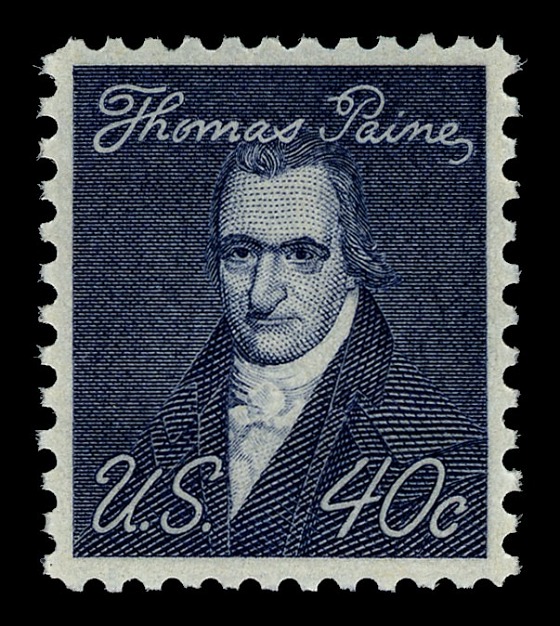
A response to Dr. Daniel Gomes de Carvalho
Growing up in New Rochelle, I’ve always been intrigued by Thomas Paine. As a young student in New Rochelle’s Catholic schools, I enjoyed educational class trips to the Thomas Paine Cottage. These trips reinforced what we were being taught in school that Thomas Paine’s writing of Common Sense played an important role in the American revolution.
As I grew older, I wondered why this national historical site did not seem very popular. The cottage grounds were usually empty, and the museum building felt off limits, unlike my childhood tours. I’d recall childhood play on the Paine property beside the stream and lake. I’d ponder why this national historical site wasn’t getting the attention Paine deserved.
In recent years, I’m delighted to see public interest in Thomas Paine and his contributions to America’s founding is gaining traction.
I’m also delighted with the academic presentations by the Paine Association, such as the talk by Dr. Carvalho, which stimulated this essay.
When I heard Carvalho’s ideas, my first impression was that Thomas Paine’s writings remain as pertinent today as in the revolutionary era. Most assuredly, the administration in the White House now would have had Paine arrested for his writings as a foreigner. It seems we have come full circle from the days of the revolution to the modern presidency.
For instance, many of the debates on voting rights in Paine’s day are relevant in America today. The same can be said about conversations around the criteria or qualifications to be a citizen.
Paine says that aristocracy and oligarchy should be rejected. Likewise, Paine says the worst kind of government is one where decisions are subject to the passions of a single individual. I advise those in the White House to study Paine’s writings on what a democratic republic should looks like.
Borrowing from Paul Simon, one might be tempted to ask, where have you gone, Thomas Paine?
Dr. Daniel Gomes de Carvalho, Professor of Modern History at the University of São Paulo, Brazil, on February 15 spoke at the Paine Building on The Age of Reason.
“By criticizing the adulterous connection between the church and state,” he said, “by demonstrating the impossibility of the Bible being the word of God, and by proposing the equality of all creatures before God, Paine had devastating effects on the governments using religion to maintain hierarchies and oppression.” As a consequence, “the question of democracy was at the heart of religious debate at the time.”
The debate continues.