
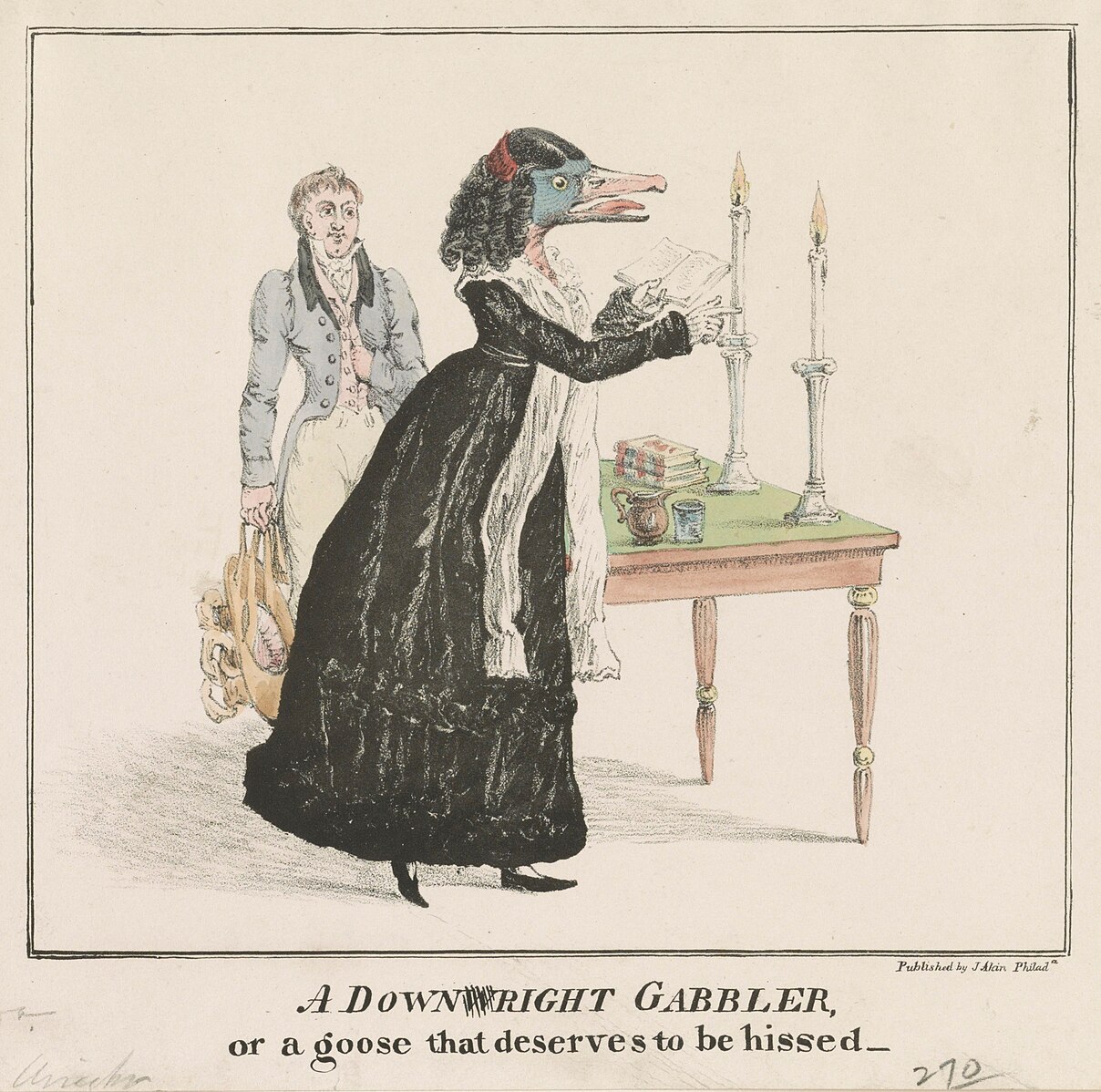
_Akin_Philada._LCCN2002708975.jpg)
By Gary Berton
Frances Wright has been called the “female Thomas Paine.” In important ways, she was. Fanny Wright was the first American feminist, a radical abolitionist, labor champion, powerful public orator, and one of the first philosophers making a public case for freethought. But it does her a disservice to be seen in terms of someone else’s achievements. Even if it’s the incomparable Thomas Paine.
Fanny Wright deserves her own standing as an American hero and her own place of honor in American memory.
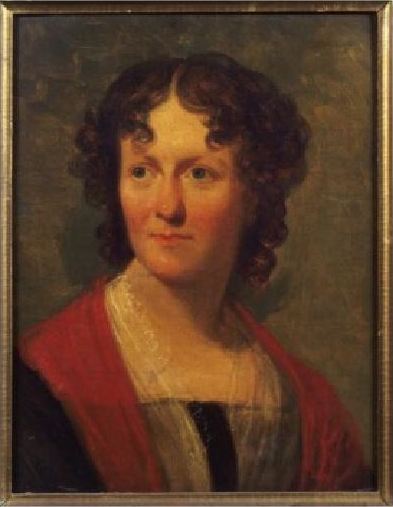

Frances Wright was born 1795 in Scotland to radical parents who supported the French Revolution and disseminated Rights of Man. Orphaned by three, she was raised by a progressive aunt in England who schooled her in the Enlightenment ideas of French materialists like Denis Diderot, who believed the world is made up of one substance, matter, which can be studied and understood.
By age 18, Fanny wrote her first book, the classic freethought treatise, A Few Days in Athens, which supported the ideas of Epicurus, the foundational touchstone for Western freethought and the ideals of free government. Inspired by Democritus, Epicurus asserted all matter is made up of tiny particles, called atoms. Wright finished writing her book in 1813, but it was not published at that time.
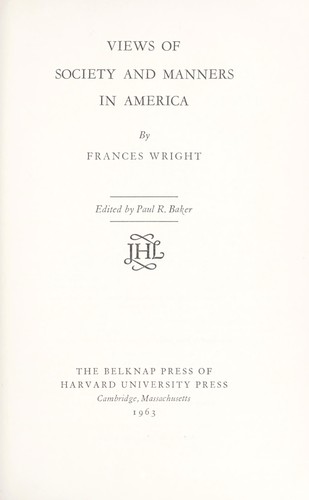
In 1818, she traveled to America and toured the new nation for two years, meeting and exchanging views with many of America’s progressive minds. That experience became Views of Society and Manners in America, the 1821 analysis of U.S. society and government that offered insights well ahead of De Tocqueville’s 1835 Democracy in America. The success of Views enabled Wright to get Athens printed in 1822.
Society and Manners opened doors for Wright. She was introduced in Europe to Lafayette, who admired the book. After a conversation with the author, he admired Fanny’s talent and worldview, as well.
Wright accompanied Lafayette on his trip to America in 1824. They developed a platonic yet close relationship that led to her meeting Robert Owen in Indiana and visiting New Harmony, America’s first socialist community. Wright embraced the ideals of socialism. She also embraced the need to end slavery to save the soul of America. After Lafayette returned to Europe, Wright stayed and became an American citizen.
She launched two projects that would define her for decades to come. With Owen, she started The Free Inquirer, the first freethought newspaper in America, and she began a failed attempt to liberate America’s slaves held as chattel property.
The Free Inquirer set the standard for future freethought periodicals. It served to unite into one philosophical movement the components of progressivism: women’s liberation (including the right to contraception and sexual freedom), abolition of slavery, labor liberation (including socialism), and free universal education. Wright and Owen both embraced these tenets, which were rooted in the works of Thomas Paine.
Although Paine did not specifically spell out these movements, his legacy led to the birth of these 19th century forces, evidenced by early annual celebrations of Paine’s birthday held in the centers of these movements, a trend Wright herself helped to create.
In 1825, Wright helped form a multi-racial community near Memphis on land gained through Lafayette. To justify her plan to educate slaves for freedom. Wright wrote, “A Plan for the Gradual Abolition of Slavery in the United States Without Danger of Loss to the Citizens of the South.” The experiment was plagued with problems — the cost of transporting slaves from Haiti, a free-love atmosphere stirring personal relationship crises, and mismanagement — all leading to its early demise.
Frances Wright is most renowned for being the first woman orator in America. at a time when women were not accepted as public speakers. Starting in 1829, cresting 1833 to 1836, she toured the USA, speaking on women’s sexual and educational liberation, the abolition of slavery, socialism and the evils of capitalism. Tying it together, she spoke on freethought and the absurdity of organized religion.
Drawing thousands to her speeches, She spoke in every major city in America, where “Fanny Wright societies” sprang up as centers for a growing social and political movement. Wright’s success made her the target of an alliance between the clergy and press to oppose her.
Her movement was stymied by being too far ahead of its time, but it produced activists and laid the intellectual groundwork for the latter half of the 19th century when these movements reached maturity.
Wright married in 1838, at age 43 bearing one child. She soon divorced and spent her remaining years in Ohio, releasing compilations of her lectures. She remained inactive except for her involvement with women’s health issues. She died at age 57 in 1852 and was buried in Cincinnati.