
By Gary Berton
Part One of Two Parts
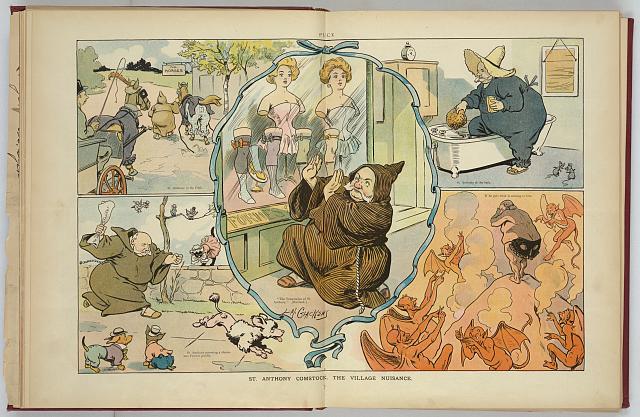
In the wake of the Civil War and the attempt at Reconstruction, the capitalist era entered the Gilded Age, where the wealthy monopolized most of the wealth as the working classes became more impoverished. The reactions to the situation resulted in the activist reform movement. At the same time the federal government took the anti-constitutional step of employing religion to repress that reform movement.
Several groups were forming to oppose the nature of the Gilded Age on such issues as suffrage for women, health services for women, freedom of the press, freethinking, labor organizing, labor rights, race equality, and more. The basic concepts of modern democracy, built on equality, and natural and civil rights, were the foundation of the movement, as established by the life and legacy of Thomas Paine.
Starting in 1872 and completed in 1873, the Comstock Act brought the weapon of religion against these groups. It was named for Anthony Comstock, a zealous Christian anti-“vice”fanatic who was put in charge of using the Act against the democratic forces emerging to challenge the monopoly of wealth, and the repressive nature of society unfolding. To a large extent, this struggle continues.
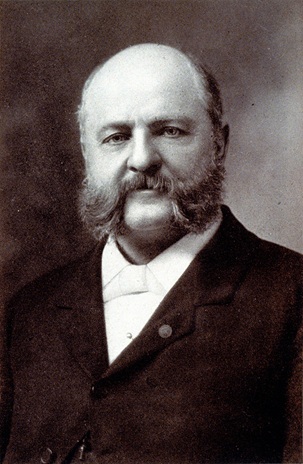
Anthony Comstock was a leader of the New York Society for the Suppression of Vice, whose purpose was to uphold “Christian morality”, which opposed obscene literature, abortion, contraception, masturbation, gambling, prostitution, and patent medicine.
Comstock worked through the Postal Department, using local police, on his authority alone, to enforce “morality.” Anyone sending literature through the mails that Comstock disliked was subject to arrest.
In the same year, and most probably in response, The Truth Seeker magazine was established by D. M. Bennett, with these principles:
Devoted to: science, morals, free thought, free discussions, liberalism, sexual equality, labor reform, progression, free education and whatever tends to elevate and emancipate the human race.
Opposed to: priestcraft, ecclesiasticism, dogmas, creeds, false theology, superstition, bigotry, ignorance, monopolies, aristocracies, privileged classes, tyranny, oppression, and everything that degrades or burdens mankind mentally or physically.
Bennett turned into Comstock’s prime target. In 1878, when Bennett published a piece on free-love, he was imprisoned for nearly a year, destroying his health. Bennett died four years later. (The Truth Seeker today carries on efforts to obtain a posthumous pardon for Bennett.)
In 1878, eventual TPNHA founders Dr. E.B. Foote, T.B. Wakeman, E.A. Chamberlain, and others founded the National Defense Association (NDA) to organize against the Comstock Law. Formation of the NDA, a forerunner of the American Civil Liberties Union, led to dissension in the movement.
The National Liberal League had been a unifying force in the formative period of progressive thinking, advocating its “Nine Demands of Liberalism.” The demands centered around the separation of church and state, opposition to favoritism shown to religious creeds in government functions.
The Liberal League in 1884 split into factions over whether social and political issues other than freethought should be included in their agenda.
A year after Bennett’s death, the Thomas Paine National Historical Association (TPNHA) was formed on January 29, 1884, the anniversary of Paine’s birth. A majority of the Board consisted of people tied to The Truth Seeker. Representing activists who were leading the reform movements, they chose Thomas Paine as the symbol of the democratic struggle, and they created an organization that could coordinate and collaborate on political struggles through one body.
The leading force in TPNHA’s formation was Thaddeus Wakeman, President of the Liberal University in Oregon and later in Missouri, a leading activist in New York politics, a political philosopher, freethinker, publisher of activist literature.
Liberal League leaders became key leaders in founding the TPNHA. Foote, Wakeman and Chamberlain continued to advocate freethinking in such social issues as free speech. women’s rights, labor struggles, and social justice. Integral to this faction was The Truth Seeker, based in Manhattan.
TPNHA’s formation triggered a split with the group led by secularist Robert Ingersoll, who formed the American Secular Union. More conservative Ingersoll never joined TPNHA, yet he was a lifelong Paine advocate.
Formation of TPNHA was part of the developing 19th century drive to inform people about the issues of free speech, labor rights, women’s rights, education, prison reform, and freethought. Thomas Paine was the uniting figure in American history these organizations had in common. The re-establishment of Thomas Paine as a preeminent founding father was part of this public education movement, and that continues today.
Comstock’s law is still on the books as a relic from the period of repression in 19th century America. The old law is now being revived by the latest movement to abolish women’s reproductive rights along with access to reproductive health information and services.