
By Joy Masoff
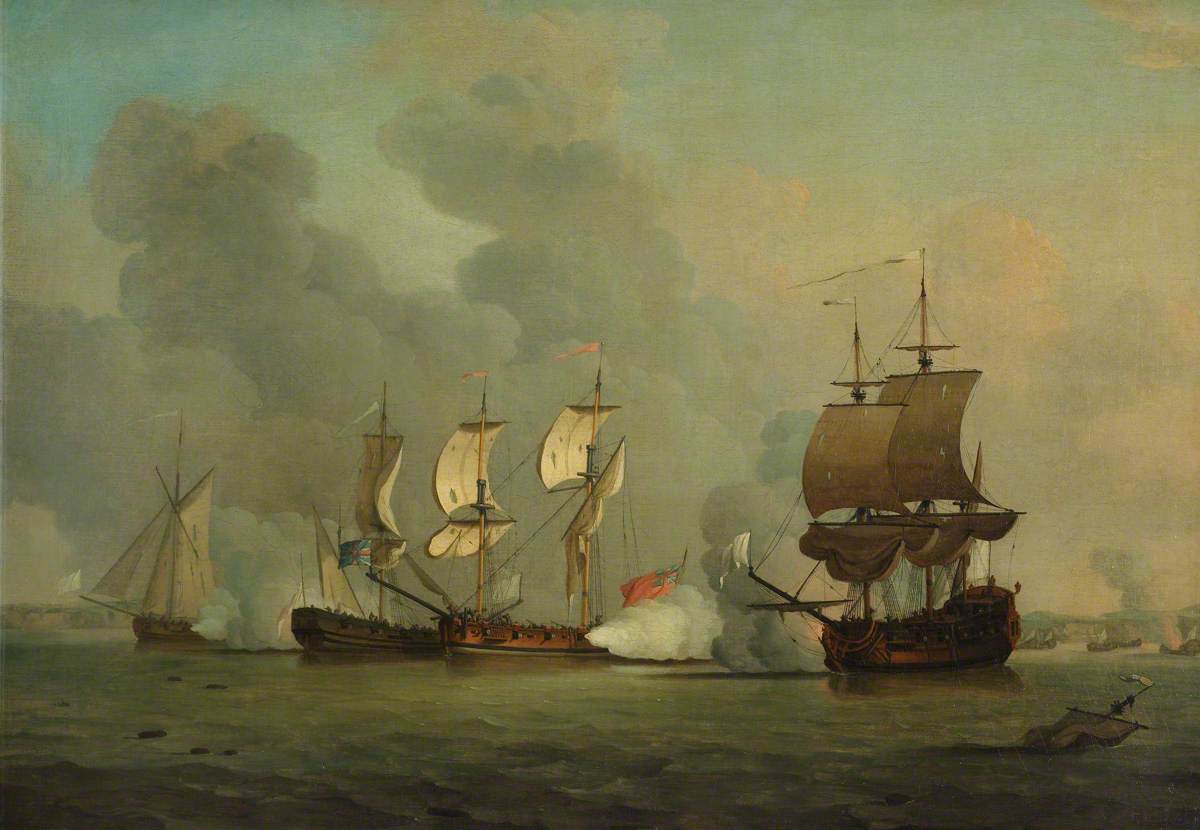
Imagine Thomas Paine as a “raw and adventurous” youth, scurrying up a ship’s rigging in storm-tossed waters, overwhelmed by the booms of two dozen cannons fired in unison, the clouds of choking smoke, and the violent lurches of a shuddering ship. In Age of Reason, Paine recalled the greatest dangers came “not by cannon balls, but by splinters from the inside of the ship that fly in all directions.”
Perhaps Paine’s worldview took shape in war. Paine biographers often cite his Quaker father and Anglican mother, his small-town upbringing in Thetford, his forced departure from schooling at age 12 to apprentice in staymaking, effectively ending his formal education. Debate persists if he made corset stays or rope stays for ships. Either way, for young Thomas, the purgatory of grueling, tedious handwork weighed on him.
In Herman Melville’s Moby Dick, Ishmael went to sea “to hurtle after adventure and to inspect the self in a personal quest for truth and knowledge.” Young Paine apparently felt that same pull of the sea.

He first tried fleeing to the sea in 1756 on the privateer Terrible, commanded by Captain William Death. Paine’s father pursued and begged his son not to go. Good thing, for the Terrible sank midway through its voyage with only a handful of survivors.
Paine’s next escape attempt in 1757 succeeded. He found adventure on the privateer King of Prussia. For more than six months, he pursued prizes from seized French merchant ships, a life-changing event.
In “Thomas Paine, Privateersman,” historian Alice Berry writes, “most privateersmen, like their piratical counterparts, sailed not for the glory of King and country, but for profit.” All hands shared the bounty.
Understudied by biographers of Paine’s youthful years is the impact from his six months of shipboard life amid the Seven Years War. At age 19, he faced his first personal encounter with globalism. Paine worked with or fought against multinational ship crews. All profited directly from their oceanic capitalism.
Privateers had their own sociability. Anthropologist David Graeber in Pirate Enlightenment, describes a “collectivistic ethos” aboard ships of plunder, including privateers. Graeber writes they were “experimenting with new ways of organizing social relations …happening not in the great cities of Europe — still under the control of various Ancien Régimes — but on the margins of the emerging world system, and particularly in the relatively free spaces.”

As an inexperienced sailor, Paine’s job was to be “able-bodied,” ready to fight when needed. A knowledge sponge, he was eager to learn the ways of the sea. His desire to learn from experience led him later to observe about seamanship lessons, “a few able and social sailors will soon instruct… active landsmen in the common work of a ship.”
In his later years Paine told his old friend Thomas “Clio” Rickman that he had “seldom passed five minutes… however circumstanced, in which he did not acquire some knowledge.”
For Paine, as a curious young privateer exposed for the first time to a wide cross-section of humanity and worldviews, life at sea was a kind of higher education in the ways of the world.
Paine’s early practical education was put to good use two decades later when he wrote Common Sense. He was able to knowledgeably present precise costs for building a navy. He accurately calculated the “charge of building a ship of each rate [type], and furnishing her with masts, yards, sails and rigging, together with a proportion of eight months boatswain’s and carpenter’s sea-stores.”
In coming years, Paine’s naval experiences filtered into his fiscal analyses like a political crystal ball to see the future. Paine asserted that for the British, “the expense of the navy is greater than the nation can bear.” He backed up his statement with detailed calculations of the interest rates for the navy debts that Britain was incurring.
In addition to advising his colleagues on the construction and operating costs of navies, he addressed matters of naval invention and engineering by writing about deployment of gunboats for invasion and defense, also the rights of neutral vessels in times of war. His reasoning sprang from knowledge and experience. Paine’s youthful months at sea gave him understanding he carried with him for the rest of his life.
NOTE:
Essay excerpted from Thomas Paine and the Company He Kept, a doctoral dissertation in progress by Joy Masoff, PhD candidate