
New-York tribune (New York [N.Y.]), March 25, 1901
PAINE MONUMENT TO BE MOVED.
Construction of New Boulevard in New Rochelle Makes the Change Necessary.
The transformation of North-st. in New Rochelle-on-the-Sound into a modern boulevard to connect that city with White Plains and the villages on the Hudson River is now in progress. The plans contemplate a macadamized road which will be one of the finest speedways for horsemen, automobilists and wheelmen in Westchester County, if not in the State. The boulevard will be eighty feet wide and three miles long. On each side a wide space will be left for sidewalks, trees and shrubbery.
Aside from its beauty as a drive and scenic attractions, North-st. has historical associations. Years ago it was the favorite route of the stage coaches which were driven from the interior of Connecticut and Westchester County to meet the Sound boats, with their landings at New Rochelle. The first Methodist Episcopal Church in the county and the second in the State stood on this ancient thoroughfare. When George Whitefield, the evangelist, visited this country he preached to large congregations in the old church.
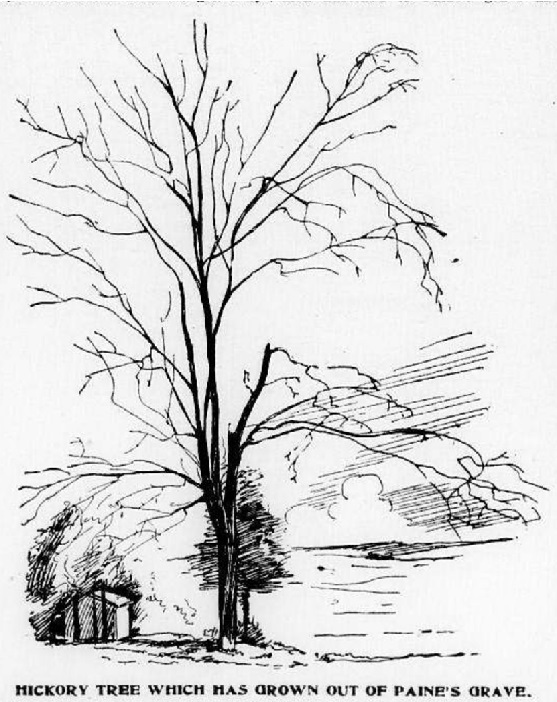
North-st. is also famous because of its associations with the memory of Thomas Paine. To complete the boulevard the Paine monument will have to be moved. This has caused some anxiety to the admirers of the author of The Age of Reason, many of whom live in New Rochelle. It seems probable that land adjoining the present site of the monument will be acquired, so that it can be moved back far enough to make space for the boulevard. The monument was erected fifty years ago.
The body of Paine is not buried near the monument. It was stolen twenty-two years after burial, and is supposed to have been taken to England in a sailboat, where the robber expected to lay it with Shakespeare and Bacon in Westminster Abbey. It is said that the people of England refused to receive it and consigned it to the Thames. Other reports say that the body was exhibited in a museum, and still others that it was taken to the East Indies. The old house, however, in which Paine lived is still standing, and will be visible from the boulevard.