
Thomas Paine’s Common Sense

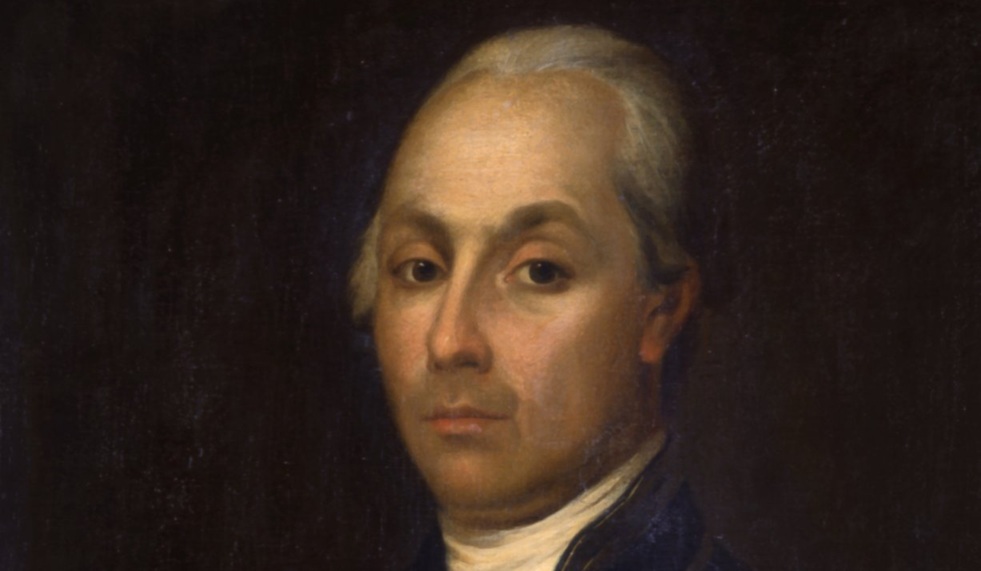
Portrait of Alexander Radishchev

Thomas Paine’s Common Sense As An Inspiration For Alexander Radishchev’s “A Voyage From St Petersburg To Moscow”

Thomas Paine Society UK, TPUK 2001 Number 3 Volume 5

Alexander Radishchev (1749-1802) the first Russian radical and Thomas Paine’s contemporary, was the first to understand Paine’s momentous significance for modern history. Radishchev expressed this view already in the 1870s.

Thomas Paine’s Common Sense As An Inspiration For Alexander Radishchev’s “A Voyage From St Petersburg To Moscow” Read Post »

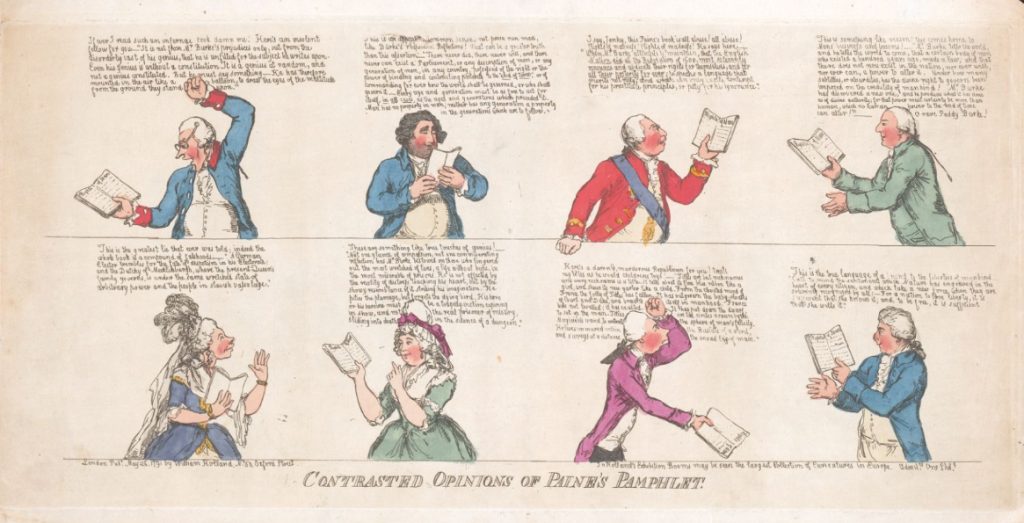
“Contrasted Opinions of Paine’s Pamphlet” is a 1791 intaglio by Frederick George Byron. Eight public figures are depicted reading excerpts from Rights of Man and reacting to them. Charles James Fox, Richard Brinsley Sheridan and Mary Wollstonecraft are the three supporters of Paine’s writings while the rest deplore them – American Philosophical Society

Thomas Paine’s Common Sense, an English Tradition of Radical and the Dissent: The Cato Letters  

Thomas Paine Society UK, TPUK 1981 Number 1 Volume 7

The traditional way of looking at Paine as an Enlightenment political propagandist or as a Newtonian Deist is not explicit enough to distinguish him from others. Nor do these descriptions of Paine enable one to explain why Paine appeals to such a variety of radical, liberal and even conservative causes.

, , ,

Thomas Paine’s Common Sense, an English Tradition of Radical and the Dissent: The Cato Letters   Read Post »

Scroll to Top