Thomas Paine’s Common Sense

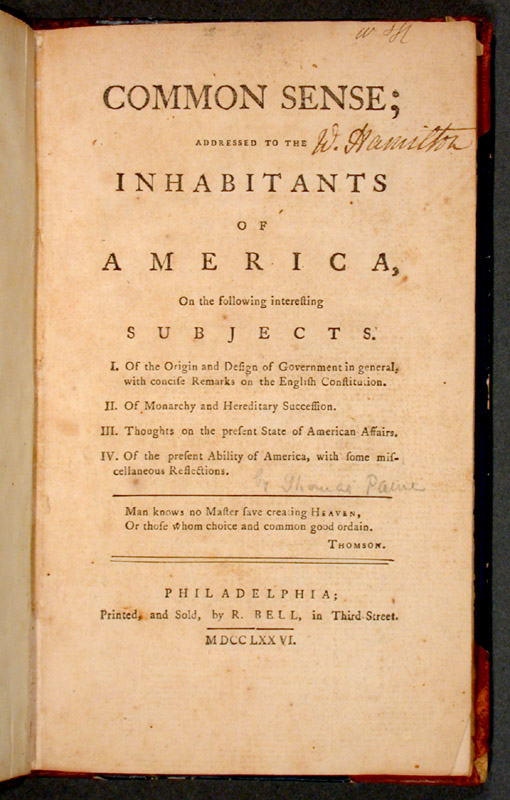
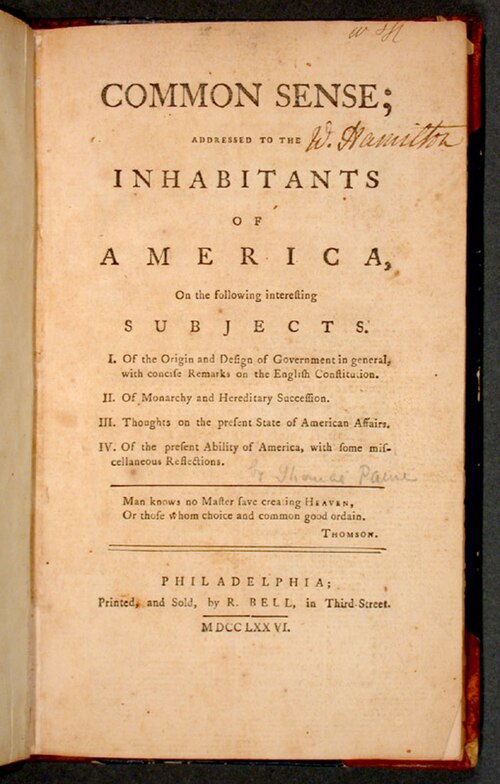
Scan of cover of Common Sense, the pamphlet.

How Thomas Paine Made the Case for an Independent and Democratic America

Beacon January 2026

Common Sense, published in January 1776, is well known for its strong advocacy of independence from Britain. Less known, but of vital importance, is Paine’s insistence that it is essential to create republics in which the people as a whole—not any one person— are sovereign. Ridiculing the unwritten English “Constitution” that all American factions then

How Thomas Paine Made the Case for an Independent and Democratic America Read Post »

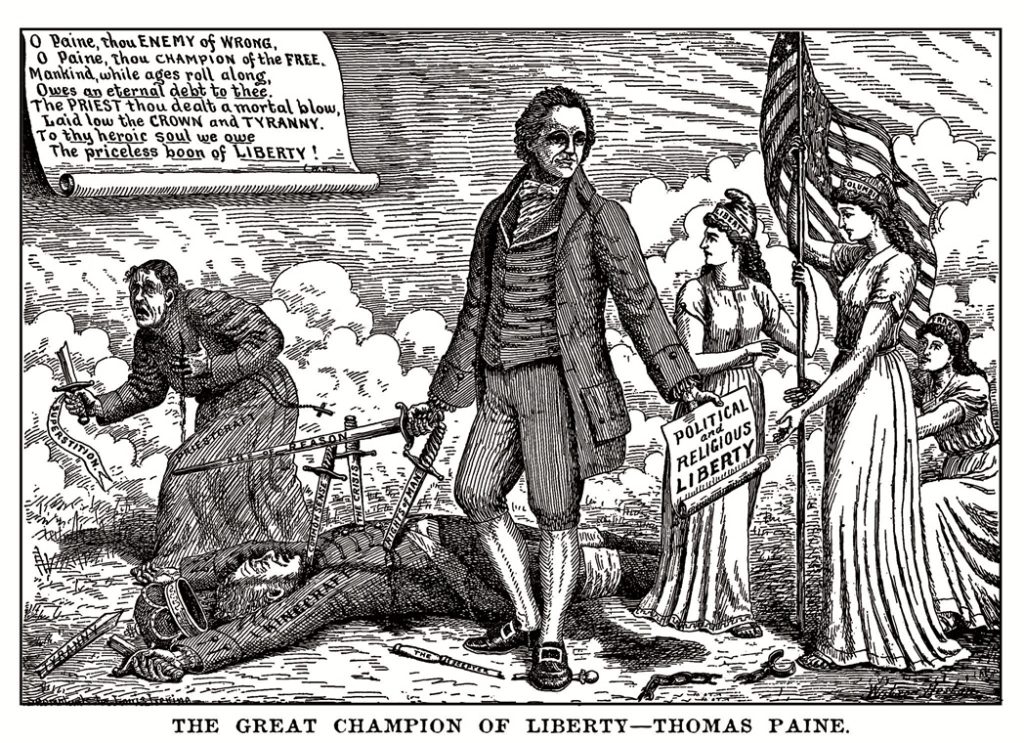
An illustration titled “The Great Champion Of Liberty – Thomas Paine” by Watson Heston from the front page of the September 8, 1894 Truth Seeker magazine showing Paine holding a paper reading “Political and Religious Liberty” having slain a character labled “kingcraft” and driving away another labled “priestcraft”.

Thomas Paine: Founder of Modern Democracy: Part 2 

Beacon, Beacon September 2025

Thomas Paine’s first principles built the structure of democracy. The mechanisms central to Paine’s political theories are rooted in his ideology of first principles. The basic foundation of these principles is equality, and as a direct result, justice. If equality is practiced, then people share equal justice. 

, ,

Thomas Paine: Founder of Modern Democracy: Part 2  Read Post »

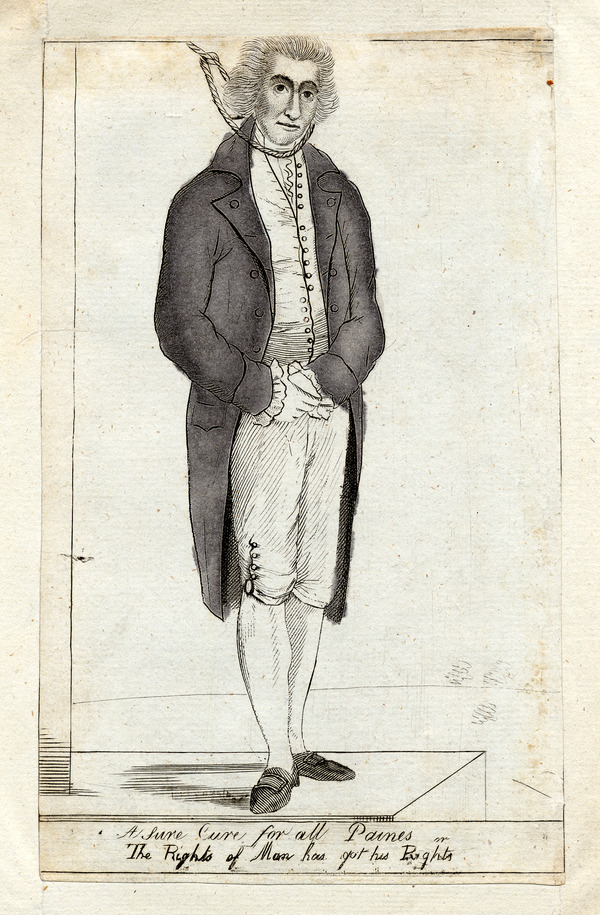
“A Sure Cure for all Paines” or “The Rights of Man has got his Rights” is a 1792 political cartoon showing Paine being hung – American Philosophical Society

Banning Thomas Paine

Beacon, Beacon May 2024

Lukin identified the 32 books most often banned worldwide. Two of those books, Rights of Man and The Age of Reason, were authored by Paine. As true from Common Sense forward, governments purporting to support democracy and free speech will resist the radical impact of Paine’s thoughts.

, , ,

Banning Thomas Paine Read Post »

Marker in Philadelphia, Pennsylvania with the inscription, ‘At his print shop here, Robert Bell published the first edition of Thomas Paine’s revolutionary pamphlet [Common Sense] in January 1776. Arguing for a republican form of government under a written constitution, it played a key role in rallying American support for independence.’ Erected in 1993 by the Pennsylvania Historical and Museum Commission – Photo by J. J. Prats

Common Sense and the Revolutionary Moment 

Beacon, Beacon March 2024

In Common Sense, Paine introduced the concept of modern democracy. This idea is what the “revolution” in the American Revolution rested upon. Self-rule was a by-product of the concept of government “of the people, for the people, by the people.” Before Common Sense, the meaning of “democracy” was diffuse.

Common Sense and the Revolutionary Moment  Read Post »

Scroll to Top