
By Robert W. Morrell
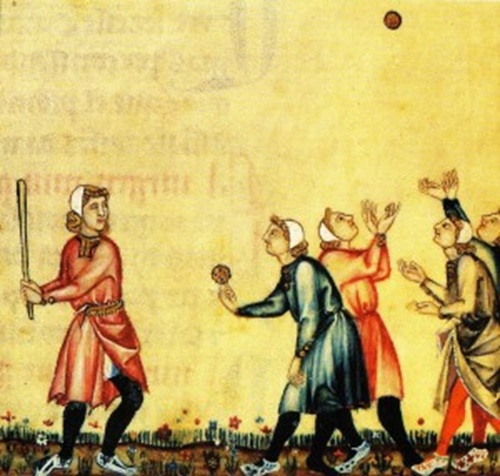

My vision of Paine’s ideal way of spending a convivial and relaxing time has him sitting with a group of like-minded friends or associates in a coffee house or inn debating politics, religion or matters scientific, or, perhaps at some class or lecture on astronomy, a favourite subject of his, for as he once wrote, the inclination of his mind was towards science.
According to his first friendly biographer, William Sherwin, when Paine resided at Lewes he was a member of a bowls club which used to meet at a green in the castle grounds, it was following one such game that having retired for punch and a discussion on politics, Paine conceived the idea for his Rights of Man. However, I would not place great weight on that suggestion, even allowing Sherwin to have been a friend of Paine.
However, it has also been suggested that Paine not only enjoyed a game of bowls but that he also liked cricket. Now while he may have knocked Burke for six, or bowled him out for a birdy, I cannot for the like of me imagine Paine shouldering a bat and heading out onto the cricket field. Yet it is not impossible. Was an interest in the sport one of the dark secrets of Paine’s life for he was always reluctant to divulge personal biographical details?
The question arises because a minute book of the Hambleton Cricket Club has an entry dated August 29, 1796, which lists as being present, “Mr. Tho. Pain Author of the rights of Man” (sic). The meeting is said to have been held at the home of Richard Nyren, who is not listed as being present, while the comment that there had been “no business” could suggest it was a political rather than a sporting gathering, however, as we find this phrase occurring regularly in the club records it might be wrong to endow it with any political significance. Of others present, one Henry Bonham, was a magistrate, another, Charles Coles, became County Sheriff of Sussex in 1779, though most attending, including Paine, were not actually members but guests Mr. Ronald D. Knight, historian of the club, suggests one full member present, John Richards, might also have been a member of the Society for (Promoting) Constitutional Information (pers.comm.). Paine was a member of this organisation and contributed his profits from the sale of Rights ofMan to their funds, so he may have known Richards personally if he too was also a member. Did Richards invite Paine to the meeting, though what point would there have been in him doing so had Paine not been interested in cricket, unless despite the reservation expressed earlier, it was a political gathering.
However, there is another problem. When the meeting was held Paine was in France and recovering from his ordeal in prison. He was also wanted by the English authorities, if only as an outlaw. So to have attended he would have had to enter the country surreptitiously, though as a former exciseman he may well have possessed the skill to do so and to have returned to France after the meeting.
Writing of the meeting, Ashley Mote in his book, The Glory Days of Cricket, The Extraordinary Story of Broadhalermy Down (Robson Books, 1997), remarks that it was obviously the policy of the club to “open membership to the great and the good, even the great and controversial, as a matter of routine”, noting that this “must have done the coffers a power of good”, but he found it difficult to surmise” quite what Mr.Paine was doing in England at the time”. He postulates three possible reasons; first, the record is incorrect; second, Paine had allowed his enthusiasm for the game to exceed his sense of self- preservation, or third, the club had fallen into the hands of a band of wartime conspirators. I incline to the first as the likely probability, and suggest it is possible that a club member sympathetic to Paine’s ideas deliberately added his name simply to upset those in the club who were opposed to them. Could it have been John Richards? Who knows?