
By Robert W. Morrell
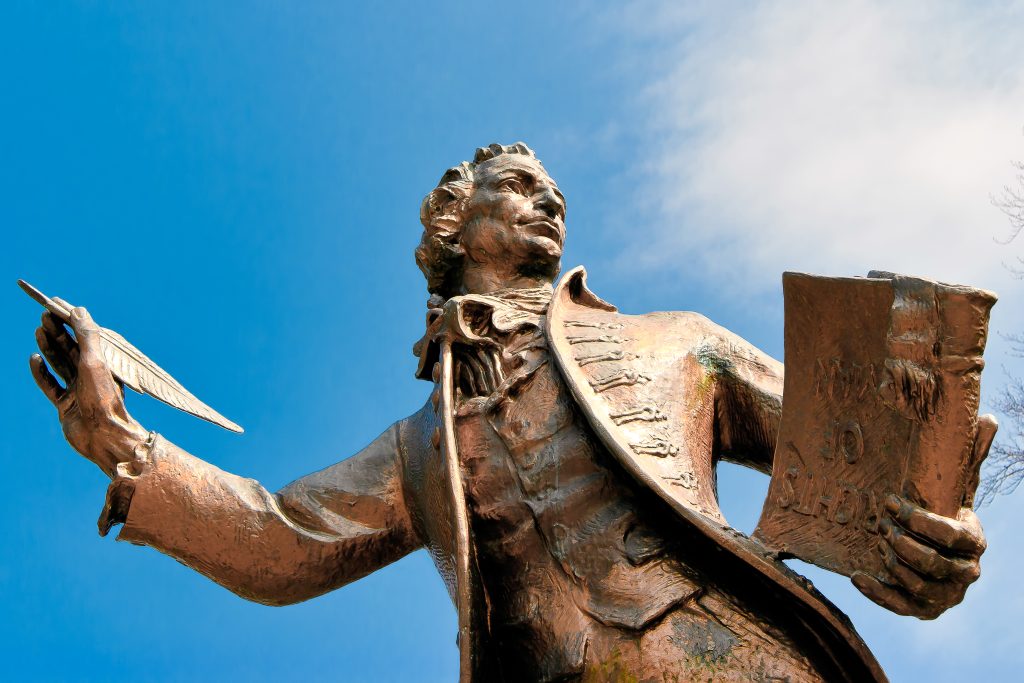
A Political Biography Of Thomas Paine. W. A. SPECK. xv & 258pp. Hardbound. London, Pickering & Chatto, 2013. ISBN 13: 9781848930957. £60.00
For anyone interested in the life and influence of Thomas Paine the appearance of a new biography of him is to be warmly welcomed. Naturally it invites comparison with previous biographical studies, in particular the most recent. It bears out well in relationship to them. What stands out in this new work is its detailed coverage of Paine’s career and his comprehensive treatment of the controversies and issues Paine addressed.
The author draws attention to the problems encountered by biographers due to the gaps in surviving information about Paine’s early life. To some extent he fills some of these gaps, particularly when it comes to Paine’s years in Lewes, in doing this he has drawn on the research undertaken by a retired excise officer of George Hindmarch, though not uncritically, though approvingly citing his contention that there was no such thing as the Headstrong Club, and that Paine had adopted republicanism – “even revolutionary” views as a consequence of his involvement. Professor Speck’s examination of the years Paine spent in Lewes bring out clearly that further research might well pay dividends. A more plausible explanation for Paine’s conversion to republicanism could have been a degree of resentment at the rejection of his Case of the Officers of Excise, over which he had laboured long and hard, and eventually lost his post with the Excise. His resentment, could well have made him more receptive to republicanism when after moving to the American colonies and there became aware of the discontent amongst the colonists to British government policies in respect of the colonies. His final conversion may well have been events at Lexington and Concord, which prompted Paine to write of rejecting ‘the hardened, sullen-tempered Pharaoh of England for ever’. I would have liked to see Professor Speck go into the subject in detail. Whatever, Common Sense became not just a rallying point for the colonists but an exposition of republicanism that had an influence internationally. Yet for all his unqualified republicanism he was to oppose the execution of the deposed French king – at his personal cost, and would, but for an accident, or was it?, followed the king to the guillotine.
Professor Speck refers to Paine’s ability to express himself in a manner readily understood by his targeted readership, artisans, small tradesmen, apprentices and others, an ability that was to alarm the political and religious establishments in England following the publication of Rights of Man which had achieved record sales. Previous Paine biographers have accepted the claim that the first biography of him, written by George Chalmers, who concealed his authorship under the name “Francis Oldys”, which appeared in 1791, had been commissioned and paid by the government, for whom he worked, however, Professor Speck questions the validity of this, and notes that given Chalmers political views [he had fled from the colonies following the outbreak of the revolution] he may have taken it on himself to denounce Paine. The fact that he had access to official papers, as chief clerk to the committee of the Privy Council, he would have had this.
An example, not cited by Speck, of the alarm generated first by Rights of Man and then by The Age of Reason, can be found in a missive addressed to his clergy by the bishop of London, Beilby Porteus. Writing specifically of Paine’s works he refers to “the meanness of their style, and the homeliness, the plainness, and the gross familiarity of their manner, are all too well adapted to the taste and apprehension of those readers whom they are meant to captivate. This”, he goes on, “is a new (his emphasis) species of infidel writing, recently introduced among us. Hitherto we have had to contend with the Tolands, the Tindals, the Bolingbrokes, and the Humes of the age; men, whose writings could fall only into the hands of a few in the higher ranks of life, and were not likely to make much impression on well- informed and well cultivated minds. But the pieces to which I allude [Rights of Man and The Age of Reason] are addressed to the multitude (again his emphasis), and are most dexterously brought down to the level of their understanding”. He continues in a similar vein calling Paine’s works, “most artful snares” (Beilby Porteus. Tracts on Various Subjects. London, Cadell & Davies, 1807. pp.276-278).
Ironically, having roundly condemned Paine’s style of writing he called upon his clergy to emulate it in both their writing and sermonising. Perhaps aware they could not, or would not, in 1792 he begged Hannah More to write something in simple words to open the eyes of uneducated people dazed by the words “liberty” and “equality”. Initially she had refused but then agreed, writing her tract, Village Politics, supposedly about a discussion between a country carpenter Will Chip, who was happy with his inferior social status and defended the political and social status quo, and a supporter of Paine’s ideas, who, naturally, ended up agreeing with Chip. This tract is briefly discussed by Professor Speck.
A Political Biography of Thomas Paine must surely become one of the most important of Paine biographies and deserves a wide readership. It is a detailed overview of Paine’s life and career presented in varying degrees of detail, and written in what is a very readable, almost Paineite style. As well as its nine chapters on Paine and the disputes he became involved in through his writings, many of which retain their relevance and could apply to events and situations today given some minor changes, it also has thirty-four pages of notes, an extensive bibliography and a useful index. One error I noted, the reference to Paine’s Jewish critic David Levi, as being an American, whereas he was English, being by profession a hat-maker turned printer.
A Political Biography of Thomas Paine is a comprehensive and thoughtful work that deserves to be not only in academic libraries but also those of anyone seriously interested in Thomas Paine. However, its high price is regrettably likely to put it beyond the reach of many students, though the Historical Association has just published an essay on Paine by Professor Speck. Priced at £2.99 it is at the time of writing restricted to Kindle, but hopefully the association will publish it in pamphlet form.