
By Clara Roukshina
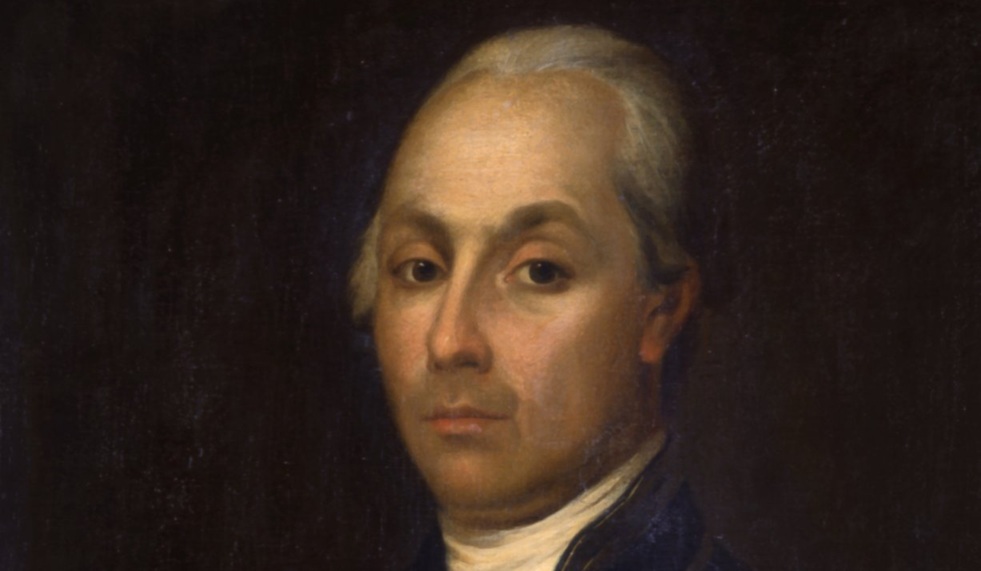

Alexander Radishchev (1749-1802) the first Russian radical and Thomas Paine’s contemporary, was the first to understand Paine’s momentous significance for modern history. Radishchev expressed this view already in the 1870s in two of his most famous works, the ode, Liberty and A Voyage from St. Petersburg to Moscow. Yet he did so without ever mentioning Paine’s name. It has been established that he was familiar with Common Sense (1776) from its restatement in Raynal’s, The History of the Settlements and Trade in the East and West Indies (1780). However, neither does Raynal mention Paine in his book.
Radishchev’s and Raynal’s omission of Paine’s name in their writings stems from the fact that all editions of Common Sense were anonymous until 1791. Both European and American readers considered Franklin (or sometimes John Adams) to have authored the pamphlet. Radishchev shared this misconception. His exalted portrayal of Franklin’s influence does not correspond to Franklin’s actual role at the dawn of the American Revolution. Scholarly literature has so far left this paradox uncommented upon.
Radishchev considers Franklin the discoverer of truths so important to humanity, that he likens the impact of his ideas to the act of divine creation. Believing Paine’s pamphlet to have been written by Franklin, Radishchev acclaims him as the main force behind the overthrowing of monarchy. In his view, Common Sense was like God’s word which gave life to the world, in that it showed a new way of life for all humanity.
Radishchef followed Paine’s footsteps. He was the first European of the Enlightenment period to entirely reject the notion of monarchy and to become a full-fledged Republican. He maintained that Law should be the true King of the state. He advocated liberation of the serfs and full restoration of their natural and civil rights. Radishchev’s hope was that his anonymously written “A Voyage from and Petersburg to Moscow” would have the same historical influence on Russia as Paine’s Common Sense had on America.
In his ode, “Liberty and A Voyage” from St. Petersburg to Moscow, Radishchev acclaimed Paine’s heritage and accepted Paine as his intellectual forefather. The great long goals which Radishchev put forth for his country, seeing the perspective of its historical evolution as its development towards a democratic republic governed by laws, become most topical and urgent for the Russia of today.