
By Terry Liddle
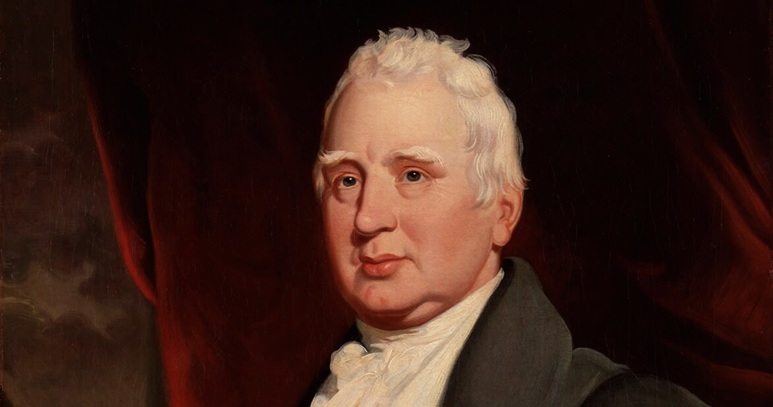
Two Cocks On The Dunghill, William Cobbett and Henry Hunt: Their Friendship, feuds and fights. Penny Young. Twopenny Press, South Lopham, Norfolk, 2009. 384pp Paperback, ISBN 978-0-9561703-0-9. £17.95
There have been numerous biographies of William Cobbett, but only one of Henry Hunt although Hunt was no less an important and prominent figure in early 19th century Radicalism. And this is out of print. This is not an attempt to write another biography of Cobbett or Hunt. Rather it is an explanation of their often troubled relationship.
Cobbett was in essence a self-educated ploughboy. Hunt came from the landed gentry, his family owned or rented 3,000 acres. A spell of six weeks imprisonment in 1800 following a dispute over the killing of pheasants brought Hunt into contact with the radical lawyer Henry Clifford. He came out of prison a convinced radical.
There was continual trouble between Cobbett and Hunt, the cause of much being Cobbett’s wife Nancy. Hunt having married Ann Halcomb, the daughter of a publican in Devizes, had become enamoured of Catherine Vince and eloped with her, while Cobbett was usually highly conventional in such matters. Out of character he made excuses for Hunt. Nancy on the other hand greatly disliked this female aristocrat and referred to her as “the whore on horseback”. The differing personalities of the two women reflected their class origins. When Cobbett first met his wife she was scrubbing out a wash tub, whereas Mrs Vince would have had servants to do her laundry. Nancy was a good cook and could make delicious home-brewed beer. Cobbett urged the English people to abandon drinking stewed tea and return to making home made ale. Mrs Vince would have drunk wine.
When Hunt and Cobbett first met they didn’t hit it off, but as Hunt contributed to Cobbett’s Political Register they grew closer. Hunt developed into a formidable political speaker being dubbed Orator Hunt, a phrase originating with the radical poet turned Tory Robert Southey.
In 1816 Hunt was invited by the Spenceans (followers of Thomas Spence who advocated public ownership of land) to speak at a meeting at Spa Bath Fields (today’s Mount Pleasant sorting office) What Hunt wasn’t told was that the aim of the meeting was to spark off a revolution. Hunt spoke from the window of the Merlin’s Cave pub, but despite his efforts to convince the crowd that violence was futile, that evening doting broke out. A second meeting led to the looting of gun shops which the Tory press blamed Hunt and Cobbett. A third meeting passed off without incident.
However, the government continued with its programme of repression. Hunt spoke in Bristol. ” We want no tumults, no riots, we want only our rights”, he proclaimed. Fearing imprisonment, he had already served two years in Newgate, Cobbett decided his best course of action was to leave for America. In March 1817 he set sail for New York. Hunt was furious that Cobbett had not told him he was going. Other radicals moved to fill the space vacated by him. In his Black Dwarf, Thomas Wooler mercilessly criticised Cobbett, whereas Hunt still chose to defend him.
Cobbett urged Hunt to come to America. One attraction, he wrote, was the land had no Wilberforces. Both regarded Wilberforce as leader of the “canting saints”, while Wilberforce saw Hunt as “the tool of worse and deeper villains” and Cobbett as “the most pernicious of all.”
In 1818 there was to be a General Election. Hunt decided to contest the Westminster Seat. At a meeting in Covent Garden his political opponent Thomas Cleary read a letter from Cobbett written ten years earlier which described Hunt as riding round the country with a whore and urged people to have nothing to do with him. Hunt wrote to Cobbett urging him to come home and to deny having written the letter. In the event Hunt came bottom of the poll with just 48 votes.
In August 1819 at least 60,000 people gathered in St Peter’s Square, Manchester to be addressed by Hunt. Hardly had he started to speak when the Salford and Manchester yeomanry charged the crowd with sabres drawn. At least eighteen people died and over six hundred were injured. Hunt escaped with a cut hand. He was arrested and charged with treason, later changed to seditious conspiracy. In the Political Register, Cobbett began to distance himself from Hunt.
Relations between the two men (Cobbett was now back in England having brought with him the remains of Thomas Paine, these were lost after his death) continued to cool as Hunt was brought to trial. On May 15 he was sentenced to two and half years in Leicester Prison, which was one of the worst in England and it was clear the government’s aim was to kill him or so ruin him in body and spirit he mould no longer be a threat. Beyond o recording Hunt’s name in the list of the imprisoned Cobbett said nothing about this. In his Memoirs, Hunt expressed bitterness and resentment about Cobbett’s flight to America, about how he had neglected and deserted him since his return, about the role played by Mrs Cobbett, blaming her for the collapse of their friendship.
From inside the grim walls of lichester, Hunt conducted a campaign against the terrible conditions and the mistreatment of prisoners including the sexual abuse of female prisoners. Beyond advertising Hunt’s A Peep Into Ilohester Goal, Cobbett did nothing to help. Instead he set out on the series of journeys which became known as his Rural Rides. Hunt was released on October 30, 1822, to widespread demonstrations, but Cobbett said not a word about this in the Political Register. Hunt resumed his life with Mrs Vince and set up a business making substitute coffee from roasted rye.
Towards the end of January, 1823, Hunt appeared again briefly in the Political Register, however, as Ms Young puts it, Cobbett wanted to be “top cock on the dunghill”. This soured his relationships with other radicals referring to them mostly to criticise and undermine them, an exception being Richard Carlile from whose imprisonment Cobbett made political capital. In the Political Register for November 15, 1823 he referred to Peterloo but did not mention Hunt.
Hunt had taken up the issue of Catholic emancipation knowing that the English government would bribe the Catholic clergy to stop them objecting to the loss of people’s voting rights (the government proposed to raise the property qualification) In the Political Register for April, 1825 Cobbett devoted pages to supporting Hunt’s actions.
In 1826 Cobbett decided to stand for parliament and organised a meeting to raise funds at The Freemason’s Tavern in Great Queen Street. Crowded to overcapacity, the meeting ended up being held in Lincoln’s Inn Fields. Hunt was there and the crowd demanded he speak. Cobbett was livid and got his own back in court two weeks later. The jury found Cobbett not guilty of libel and Hunt was ordered to pay £25 costs.
However, following Cobbett’s defeat at an election in Preston the two men again edged towards reconciliation. Both were to meet at a meeting in Covent Garden. Nancy threatened to commit suicide if Cobbett went, but he ignored her threat and when she learned hr had attended she cut her throat with a knife. Although serious the wound was not fatal.
A political dinner at the Crown and Anchor tavern in the Strand ended in a fist fight but brought Cobbett and Hunt closer together. For the next eighteen months the men were good friends. They set up an organization, the Radical Reform Society to agitate for annual parliaments, universal suffrage and vote by ballot. While Cobbett was willing to compromise and if needs be dilute, Hunt stuck firmly to his principles. Cobbett also objected to Republican speakers like Hunt’s friend John Gale Jones being invited to address meetings. Once more relations between the two men soured. The situation turned bizarre when Nancy Cobbett thought that Cobbett’s secretary had rid himself of his drunken and adulterous wife so he could have a gay affair with Cobbett, an extreme homophobe. The accusation indicates Nancy’s state of mind.
Both men would achieve their ambition of being elected to parliament, although Cobbett lost his seat for opposing the Reform Bill of 1832 which he thought didn’t go far enough. Having suffered two strokes, Hunt still toured the north including Manchester early in 1834. He died on February 13, 1835. Cobbett some weeks later in June. Had the two been able to overcome their differences, had Hunt led a more regular life and Cobbett been able to address what were undoubtedly his wife’s mental health problems, the course of radical history in the first part of the nineteenth century may have been somewhat different.
Two Cocks On The Dunghill is illustrated with some very interesting contemporary cartoons and two colour plates. But it suffers from a multitude of typographical errors, proof, if it was needed, that manuscripts should be thoroughly proof read before going to the printers. Nevertheless, it remains a valuable contribution to early nineteenth century political history.