
Blue-grass blade (Lexington, Ky.), February 14, 1904
HONOR THE BIRTHDAY OF THOMAS PAINE
From Los Angeles, Calif., Herald.
The anniversary of the birth of Thomas Paine was fittingly celebrated by the Liberals of Los Angeles last night.
Addresses and discussions of the varied phases of Paine’s greatness as a reformer were participated in by a number of local speakers.
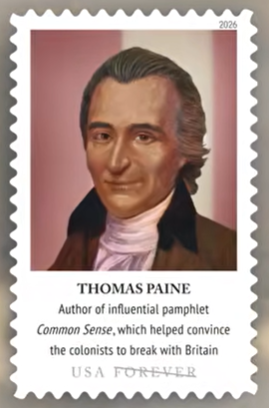
W. C. Bowman, who acted as chairman, said that Paine was one of the greatest champions that the world had ever seen on behalf of civil and religious liberty.
For over a hundred years since the American Revolution, he said, his name was studiously ignored in high places. When it was mentioned it was only in odium and defamation, as a religious warning to the young.
Yet with all the defamation, Paine was the only man of his day whose birthday was regularly observed the world over.
Surely truth crushed to earth would rise again.
T. W. Williams discussed “The Man Paine.”
Paine lived at a time, said he, when the world was moved by ignorance and religious intolerance.
His ruling maxim was that if there must be trouble let it come in his day, that his children might have peace.
The only true patriotism is a sacrifice of the present for the future.
He was the enemy of Toryism and toadyism.
He stood for liberty in religion and liberty in politics.
In fact, it was he that made it possible for us to have our elective franchise.
The speaker went on to discuss the right and justice of Paine’s sentiments and wound up with the hope that future generations would live to enjoy the freedom which Paine sought to inculcate.
Freedom as taught by Paine was the subject of the remarks made by Frank L. Wheat. He eulogized the man as an all-around genius. He said that there was no freedom in religion; that religion filled up a whole world of the interests of humanity and came to be monopolized by the men who dominated the world. History, said he, was the struggle of the few to hold the mastery. Only labor never dominated and never domineered. The grasping hand for power was found in everything else—in politics, in religion and in education.
Religion, said Mr. Wheat, is one of the most tremendous powers to hold the rest of the world in bondage. It was because the men of his day felt that the writings of Thomas Paine were taking away the unjust advantages they held through religion that they hated him. It was only religion that could blacken his name for a generation or two.
Mr. Wheat went on to state that religion was of our own creation, not something whose mandates we are bound to obey. He talked of the old evangelism and the new evangelism, which sought to strangle the old while it directed us to love one another.
Washington said that Paine had done more with his pen than he had with his sword toward the freedom of the American people, and as a matter of fact it was the writings of Paine that had kept up the drooping spirits of the disheartened, starving patriots.
The speaker went on to discuss the right and justice of Paine’s sentiments and wound up with the hope that future generations would live to enjoy the freedom which Paine sought to inculcate.
(FAILED TO SCAN SECTION)
Freedom as taught by Paine was the subject of the remarks made by Frank L. Wheat.
He eulogized the man as an all-around genius.
He said that there was no freedom in religion; that religion filled up a whole world of the interests of humanity and came to be monopolized by the men who dominated the world.
History, said he, was the struggle of the few to hold the mastery.
Only labor never dominated and never domineered.
The grasping hand for power was found in everything else—in politics, in religion and in education.
Religion, said Mr. Wheat, is one of the most tremendous powers to hold the rest of the world in bondage.
It was because the men of his day felt that the writings of Thomas Paine were taking away the unjust advantages they held through religion that they hated him.
It was only religion that could blacken his name for a generation or two.
Mr. Wheat went on to state that religion was of our own creation, not something whose mandates we are bound to obey.
He talked of the old evangelism and the new evangelism, which sought to strangle the old while it directed us to love one another.