
Dollar weekly mirror (Manchester, N.H.), April 10, 1858
New Rochelle, N. Y., March 30, 1858
By P. Q. C. B.
Manhattan Island.
From our New York correspondent
Dear Mirror:—Business, a few days ago, called me from New York to this village, and before immediate duties demanded my care I took a stroll of 1½ miles from the village to the tomb of the author of “The Age of Reason” and “Common Sense.”
Years ago I had read “some of the infidel works of the day and imbibed a few of the (liberal?) ideas then promulgated, and though I have since been led to see the fallacy and great sinfulness of embracing such doctrines, I could not refrain from seeing with my own eyes, where lay the remains of one, towards whom many souls will point in the great day of accounts, as the author of of their eternal sorrow.
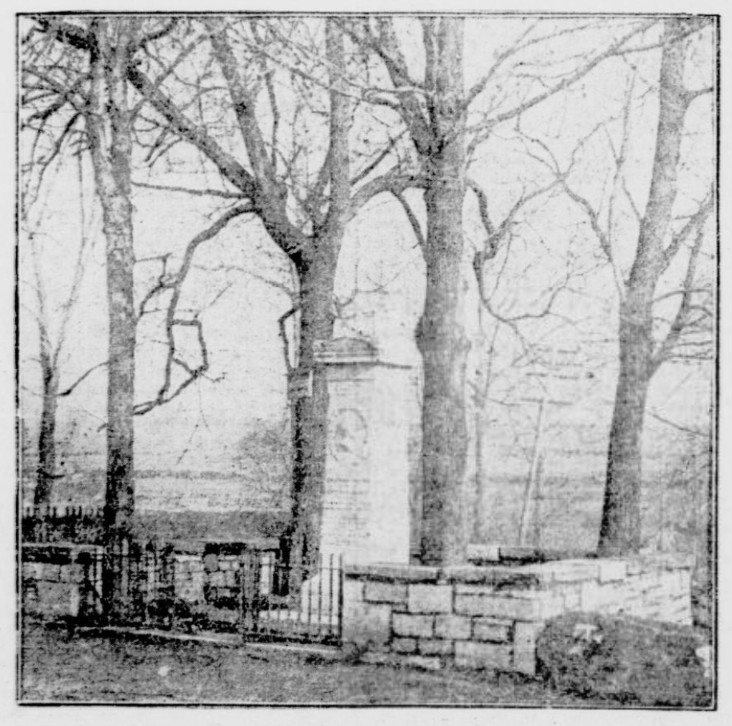
The monument stands on the right of the road, about one mile from the village. It is nine feet high, two and one half feet square at base and narrowing towards the top, and is surmounted by an ornamental cap-stone. Engraven on the marble is the noted scoffer’s profile, surrounded by an oaken wreath. The inscription reads as follows:
THOMAS PAINE,
Author of
“Common Sense.”
Erected by
PUBLIC CONTRIBUTIONS.
The whole is surrounded by a stone wall about twenty feet square, one and a half feet thick, and five feet high. Within the enclosure grow briars and weeds, and neglect appears on every hand. It is the custom of sportsmen as they pass the monument to fire upon it, and fifty or seventy-five bullet and shot marks are spread over the inscription and profile.
And this is the Tomb of Thomas Paine. Almost everybody knows who he was, what was his course through life, what were his literary productions, their tendency, and how the last few years of his life were spent. Some have been rash enough to state, that were it not for his outspoken sentiments, we had not been a free people. If the age of miracles had not passed, how would the patriots of the Revolution rise in their winding sheets to repel such an outrage, as sacrilege. It is an insult to the intelligence of our people to harbor such a thought, and I am free to believe that where you will find one such admirer of the soul-destroying doctrine of Paine as Mrs. Ernestine L. Rose, you will notice five hundred, yes, one thousand men and women, who will forever execrate his memory. If the youth of our land who have imbibed the poison of infidelity could now be arrayed once (and but once) before Thomas Paine and hear him relate with the eloquence of actual knowledge, what mean those words, “The undying worm and the fire that is never quenched,” they would turn from the polluted page which meets their gaze, and seek refuge in works of a higher and nobler character. Let those who have the interest and happiness of our people at heart, do something towards blotting out from existence all volumes, through whose pages steals the insidious charm which clothes Thomas Paine’s “Age of Reason” and “Common Sense.”
Young men, I speak to you; you have a soul to save.