
By Kenneth W. Burchell
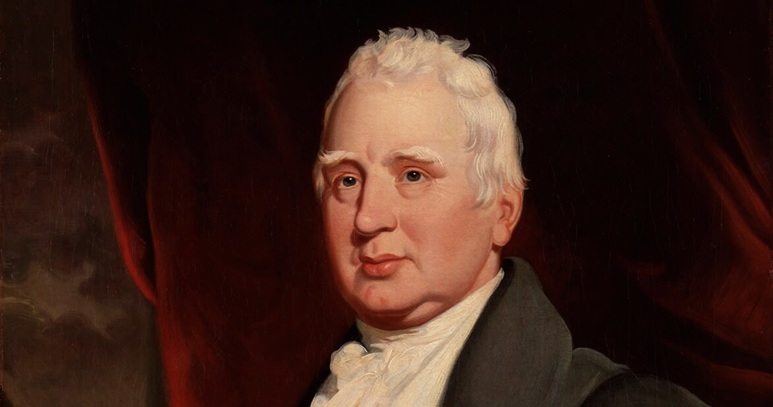

First let me say what a great pleasure it is to read the Journal of Radical History (hereinafter JRH). There is always a great deal to ponder and often a good deal of useful information and/or history. Thanks to the Thomas Paine Society for publishing it.
A recent article by Leo Bressler entitled ‘Peter Porcupine and the Bones of Thomas Paine’ gives pause to consider the nature of history; particularly the nature of good history.
1. Bressler says Paine “died in poverty”. He most certainly did not. His friends visited and sat with him until the end and when he died he left a considerable estate valued at around $7500.00 in liquid assets apart and aside from his 300 acre farm in New Rochelle. According to the Economic History Centre, and depending on how you compute it, that would equate in today’s dollars something like this:
$111,518.92 using the Consumer Price Index.
$109.889.04 using the GDP deflector.
$1,084.791.78 using the unskilled wage.
$2,664. using the GDP per capita.
$110,106.191.02 using the relative share GDP.
Paine was no pauper. The testimony of those who knew him is that he was abstemious in personal habit but with the need to be generous to a fault.
2. Bressler describes Madame Bonneville as “a French Catholic whom Paine had befriended along with her children, when she was widowed”. That statement is just as inaccurate as the previous. To the contrary, Paine resided with Madame Bonneville and her husband Nicholas and their family in Paris, from approximately 1797 to 1802. Nicholas was a prominent publisher, freemason and at the centre of the Cede Social… and a very close friend and associate of Paine’s. He was placed under surveillance and virtual house arrest, his safety compromised and his press suspended under Napoleon’s regime. Paine welcomed his wife and sons to shelter in America. He supported them and his Last Will and Testament provided for the boys’ education upon his death. Conway has it about right when he describes how Nicholas rejoined his wife in America after he was “relieved of his surveillance, hastened to New York, where he and his family were reunited, and enjoying the happiness provided by Paine’s self- sacrificing economy” (Moncure Conway. The Life of Thomas Paine. Putnam & Sons, 1908).
3. Bressler’s statement that “Cobbett had come first to the United States in 1792” is technically correct, but he leaves the wrong impression since Cobbett came to America for the first time seven years earlier in 1785 when he served in Nova Scotia and New Brunswick with a military regiment. He lived in America about four years on that occasion.
4. The editor of this journal has already properly observed that, contrary to Bressler’s assertion, Cobbett was never flogged.
5. Bressler says that Cobbett “had become almost as much a crusader for human rights as Paine had been”. There is no wish on my part nor would it be possible to detract from the influential and amazing career of Cobbett, but to compare him to Paine is a stretch. Even in his later more radical phase (he was a hidebound and antagonistic Tory apologist in his early years) Cobbett never achieved anything near the democratic perspective or influence of Thomas Paine. Cobbett ever looked to the somewhat chimerical “English Constitution” or the mythical Saxon one for precedent. Paine’s radically democratic conception repudiated the Constitutionalism of Cobbett and others, has never yet been achieved, and still electrifies the mind today:
“There never did, there never will, and there never can exist a parliament, or any description of man, or any generation of men, in any country, possessed of the right or the power of binding and controlling posterity to the “end of time”, or of commanding for ever how the world shall be governed, or who shall govern it; …Every age and generation must be free to act for itself, in all cases, as the ages and generations that preceded it. The vanity and presumption of governing beyond the grave, is the most ridiculous and insolent of all tyrannies…It is the living, and not the dead, that are to be accommodated…That which a whole nation chooses to do, it has a right to do”. (Thomas Paine. Rights of Man, Part 1).
6. Bressler says that Cobbett “requested permission to disinter Paine’s bones. After encountering some difficulty, he was granted permission in 1819”. No such thing ever happened. First of all, no civil or statutory authority had the power to give that permission. With the provisio that, like Paine, I shall be happy to be proven wrong (and thereby learn and profit by experience). I should like to know where Bressler came up with this bit of fantasy; perhaps the grave robber’s own self-serving account? Factually, Cobbett desecrated Paine’s grave in the early hours before sunrise and fled to New York City with a Westchester deputy in pursuit.
7. Bressler states that “it too a great deal of courage for Corbett to bring the remains of Paine to England”. Courage? More like a shameless self-serving gall. Cobbett may be said to have violated every landmark of honour and propriety through his actions and additionally to have violated the last wish of the man he claimed to admire. Paine’s Last Will and Testament stated unequivocally that he wished to be interred on his farm in New Rochelle and he never gave the slightest inkling of any desire that his remains remain anywhere else but in America.
8. Bressler cites Cobbett’s complaint that “Former friends shrugged their shoulders and looked hard in my face, as if in wonder”. No doubt. They were doubtless shocked to find themselves in the company of a grave robber. As such, he was lucky any friends kept by him whatsoever. Many believed him mad; it seems reasonable to observe that he showed signs of derangement.
9. Bressler refers to “Cobbett’s noble project”. The phrase is shocking and bereft of common sense.
10. Bressler says that “three years after Cobbett’s death the United States belatedly erected a monument to Paine in New Rochelle”. Nothing of the sort. The modest marble column was erected through the efforts of publisher Gilbert Vale and a relatively small group of radical reformers and freethinkers with connections in the Working Men and Loco Foco/Equal.
Cobbett’s grim folly not only fell predictably on its face, it resulted in the scattering and loss of Paine’s remains. Beilby Porteus (1731-1809)
The author concludes by saying “in some sense the monument was also a tribute to William Cobbett”. If the essay’s conclusions follow from its premises, we may well question the author’s judgement.
Coeur d’Alene,
Idaho, USA.
© Kenneth W. Burchell, 2005. All rights reserved. Non profit users may reprint with author’s copyright cited as above.