
By R.W. Morrell
On January 29, 1799, Daniel Holt died of tuberculosis in the small Nottinghamshire town of Newark, at the early age of 33. Few people, even in his hometown, appear to have heard of him, yet for the latter part of his short life he did much to promote in Nottinghamshire radical political reform and what we now popularly term human rights, being, in so far as I can discover, the only person in the county to have been prosecuted for printing and publishing a work by Thomas Paine.
Holt’s father, Simeon (he may have changed this to Simon, as he is listed in a trades directory of 1784 as Simon Holt), a native of Edmondsthorpe Leicestershire, settled in Newark with his wife Mary, where he established himself as a nurseryman and seedsman. His business prospered and he appears to have had a happy married life, his wife giving birth to five children, four boys and a girl, of which Daniel was the second oldest, being born in April 1766 and baptised at Newark’s parish church of St. Mary Magdalen on the 25th. of that month. No record as to where he was educated appears to have survived, but considering he was to become a printer, bookbinder, stationer, writer, poet, newspaper editor, bookseller and, of all things, upholsterer, the presupposition must be that he may well have attended the Magnus Grammar School in the town, although there is no reference to him in its published history.1 Interestingly, Holt’s older radical contemporary, Major John Cartwright (1740-1824), received his education at the school. There is no record of the two having become friends, though this is quite probable considering the similarity in their political opinions, however, they are certainly known to have met.
Holt served a seven year apprenticeship in the shop of the Newark printer, James Tomlinson, but set up in business (competition) for himself shortly after completing it, perhaps with financial help from his father. At what date he did so is not on record, however, assuming he was about fourteen when he took out his apprentices’s indentures it would have been some time after 1787 but prior to 1790, for in that year he printed a work entitled, The Old and New Charter granted to the Town of Newark by Charles I and Charles II.
MJ. Smith has suggested it was before 17892 for on February 19th of that year he married Eliza Hankin by license , although Smith does not name her.3 His wife was to give him four children, three boys and a girl, one of the former dying in infancy.
Had Daniel Holt been content to remain an apolitical small town tradesman he would probably have lived far longer and left a flourishing business to his heirs. But he was a man of principle who refused to keep quiet about his political convictions which were opposed to those of the dukes of Newcastle and Rutland and the Sutton and Manners families, who were related to the latter and who collectively controlled the town council, even the town clerk, Job Brough, was also an employee of the duke of Newcastle. There were, of course, many in Newark who shared Holt’s radicalism and local elections often tended to be bitter, sometimes violent, encounters between the blues and the reds, as the two major political factions were termed. Ironically, in light of current usage, the blues were the radicals while the reds were the ‘constitutionalists’, as they liked to be thought of, although, as might be expected, there were times when the distinction between the two became blurred. Holt first exhibited his political colour when he publicly espoused the cause of the radical candi- date, Richard Paxton, in the election of 1790. In his account of the two month electoral campaign he clearly implies there to have been considerable irregu- larities in the poll in which, it should be added, Paxton came last.4
According to Thomas Blagg, Holt founded Newark’s first newspaper in 1791, calling it, The Newark Herald5 its full title being, The Newark Herald and Nottinghamshire and Lincolnshire General Advertiser, the first issue was published on Wednesday, October 5, from Holt’s shop in Stodman street, a narrow thoroughfare which still exists and leads to Newark’s market square, the focal point of the town then as now. The location of the shop in the street is now uncertain for the practice of numbering individual premises had not been introduced when Holt lived, however, a clue is provided by Blagg who wrote of it being ‘on the site of the (Newark) Advertiser publishing offices’6 although he offers no evidence supportive of this. It is known that when Blagg wrote the Advertiser offices were at 30 Stodman street, but as the practice of using street numbers appears to have been discontinued by all but a few shops in present-day Stodman street, we are left to guess just where number thirty was. However, as a handful of numbers can still be seen I calculate on the basis of these that Holt’s shop was located where Boots now stands, although I stand to be corrected on this.
Although Holt claimed his paper would be politically neutral, it became obvious from the first issue that this was not the case and it would be strongly supportive of radical and reform causes, although his political philosophy can hardly be described as extreme or even revolutionary, an opinion perhaps not shared by those of his local contemporaries opposed to his beliefs. As there were no church rates in the town it had a considerable electorate, in fact one of the largest in the country, a fact which made elections in the town extremely interesting. Newcastle and Rutland and their associates may have considered it a ‘pocket borough’ but they could not rely upon it remaining so, particularly as the town’s newspaper was hostile to them. The many radical supporters in the town must be considered to have formed the customer base for the Herald, though to be fair to Holt he did seek to cater for the non-radical elements in the local population by publishing news of the views and activities of those with whose political beliefs he differed strongly from. Nevertheless, overall his paper was clearly radical in its selection of political information. Detailed coverage was given to national and international events, which in respect of the latter tended to emphasise what was happening in France, being presented in a supportive or sympathetic manner. He certainly appears to have taken some pleasure in the news of the abolition of aristocratic and ecclesiastical titles in France, if the space devoted to the news is anything to go upon.7 Holt was a strong opponent of the slave trade and gave extensive and prominent coverage to parliamentary debates about it. Notice was also taken of the activities of radical organisations, among them a commemorative celebration held in London by the Revolution Society (the revolution in question being that which had overthrown Charles I) attended by many leading radicals, including Thomas Paine, whose health was toasted during the proceedings.8 All in all, Holt’s newspaper, a weekly not a daily, represents a good example of a late 18th century provincial paper, perhaps at times a bit long-winded or even pompous, but even now still very readable.
Poetry was a regular feature of the Herald, many of the offerings, all anonymous in respect of the author, being political in content which, one suspects, were written by Holt himself. Some versified sympathetically, if not enviously, about France, one of the earliest being tided: ‘Ode on a Distant View of France from Dover Cliff’, which envisioned Franco-British co-operation once the political situation in Britain had changed. A few sample lines read:
Militant shadows – hence away!
His to some dark, unletter’d shore!
Behold the dawn of reasons day –
Britain and France contend no more.
In Freedom’s cause from age to age,
Shall both with equal warmth engage,
Pursue the same exalted plan,
And vindicate on Earth the RIGHTS OF MAN.
Another rather longer poem, which I have little hesitation in attributing to Holt, takes Edmund Burke to task with a vengeance, tearing into him with no holds barred. It is entitled, ‘The Life, Death and Wonderful Achievements of Edmund Burke’,9 three sample verses follow:
But heavens ills on Edmund wait,
He seeks to `scape in vain –
For but there nish’d a fierce foe,
Whose dreaded name was Paine
This dreaded foe when Edmund saw,
He felt his fate and sigh’d.
But ere the approaching blow could fall,
He fainted, gasped and died.
And now this wandering spectre walks,
By night and shy by day,
A warning to the thoughtless crew,
That beauty leads astray.
Hardly brilliant poetry, but typical of late 18th century political verse (many radicals, including Paine, were inclined at times to get poetic, as were their opponents, whose efforts can be found in the pages of The Antilarobin). The reference to the death of Burke is odd, for he did not die until 1797, so perhaps this is a coded reference to his failure to reply to Paine’s Rights of Man, which had been published in February, 1791, being the most effective reply to Burke’s defence of privilege in pre-revolutionary France and his musings on government as offered in his book, Reflections on the Revolution in France (1791).
In the Newark Herald’s issue for February 22, 1792, Holt published an extract from Part 2 of Rights of Man, describing it as ‘just published’ and prefacing the extract with the following comment: ‘From this masterly publication, we shall continue to lay before our readers extracts as will be generally interesting, from the discussion which it will undoubtedly occasion’. However, he does not appear to have put this promise into effect for no further extracts appeared in the paper, presumably because the second part of Rights of Man had been banned when Paine had been found guilty of seditious libel, for Holt said he had stopped selling the book ‘as soon as it was judged a libel’,10 however, he did publish Paine’s letter to Lord Onslow Cranley11 and devoted an entire page to his letter to Henry Dundas, then the Home Secretary.12
In his final issue, Holt refers to having only planned to publish his paper for three years, a comment which does not ring true. He goes on to say it would now become The Midland Mercury, making it clear he would not be running the new paper, although he commends it to his readers. From the single issue of this scarce publication I have examined it seemed to lack the vigour of the Herald, which may explain why it folded after only twenty-five issues, the title being acquired by the Leicester radical publisher and bookseller, Richard Phillips, who merged it with his own Leicester Herald. Phillips had been imprisoned for selling Paine’s Rights of Man, but eventually made his peace with the establishment and ended up with a knighthood! Holt printed another paper, The Briton, from the first issue dated January 23, 1793 to what appears to have been its final issue dated January 22, 1794. Whether he contributed anything to it is impossible to say, but it is made clear on the title page of what can best be described as a weekly pamphlet concentrating on a single issue that he only printed it, ‘for the editors’, who, like all contributors, remained anonymous. The first issue took a swipe at enthusiastic republicans, mentioning Paine by name, while later in the same issue there is a reference to ‘the impecius rhapsodies’ of Paine and Burke. Those behind The Briton saw it as a publication of moderation, or as the title of the only article in No.23 reads, ‘Moderation the Test of Understanding’. Only one article really can be said to reflect Holt’s views and that is No.62, which is taken up with an essay in the form of a dialogue between two people about the slave trade, coming down heavily points wise against it. Whether Holt compiled this one cannot say but he may have. There is no doubt that he promoted the new publication with some enthusiasm, even sending the first issue out free of charge, presumably to subscribers to his own paper. A notice published in the Herald describes The Briton as being unconnected with any party and ‘totally attached to the public good’, a form of words echoing Holt’s announcement in the Herald in January 1793, that he adhered to ‘the party of the people.’13
Appearing in the Herald for May 30, 1792, was the text of the ‘Kings Proclamation’, which was repeated in a subsequent issue. This was aimed specifically at Thomas Paine and the second part of his Rights of Man, although neither he or his book are named. The proclamation was instrumental in prompting ‘patriots’ throughout the country to hold meetings which passed addresses condemning Paine. Responding to these he threw caution to the wind and replied with his, An Address to the Addressers on the Late Proclamation, which, as the Paine scholar, A.O.Aldridge, observed, was certainly seditious, being an ‘open appeal for swift and immediate revolution.14 Holt rather unwisely played into the hands of his political enemies by reprinting the Address as a separate publication so what followed was predictable, the newly formed Newark Association for the Support of the Constitution instituting proceedings against him on the grounds that in publishing Paine’s letter, and another by John Cartwright, he has committed seditious libel. Holt was in prison when the charge was brought against him for early in 1793 he had been found guilty at the Nottingham Assizes of having libelled the Newark Town Clerk, Job Brough in his Complete Collection of the Papers… (see ref. 5) and had been sentenced to six months in prison plus a fine of £50 on May 11. Abigail Gawthern of Nottingham, a relative of Brough, described him in her private diary following his death after a riding accident in January 1806 as `a worthy man and much respected’.15 It is possible that despite the political differences between the two Brough, a solicitor, would have withdrawn his action had Holt made a public apology, however, there was a stubborn streak to his character and no apology was forthcoming. However, as the jury in the libel case was a special jury, the possibility of there being a political element behind Brough’s decision to sue Holt cannot be excluded. from consideration. Brough was, after all, known to be in the pay of the duke of Newcastle, against whom Holt had campaigned. In having him sent to prison the red element in Newark had got rid, at least for a time, of a political `gadfly’ who they would have liked to, but could not, ignore.
On July 19, 1793, Holt was again in court, this time charged on an ex officio information with seditious libel, presumably provided by a member of the Newark Association, as in his Vindication Holt refers to a clergyman, who he knew was a supporter of the association, having come into his shop and asked to buy a copy of Rights of Man, which he had refused to sell him as it was a banned book, even though the ban only applied to Part 2. Once more a special jury was enrolled and this time none other than the Attorney-General, Sir Archibald Macdonald, himself was present to lead the prosecution. In turn Holt’s defence was led by one of the most able and expensive attorneys to appear in political trials, Sir Thomas Erskine, who had defended Paine when he was charged with the same offence in 1792. The use of ex officio information was favoured by the authorities in their campaign to suppress agitation for reform as it permitted harsher penalties to be imposed if the accused was found guilty. To help bring this about a second course of action was employed, the use of a special jury. This allowed jury members to be vetted and thus made it almost impossible for the accused to have a fair trial for the odds were stacked against the defence. In short, special juries were nothing more than rigged juries, as the Chief Justice of England, Lord Ellenborough, once let slip, when he acknowledged that, ‘Special Juries were required for special purposes.’16 When such a jury was called for the local Sheriff would submit a list of forty-eight prospective jurors to the Master of the Crown Office who was then able to select those considered as supporters of the prosecution, although, as might be expected, this was denied despite the evidence to the contrary, while excluding those considered likely to favour the accused. Commenting upon these juries, TJ. Wooler, the editor of the radical journal, The Black Dwarf, observed, ‘The nature of Special Juries was unknown to the primitive spirit of our laws. They have resulted from those encroachments upon our rights, of which corrupt lawyers have been in all ages the willing agents. To trust the judgement of the people with themselves was a dangerous check to the designs of despotism. The mass of the nation could neither be influenced by fear, nor corrupted by avarice. It became necessary for power to invent some expedient, to take indirectly into its own hands the judgment which it wished to pass upon the rude licence of those who might offend its pleasure. Cases of peculiar importance were pretended, upon which the commonality, the ignorant commonality, “the swinish multitude,”17 were incompetent to judge, and Special Juries became the order of the day.’18 Wooler also described the employment of these juries as rendering trial by jury ‘a mere farce played between the Crown Judges, the Crown Lawyers, the Master of the Crown Office and the Ministers of the Crown.’
The charge of seditious libel was, as noted above, for having published Paine’s Address… and another essay, this being John Cartwright’s, An Address to the Inhabitants of Leeds, Sheffield, Birmingham and Manchester, and Other Unrepresented Towns on Parliamentary Reform, the title of which Holt changed at the suggestion of local radicals, to, An Address to the Tradesmen, Mechanics, Labourers, and Other Inhabitants of the Town of Newark, on the subject of Parliamentary Reform. Cartwright’s essay had been published in 1782 and since then no attempt had been made to suppress it, which was perhaps understandable as it was known to have had the approval of William Pitt, Prime Minister from 1783 until 1801 and from 1804 until 1806, and numerous other influential individuals unconnected with radicalism, though sympathetic to reform.
If Holt had made a serious blunder in republishing Paine’s essay, he had no reason to suspect there would be any threat to him from having reprinting Cartwright’s essay, even if given a new title. If Holt had committed seditious libel by printing and publishing Cartwright’s essay then why did he escape legal action? This question was to exercise Holt considerably when he came to write his Vindication… Could it be that the anonymous provider of the information knew nothing of the work’s history, being misled by the change of title? On the other hand, there can be little doubt that Cartwright’s wealth and his political connections (he was a friend of the Prime Minister) probably protected him from prosecution; it was easy to prosecute a small-town publisher such as Holt, but it was another matter when it came to an individual who had links with the establishment, even if he was well known for his radicalism.19
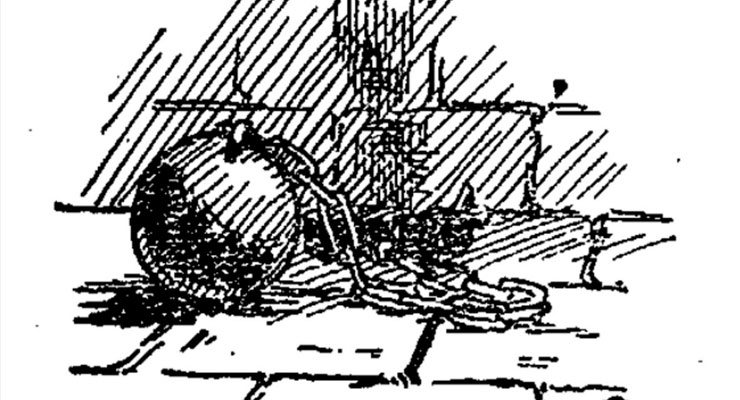
According to the charge, Holt had ‘wickedly, maliciously and seditiously designing, contriving and intending to disturb the peace and tranquillity of the kingdom’ by publishing the essays, and while Erskine conducted an able defence the rigged jury ensured the required verdict was brought in. Holt was sentenced to two years imprisonment, a fine of £50 and ordered to provide a surety of £200 along with two others of £50 each for his good behaviour for the next five years. These figures may appear small by present day values but in terms of 18th century values they represented fines amounting to several thousand pounds and while they did not bankrupt him they effectively destroyed Holt financially. He served his sentence in London’s notorious Newgate Prison, sharing a cell with three other radicals, the London booksellers and publishers, H.D. Symonds and James Ridgway and a Nonconformist minister, the Rev. William Winterbotham. The imprisonment of the four men was commemorated on a penny copper token issued in Middlesex in 1794 in order to provide them with financial help, one side being inscribed with the words: ‘Payable at the residence of Messrs Symonds Winterbotham Ridgway & Holt’, the other showing an illustration of the prison. Holt appealed against having to serve his sentence in London but this was rejected.
While in prison Holt wrote and published an essay explaining his actions and beliefs which he entitled, A Vindication of the Conduct and Principles of the Printer of the Newark Herald…. Published in 1794 it rapidly went through two editions and around 1826 another appears to have been published. In this book Holt shows he had retained his sense of humour despite financial ruin and ailing health. Commenting upon the prosecution’s star identification witness, he ably and humorously exposes the almost farcical character of this aspect of the case against him. The prosecution was attempting to show Holt to be a dangerous revolution- ary and to do so produced a witness named as Bland. This character claimed he had been riding past Holt’s printing shop when he saw a person posting a bill opposite. Stopping to read this he was handed a copy by the billposter, who remained nameless. He also said he had observed another individual inside Holt’s office who was wearing a paper cap inscribed with the words, ‘Liberty and Equ’, however, he could not actually identify the person concerned, though the implication was clear, the prosecution wanted it to be believed that it was Holt himself. About this witness Holt comments, “Either from the weakness of Mr.Bland’s optic nerves, or the treachery of his memory, he unfortunately could not say what other letters finishes this alarming sentence”.20 Throughout his Vindication Holt defends his political beliefs and actions vigorously, although one gets the impression that much of the old fire so evident in his newspaper had evaporated away. Nevertheless he offers no apologies or regrets, though he denies he was a revolutionary and insists his aim was to achieve political reform.
What appears to have puzzled Holt the most was having been charged for publishing Cartwright’s essay, which he asserts had been originally published ‘under the sanction and with the approbation of Mr. Pitt, indeed, he even suggests it was actually ‘composed and written by Mr. Pitt, the Duke of Richmond and other eminent persons who stand high in his Majesty’s favour’.21 He also reproduces as an appendix a speech by Pitt supportive of reform as an illustration of the fact that Pitt’s ideas on the subject did not differ substantially with his own or Cartwright’s. He also pointed out that when he had reprinted Paine’s, Address… it had not been legally declared to be libellous, moreover, he actually felt honoured as having been prosecuted before it was pronounced a libel in London and the author or primary publisher prosecuted for it.22 He was strongly of the opinion that ‘the real object (his emphasis) at which all the artillery of persecution had been directed’ was his newspaper, but despite this it was still flourishing.23
Prior to being imprisoned Holt was closely involved with several radical and reform organisations in both Newark and Nottingham. He was a member of the Nottingham Society for Parliamentary Reform and the Nottingham Political Society, whose literature he printed, this suggests the Nottingham radicals may have experienced some difficulty in finding a sympathetic printer locally. He was appointed librarian to the Newark Book Society in 1791 (he also ran a circulating library as part of his business) and in 1792 became a supporter of the Associated Friends of the Unfortunate, which was established in Newark on June 25, of that year for the purpose of providing financial help for political prisoners.24 It may be that this organisation was called upon to assist Holt financially. He was also a publicly spirited man, for when a public subscription was raised to provide the streets of Newark with lamps, he contributed fifteen shillings and six pence towards the cost of lighting Stodman street, this being among the largest donations given by the street’s residents and tradesmen. The donation carries the implication that at the time Holt’s business was prospering, indeed in March of the same year we find him advertising for an apprentice.
Daniel Holt was released on November 25, 1797, returning to Newark ‘in a nobleman’s carnage’ to be greeted by the bells of Balderton and Newark parish churches, according to Blagg,25 who regrettably fails to identify the nobleman concerned, though it indicates that there were many in Newark and district sympathetic to him. The years spent in prison had not only ruined Holt financially but also badly effected his health, which must have made it difficult to rebuild his business, although he certainly tried to, perhaps aided I believe by his wife who probably also ran it when he was in prison. Holt’s father and mother had died while he was incarcerated and in 1798 his son, Hankin died at the age of seven months. A few months later Holt himself died and was buried in the churchyard of St.Mary Magdalen, perhaps in the same grave as his infant son. He left no will and in April 1799 two administrators, John Huddlestone and John Falland, were appointed to administer his estate, or what there was of it, being empowered to use his goods, chattels and credits to meet his debts. They drew up an itemised list of his property and assets, which does not appear to have survived, though reference is made to it in one of their official documents; all we know for certain is that his assets were assessed at less than £1,000, although just how much less is anyone’s guess.
On February 7, 1803, Holt’s widow Eliza married Matthew Hage, whose name had appeared along with that of Holt, with the latter in the senior position, as printers (also publishers) of a work on Nottingham- shire by the local historian, W.Dickinson, in 1801, which indicates the printing business had survived Daniel Holt’s death. Other works followed until 1803 when a religious work was printed by Hage alone. Not long after the printer’s name was given on books as Hage and Son, and in 1826 it changed to H. & J.Hage. It was Hage and Son who may have re-issued Holt’s Vindication, as the title appears in an advert they published from their printing establishment in Stodman street, presumably Holt’s old premises.26
There is supposed to be a print showing a likeness of Holt but I have been unable to locate a copy. You will find no monument or commemorative plaque to him in present-day Newark, where even the site of his grave is lost; if there was a memorial over it this, too, has disappeared. However the interior of the parish church is littered with memorials to townspeople and others who in most cases if compared with Holt are nonentities. Nor does Robert Mellors in his collection of Nottinghamshire biographies have an entry for him, though he excludes many who deserve an entry while including many who do not.27 In 1968 the Newark Archaeological and Local History Society planned to have a plaque erected to Holt,28 but nothing appears to have come of the proposal. Perhaps, then, in the year in which the 200th anniversary of the death of a brave man has already passed without notice in Newark, and elsewhere, the time has come to rectify the neglect.
References
1. Jackson, N.G. Newark Magnus Nottingham, J. & H. Bell, 1964.
2. Smith, M.J. Biographical Dictionary of Modem British Radicals. Vol.1. Harvester Press, 1979. p.235.
3. Phillimore, W.P.W. & Blagg, T.M. Eds. Nottinghamshire Parish Registers: Marriages. Vol.15. London, Phillimore & Co., 1910. p.42.
4. A Complete Collection of the Papers which were published on Occasion of the Late Canvass and Election for the Borough of Newark, In the Months of May and June, 1790. Newark, D.Holt, 1791.
5 Blagg, T.M. Newark as a Publishing Town. Newark, Privately published, 1898. p.57.
6. Blagg. ibid. p.57.
7. NH. 11. 14 December, 1791 and 16. 18 January, 1792.
8. NH. 6. 9 November, 1791.
9. NH. 9. 30 November, 1791.
10. Holt, D. A vindication of the Conduct and Principles of the Printer of the Newark Herald. An Appeal to the Justice of the People of England on the Results of Two Recent Decisions an Extraordinary Prosecution for Libel. Newark, D.Holt, 1794. pp.4 & 13.
11. NH. 41. 11 July, 1792.
12. NH. 43. 27 July, 1992.
13. NH. 66, 2 January, 1793.
14. Aldridge, A.O. Man of Reason. The Life of Thomas Paine. Cresset Press, 1960. p.165.
15. Gawthem, Abigail. The Diary of Abigail Gawthem of Nottingham, 1851-1810 Edited by A.Henstock. Thoroton Society of Nottinghamshire Record Series, 1980. p.121.
16. Wooler, T.J. An Appeal to the Citizens of London against the Alleged Lawful Mode of Packing Special Juries. London, T.J.Wooler, (1817). p.10.
17. A phrase Edmund Burke employed to describe ordinary people. Thomas Spence, a radical, issued a journal which he titled, Pigs Meat (1793-6)- he was sent to prison, of course. Holt also referred to the term twice in his Vindication…(pp.9 & 11).
18. Wooler, ibid. p.4.
19. John Cartwright (1740-1824 had been a naval officer and having resigned from the navy was appointed a major in the Nottinghamshire militia in 1775. His radical political opinions led to him being dismissed in 1792 ‘by,, according to his supporters, an illegal manoeuvre’. In the event, Cartwright appeared at Holt’s trial as a defence witness.
20. Vindication. p.31.
21. Vindication. p.53.
22. Vindication. pp.13-14.
23. Vindication. p.10.
24. NH. 11 July, 1792.
25. Blagg. ibid. p.57.
26. Included in The Poll Book of the Election for the Borough of Newark… June 9 & 10, 1826. Newark, Hage & Son, 1826.
27. Mellors, Robert. Men of Nottingham and Nottinghamshire Nottingham, J. & H.Bell, 1924.
28. NALHS Newsletter. 11. 1968
Acknowledgements
The writer would like to thank the staff of the Local History Department of Nottingham Central Library, Nottinghamshire Archives Office, the Local History Department of Newark Public Library, the Librarian of the Working-Class Movement Library at Salford and Glynn Hughes of Newark Museum for the help they have given him. I also owe a debt to Mr. Dorling of Newark who is also researching into Holt’s life and work with a view to publishing a paper on him and who contacted me when he learned of my interest. He was kind enough to share some of his ideas with me and drew my attention to certain material I had not been aware of. I suspect that there will be a measure of overlap between our two papers but hopefully they will compliment each other, although I also suspect we may differ on the interpretation of some material. I must thank Mr. Dorling for helping to point me towards sources which filled some of the gaps in my information on Holt.