
By R.W. Morrell
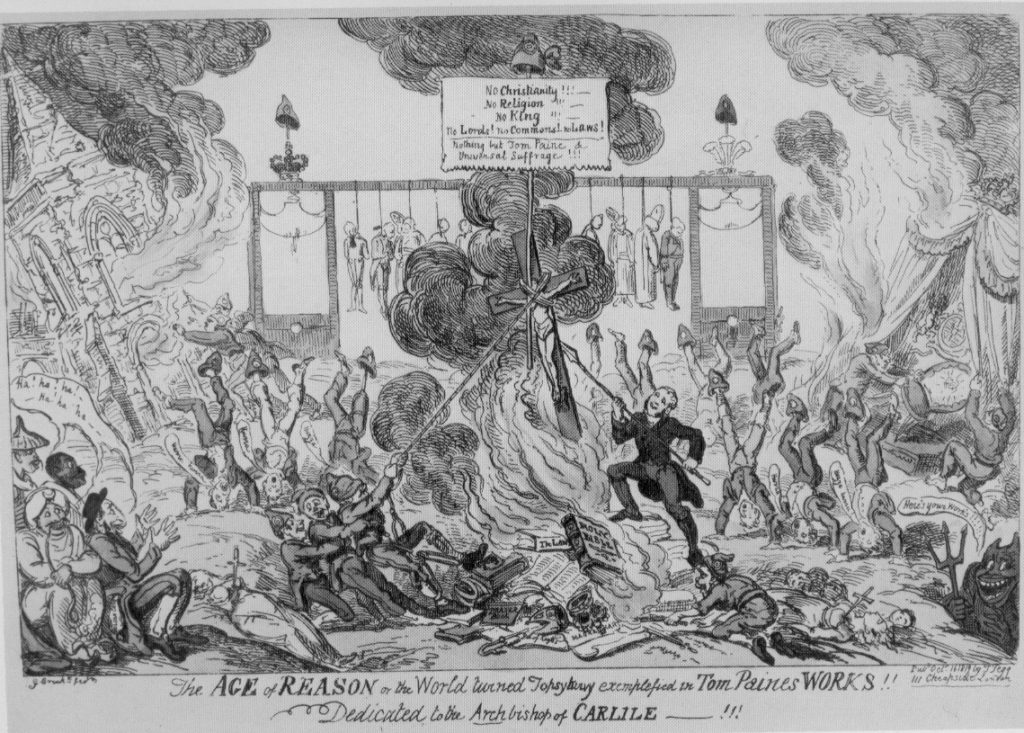
Paine, Scripture, And Authority. The Age Of Reason As Religious And Political Idea. Edward H. Davidson and William J. Scheick. Lehigh University Press, 1994. £22.50
I found this an important yet highly irritating book. Important in its coverage, discussion and identification of many of the books and ideas which had influenced Paine. Irritating in that Paine is assessed in terms of what may be described as an academic exercise.
If Paine is taken as representative of authority, or, as the authors often see him, as presenting himself in such a role, then so be it. But this drags him from his social and political context for what he sought to do was to prompt ordinary people to examine the basis for the claims on which authority was supposed to rest, in short, form their own conclusions for themselves. Thus each individual was seen as being their own authority. Paine, then, was an inspiration but not an authority, unless his ideas were accepted unquestionably at face value, and this he never wanted.
The many ‘replies’ to The Age of Reason, several of which the authors cite, illustrate all too clearly how Paine’s rejection of authority upset them, particularly as his ideas were addressed to ordinary people who were expected as a matter of course to accept their humble role in society, ‘theirs not to reason why, theirs but to do and die..’
Paine, Scripture, and Authority is an important work, particularly as it is the first book for many years to focus on The Age of Reason. Yet for all its value it pays too much attention to what the authors see as Paine’s personal motivation and too little to actually assessing the contemporary status of his book. This remains to be done.