Who was George Loyd?
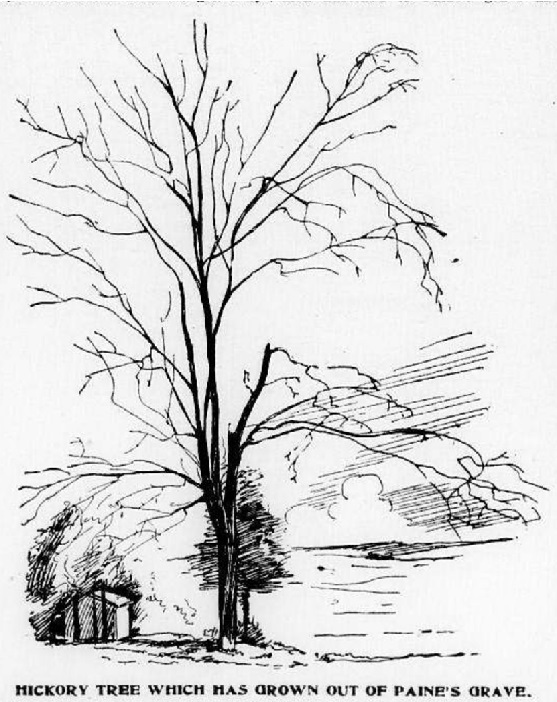
George Loyd, lived in New Rochelle from 1853 to his death in 1906. For 30 years he cared for the abandoned grave of Paine, and when the Monument was moved in 1905, he cut off a piece of the tree over the grave for remembrance.
Gilbert Vale was an early supporter of Thomas Paine, first in England, then in America in the early 19th century. He was a freethought publisher and writer, and through his work he reached the freethought and progressive segments of the American people.
The Thomas Paine Historical Association will be designating the Paine Monument as the Thomas Paine Monument and Grave. We cannot officially change the name, as the City of New Rochelle has jurisdiction over it.
The author of the article in the newspapers at the end of June in 1776 was Thomas Paine, making him the one that publicly coined the name. He used it again in January, 1777 in Crisis II
A song by Joseph Mather, to the tune of God Save the Queen, “showing support for Tom Paine’s Rights of Man and reflecting the republican sentiment immediately understood by working people.” From the mid 1790s.
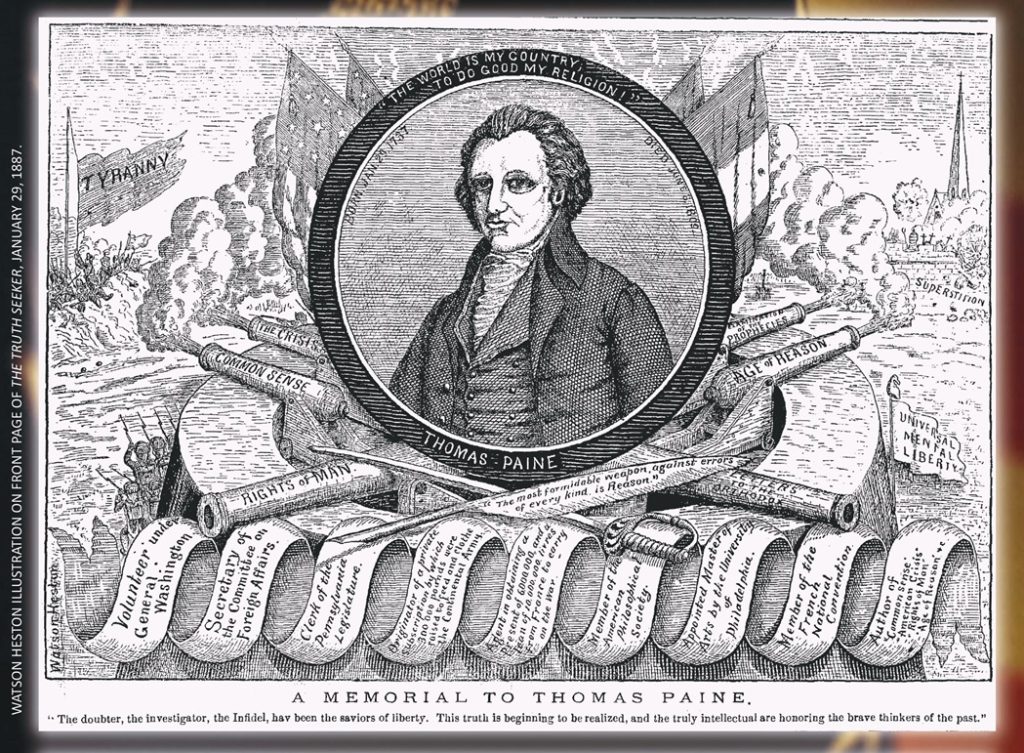
When our Association was formed, it was on January 29, 1884, on Paine’s birthdate. The people involved had gathered every year on Paine’s birthdate, to meet at the Liberal Club in New York City.
Little has been written about the political party formed after Paine’s return from the battlefield in January 1777, the Whig Society. The Society was perhaps the first revolutionary party in modern history.
Paine is the benchmark, the inspiration, the guide, the inspirer of the secular democratic trend in world history. His legacy is all around us: in Black Lives Matter, in separation of church and state, in the sanctity of government for, of and by the people, in civil and human rights.
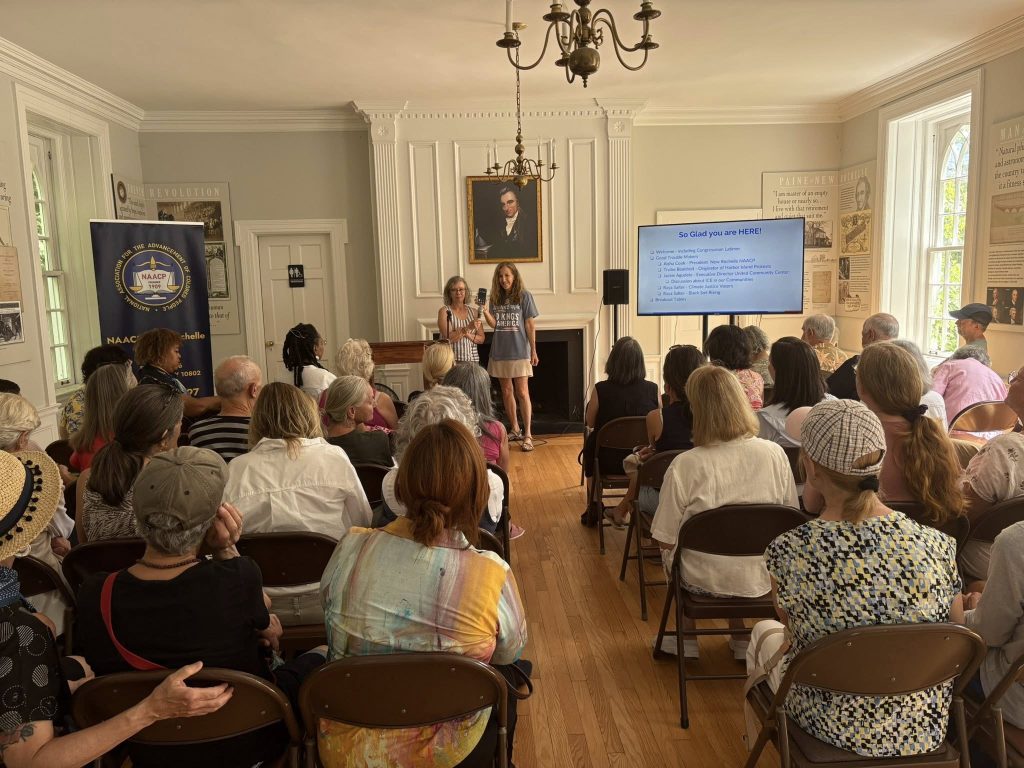
Speech at the Juneteenth Event at the Thomas Paine Memorial Building June 19, 2021 Read Post »
One of the dozens of copies of the statuette was part of the TPNHA Collection, but it went missing in the 1980s. All attempts to retrieve it were unsuccessful.
The Paine Statuette: The First Sculpture of Thomas Paine Read Post »
An article in the journal The Log of the Mystic Seaport in December, 1948 recounts an oral history of the Haley family there. It seems that Captain Nathan Haley, according to the oral history, was a friend of Thomas Paine.
Unlike the political theorists employed by our own self-important news media, Paine doesn’t think it the duty of the political writer to keep things running quietly and smoothly. His aim is to arm ordinary individuals with the weapon with which to defend themselves against organized deception and arbitrary power.
The storms of revolution bursting forth afresh, Paine again repaired to France. A joyous reception awaited his arrival at Calais. As his vessel entered the harbor a hundred cannon thundered “Welcome!” As he stepped upon the shore a thousand voices shouted “Vive Thomas Paine!”