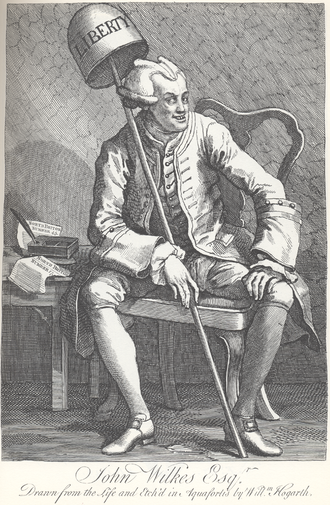
John Wilkes

declaration of independence

BOOK REVIEW: Thomas Paine And America

Thomas Paine Society UK, TPUK 2009 Number 1 Volume 10

Those studying the reaction by Americans to Thomas Paine’s ideas, and, perhaps, to him as an individual, will find the judicious selection of works reprinted herein of immense value. Of course, there are works that one feels should have been included, but where does this process end, another six volumes?

, , ,

BOOK REVIEW: Thomas Paine And America Read Post »

vote protest

BOOK REVIEW: Gender, Religion And Radicalism In The Long Eighteenth Century

Thomas Paine Society UK, TPUK 2007 Number 4 Volume 8

That century with its agricultural and industrial revolutions, the Wesley and English Methodism, the sciences, the challenge of slavery, the French and American revolutions, Thomas Paine and other enlightened thinkers, but then the loss of the colonies – was not an easy stage on which a woman might make her case.

, , , ,

BOOK REVIEW: Gender, Religion And Radicalism In The Long Eighteenth Century Read Post »

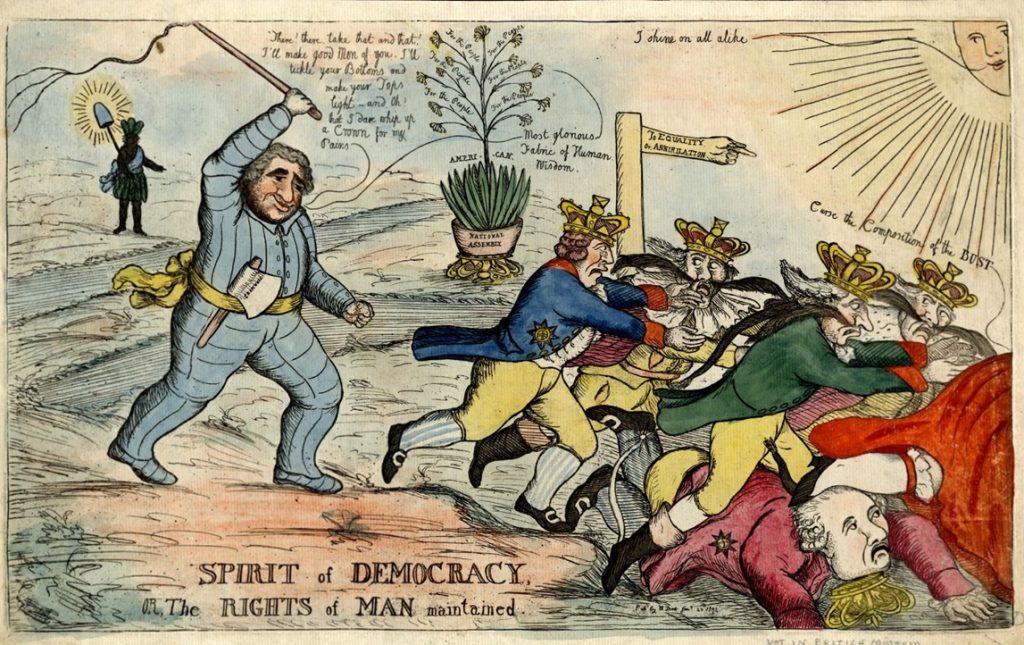
Spirit of Democracy

Thomas Paine and His Radical Contemporaries 

Thomas Paine Society UK, TPUK 1981 Number 1 Volume 7

Basically, like all the greatest writers on liberty, Paine was a humanitarian. Freedom, in Paine’s view, could not be dissociated from political morality, and he sounded a warning note which still carries a message.

, , , , ,

Thomas Paine and His Radical Contemporaries  Read Post »

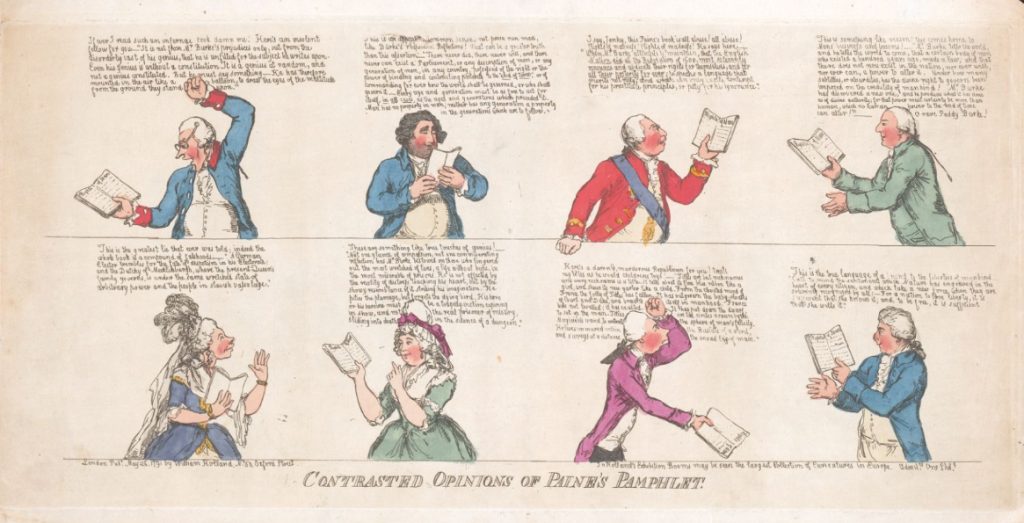
“Contrasted Opinions of Paine’s Pamphlet” is a 1791 intaglio by Frederick George Byron. Eight public figures are depicted reading excerpts from Rights of Man and reacting to them. Charles James Fox, Richard Brinsley Sheridan and Mary Wollstonecraft are the three supporters of Paine’s writings while the rest deplore them – American Philosophical Society

Thomas Paine’s Common Sense, an English Tradition of Radical and the Dissent: The Cato Letters  

Thomas Paine Society UK, TPUK 1981 Number 1 Volume 7

The traditional way of looking at Paine as an Enlightenment political propagandist or as a Newtonian Deist is not explicit enough to distinguish him from others. Nor do these descriptions of Paine enable one to explain why Paine appeals to such a variety of radical, liberal and even conservative causes.

, , ,

Thomas Paine’s Common Sense, an English Tradition of Radical and the Dissent: The Cato Letters   Read Post »

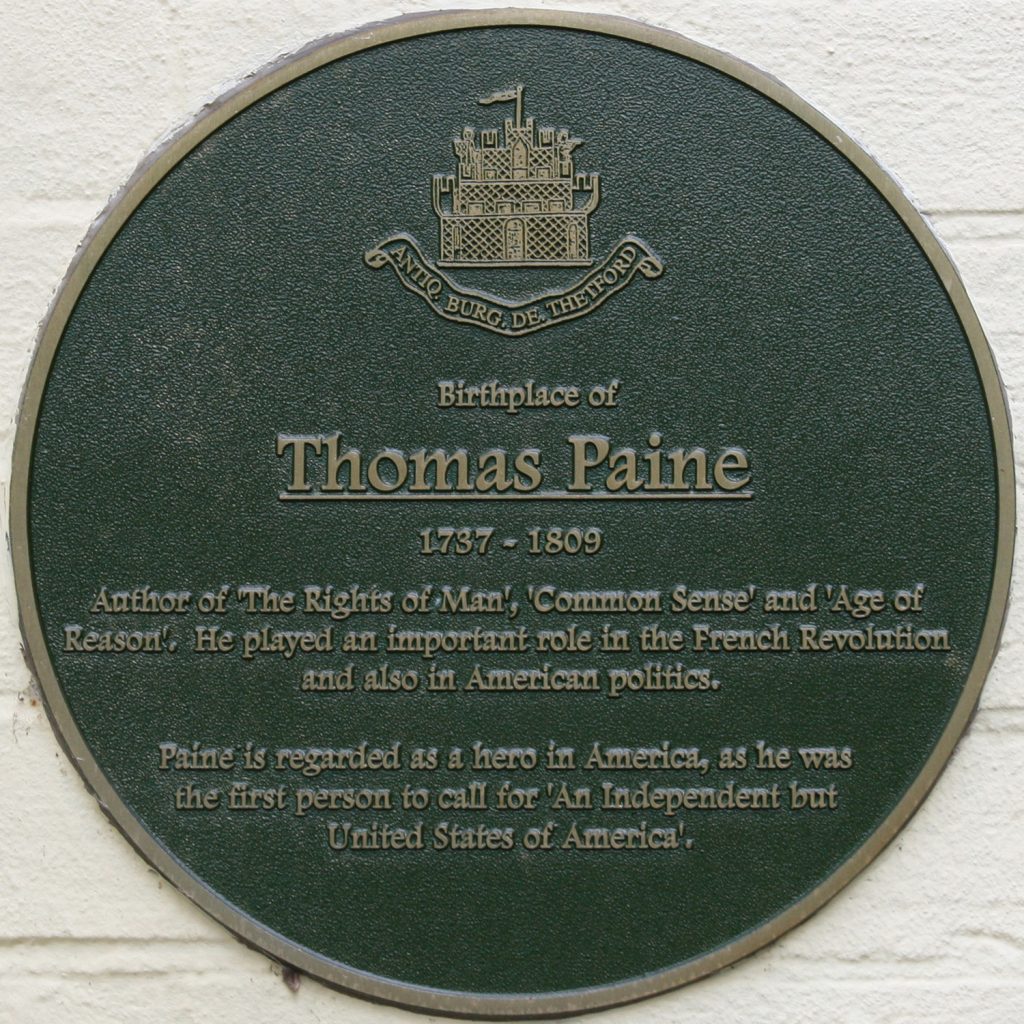
Plaque at the birthplace of Thomas Paine in Thetford, England erected by the Antiquities Borough of Thetford. Paine was born on February 9, 1737 – Flickr

Thomas Paine – Early Life In England 

Thomas Paine Society UK, TPUK 1980 Number 4 Volume 6

Paine, I am sure, was never “just” an exciseman, a teacher, staymaker, or storekeeper. His mental activity, interest in science, government and human relations, implied that there was far more bigger and grander things for him to do.

, , , ,

Thomas Paine – Early Life In England  Read Post »

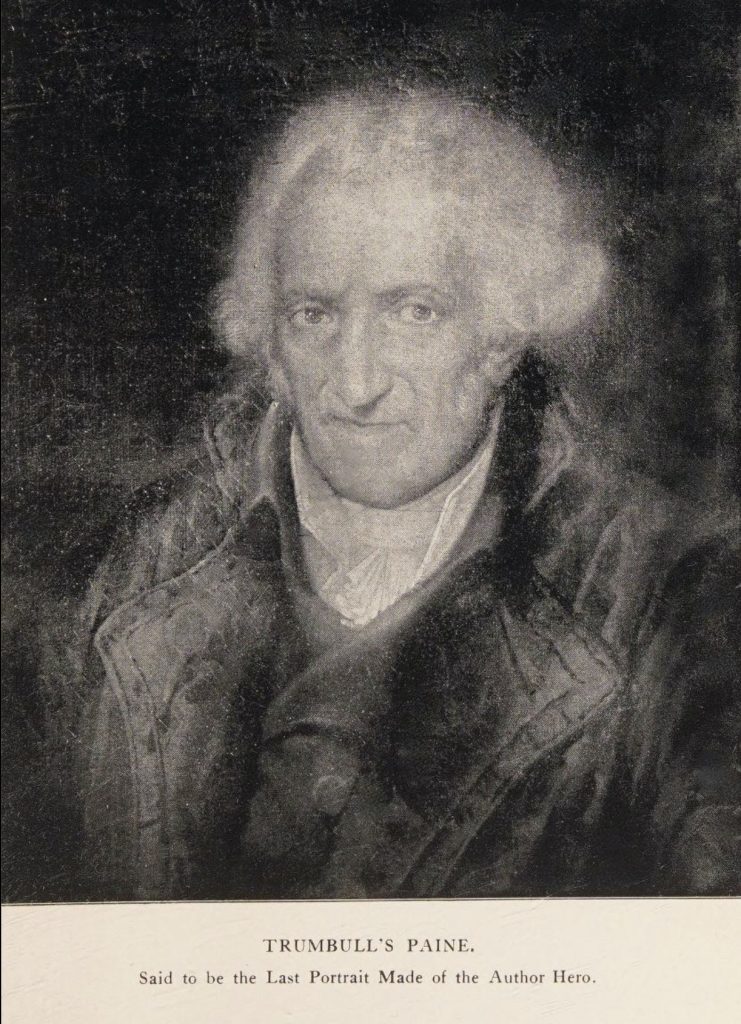
John Trumbull sketch of Paine in his later years believed to the last portrait of Paine made in his lifetime

Some Comments On Paine And His Times

Thomas Paine Society UK, TPUK 1978 Number 2 Volume 6

Once the War of Independence was ended no other English emigrant who had fought in the War, to my knowledge, was accused of being a “traitor” to his country of origin. But Paine was a dangerous political writer and the ‘traitor” myth is maintained.

, , , ,

Some Comments On Paine And His Times Read Post »

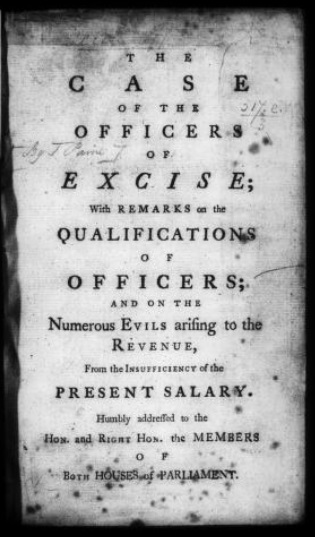
Cover of "The case of the officers of excise" - link

Thomas Paine — The Excise Background

Thomas Paine Society UK, TPUK 1977 Number 1 Volume 6

The meteoric political career of Thomas Paine was so dazzling that it has largely eclipsed the events of his formative years during which he obtained the expertise and developed the tenacity that enabled him to respond to the opportunity afforded by the rapid changes in the American colonies.

, , ,

Thomas Paine — The Excise Background Read Post »

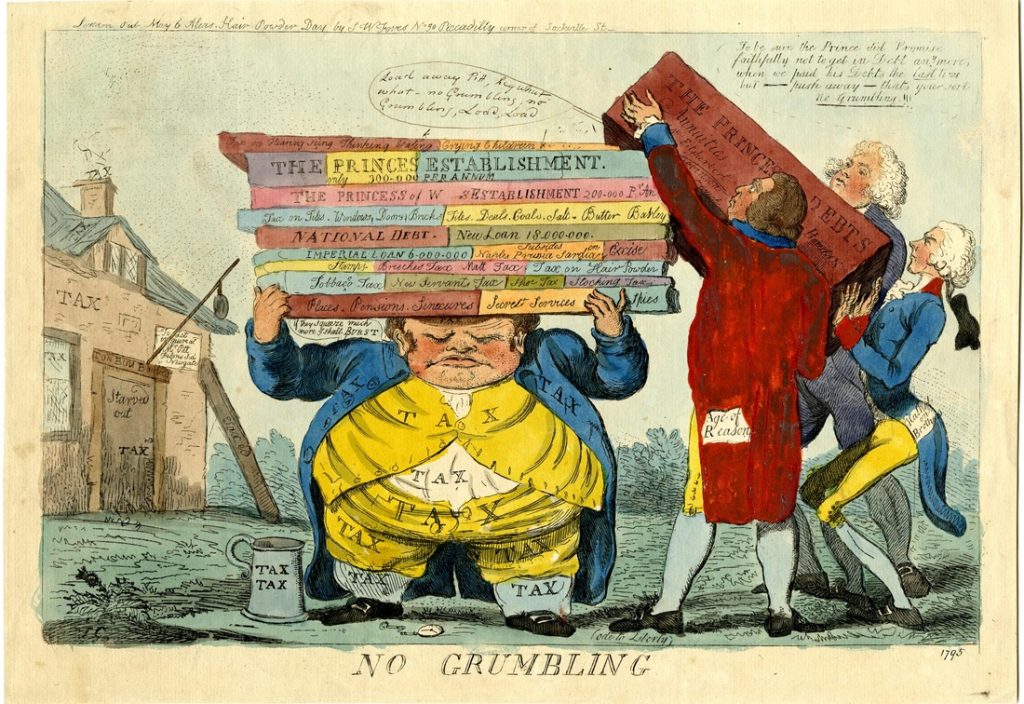
“No Grumbling” a 1795 political cartoon by Isaac Cruikshank shows John Bull (a British equivalent of Uncle Sam) under a heavy load of blocks. The king, in a red coat, helps add another block onto Bull’s head. From his pocket hangs a paper: ‘Age of Reason’ – © The Trustees of the British Museum

The 1790’s: Paine And The Age Of Reason 

Thomas Paine Society UK, TPUK 1975 Number 2 Volume 5

Paine’s Rights of Man was prosecuted for libel not so much because of its contents but because, rather than confining his audience to ‘the judicious reader’, he had addressed ‘the lowest orders of the people – people who…cannot from their education or situation in ‘life, be supposed to understand the. subject on which he writes.’

, , , , ,

The 1790’s: Paine And The Age Of Reason  Read Post »

Scroll to Top