Thomas Paine and England

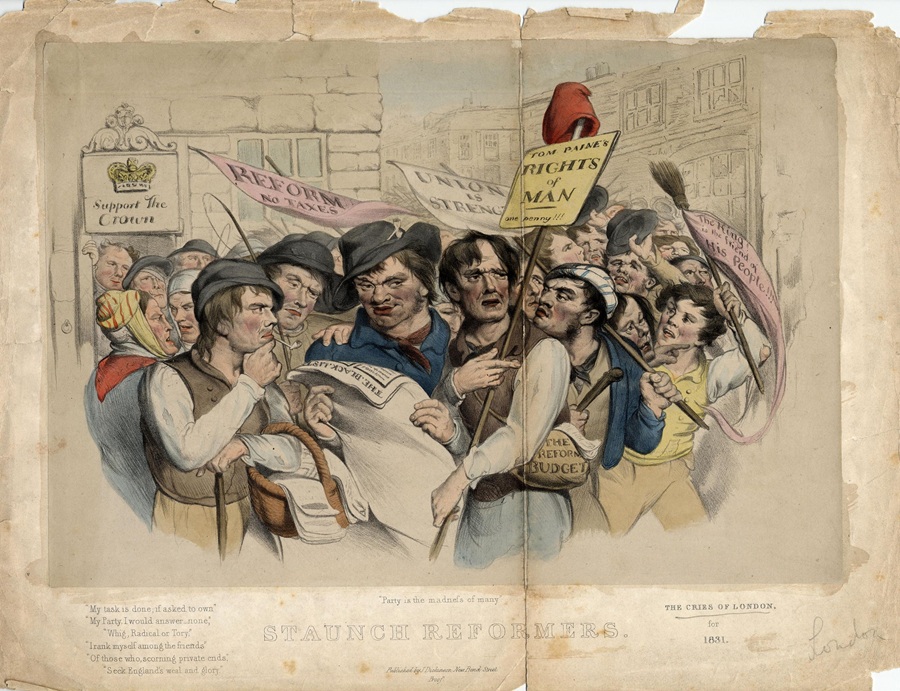
“Staunch reformers” a 1831 satirical print by John Dickinson with a dense crowd of rough-looking men at a London street-corner. One holds up a holds a placard on a pole topped by a red ‘liberty cap’ reading ‘Tom Paine’s Rights of Man—one penny!!!’ – © The Trustees of the British Museum.

Thomas Paine and Monarchical Republicanism 

Thomas Paine Society UK, TPUK 2011 Number 4 Volume 10

We remember Paine now, as radicals did in the nineteenth century, because he was distinctive — there have been few, if any, English political figures whose republicanism has been so strident and yet who have managed to communicate such a radical ideology (in an English context) to such a wide audience.

, ,

Thomas Paine and Monarchical Republicanism  Read Post »

vote protest tyrant

Paine Departs From England For The Last Time 

Thomas Paine Society UK, TPUK 2010 Number 3 Volume 10

We thank Paul Myles for the transcript of this important letter, now in the British Library, from the government agent J. Mason, to J.B. Surges. an under secretary for foreign affairs, which demolishes the constantly repeated mantra of Paine having fled the country to escape arrest.

,

Paine Departs From England For The Last Time  Read Post »

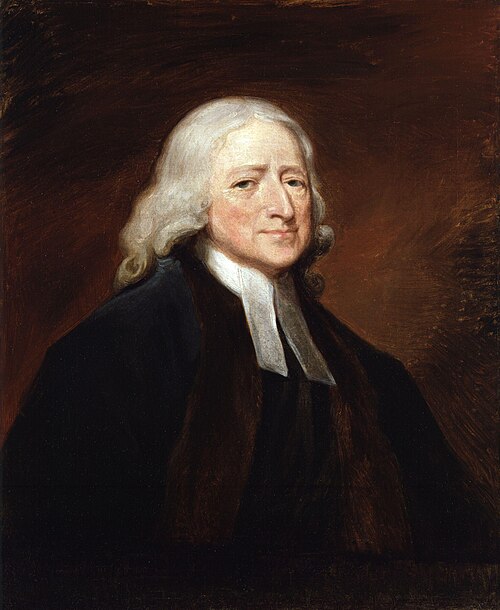
John Wesley (1703-1791) was an English cleric, theologian, and evangelist who was a principal leader of a revival movement known as Methodism - link

Young Thomas Paine, Wesleyan Methodist Or Rational Dissenter? 

Thomas Paine Society UK, TPUK 2006 Number 2 Volume 8

Paine had very enlarged ideas of the rights of others and was, upon principle, a thorough friend to the civil and religious liberties of all mankind. In conversation he was open and liberal, and at the same time serious and instructive. 

, , , ,

Young Thomas Paine, Wesleyan Methodist Or Rational Dissenter?  Read Post »

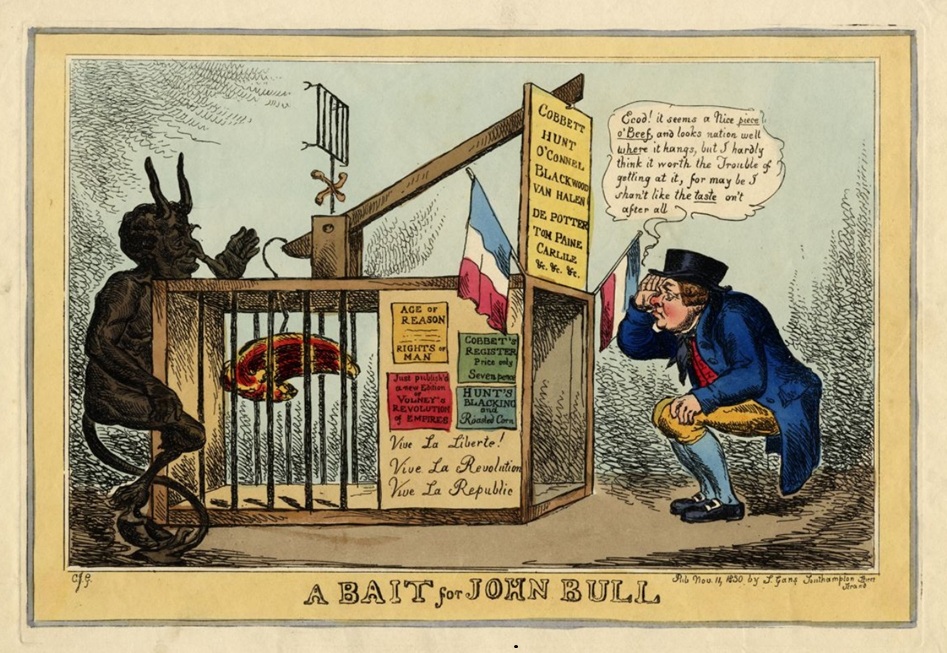
“Billy the bully, and ranting Dan” a 1830 political cartoon by Charles Jameson Grant shows the devil attempt to lure John Bull (a British equivalent of Uncle Sam) into a box trap papered with slogans, names and advertisements for The Age of Reason, Rights of Man and other publications – American Philosophical Society

BOOK REVIEW: Contested Sites, Commemoration, Memorial and Popular Politics in Nineteenth-Century Britain

Thomas Paine Society UK, TPUK 2004 Number 3 Volume 7

Contested Sites deserves a wide readership. It contains much I found new and it has prompted me to wonder what other radical monuments lurk forgotten around the country and also what might be said to constitute one.

, ,

BOOK REVIEW: Contested Sites, Commemoration, Memorial and Popular Politics in Nineteenth-Century Britain Read Post »

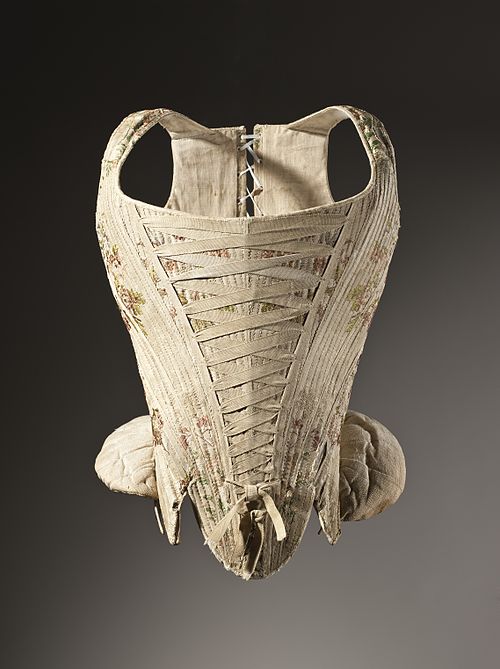
Woman's corset, France, c. 1730-1740. Silk plain weave with supplementary weft-float patterning

Eighteenth-Century Stays: Their Origins and Creators

Thomas Paine Society UK, TPUK 2004 Number 2 Volume 7

It seems that pattern-making began not as the science it is today, but as an art form, with formulated pattern-drafting systems not originating until the nineteenth century. It is likely that the creators of eighteenth-century stays draped or sculpted pattern pieces directly on the body, possibly never making paper patterns.

Eighteenth-Century Stays: Their Origins and Creators Read Post »

vote protest

BOOK REVIEW: Revolutionary Britannia? Reflections On The Threat Of Revolution In Britain

Thomas Paine Society UK, TPUK 2001 Number 3 Volume 5

Royle attempts to answer the question why there was no revolution? He looks at the nature of the popular movements arguing that their leaders knew both their own limits and those of their followers. He further argues that the revolutionaries were always in the minority.

, , ,

BOOK REVIEW: Revolutionary Britannia? Reflections On The Threat Of Revolution In Britain Read Post »

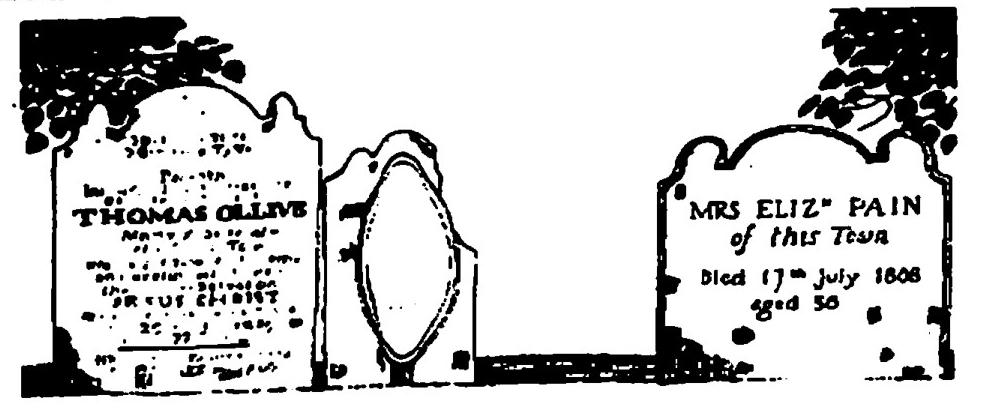
Grave of Thomas Ollive and his sister Elizabeth Paine, Thomas Paine’s second wife, who were married in March 1771. Eventually, Paine was forced into bankruptcy in 1774 and Elizabeth and Paine separated in June partly due to Paine’s long absences stemming from his work as an exciseman. Elizabeth died in Cranbrook on 17 July, 1808, and lies buried in the churchyard of St. Dunstan’s – Image from Thomas Paine Society UK Bulletin, 1999. Vol.4. No.2.

Elizabeth Paine: The Wife Of A Revolutionary

Thomas Paine Society UK, TPUK 1999 Number 2 Volume 4

Following the publication of The Age of Reason, Thomas must have come to regard Paine as a infidel – and already as someone whom he regarded as having ruined his sister’s life and embarrassed his own. When Elizabeth died, the obituary he drafted gave vent to his venom regarding Paine.

,

Elizabeth Paine: The Wife Of A Revolutionary Read Post »

journalism typewriter art

BOOK REVIEW: Thomas Paine: The Case Of The King Of England And His Officers Of Excise

Thomas Paine Society UK, TPUK 1998 Number 4 Volume 3

This short essay is unquestionably a major contribution to Paine studies, though likely on the controversial side in that it casts Paine in a role few of his admirers would have thought possible, for it is the belief of the author that Paine was ‘an undercover agent’ for George III.

, , ,

BOOK REVIEW: Thomas Paine: The Case Of The King Of England And His Officers Of Excise Read Post »

“Contrasted Opinions of Paine’s Pamphlet” is a 1791 intaglio by Frederick George Byron. Eight public figures are depicted reading excerpts from Rights of Man and reacting to them. Charles James Fox, Richard Brinsley Sheridan and Mary Wollstonecraft are the three supporters of Paine’s writings while the rest deplore them – American Philosophical Society

Thomas Paine’s Common Sense, an English Tradition of Radical and the Dissent: The Cato Letters  

Thomas Paine Society UK, TPUK 1981 Number 1 Volume 7

The traditional way of looking at Paine as an Enlightenment political propagandist or as a Newtonian Deist is not explicit enough to distinguish him from others. Nor do these descriptions of Paine enable one to explain why Paine appeals to such a variety of radical, liberal and even conservative causes.

, , ,

Thomas Paine’s Common Sense, an English Tradition of Radical and the Dissent: The Cato Letters   Read Post »

Scroll to Top