Thomas Paine and Religion

Where Would Thomas Paine Stand Now On Republicanism, Atheism And Survival After  Death?  

Thomas Paine Society UK, TPUK 1995 Number 4 Volume 2

Today Thomas Paine would be in line with the majority of society that bears his name – secularists and atheists. Thomas has been described as the most valuable Englishman ever. The writings of Arthur Findlay, who must be a candidate for the title of the most valuable Scotsman ever.

Where Would Thomas Paine Stand Now On Republicanism, Atheism And Survival After  Death?   Read Post »
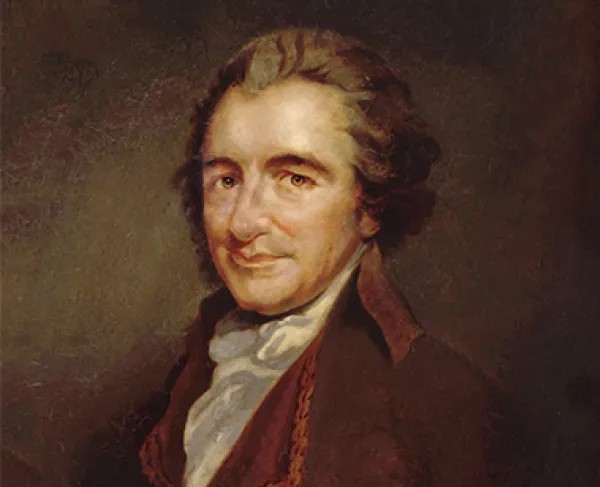
“Thomas Paine” from a 1792 William Sharp engraving taken directly from 1792 Romney life portrait – New York Public Library Digital Collections

Daniel Isaac Eaton’s Prosecution For The Third Part Of The Age Of Reason  

Thomas Paine Society UK, TPUK 1994 Number 3 Volume 2

On 6 March, 1812, Daniel Isaac Eaton, the so-called “infidel  bookseller”, stood before the Court of King’s Bench charged with  publishing what was known as the third part of Thomas Paine’s, The Age of Reason – a work the Attorney-General saw as “a libel”.

,

Daniel Isaac Eaton’s Prosecution For The Third Part Of The Age Of Reason   Read Post »

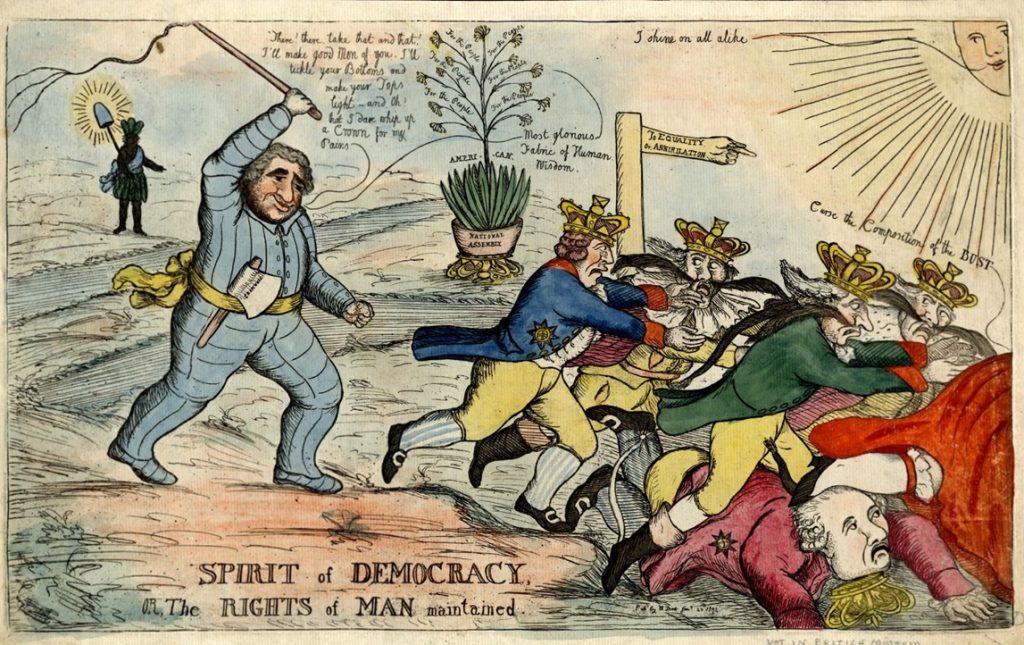
"Spirit of Democracy or the Rights of Man maintained" a cartoon by William Dent from 1792 shows Charles James Fox, as Oliver Cromwell, wave a whip and drive the allied Kings in the direction of a sign inscribed: "To Equality or Annihilation" while an allegorical America, as "Indian Queen" with liberty cap and pole, looks on - American Philosophical Society

Thomas Paine and His Radical Contemporaries 

Thomas Paine Society UK, TPUK 1981 Number 1 Volume 7

Basically, like all the greatest writers on liberty, Paine was a humanitarian. Freedom, in Paine’s view, could not be dissociated from political morality, and he sounded a warning note which still carries a message.

, , , , ,

Thomas Paine and His Radical Contemporaries  Read Post »

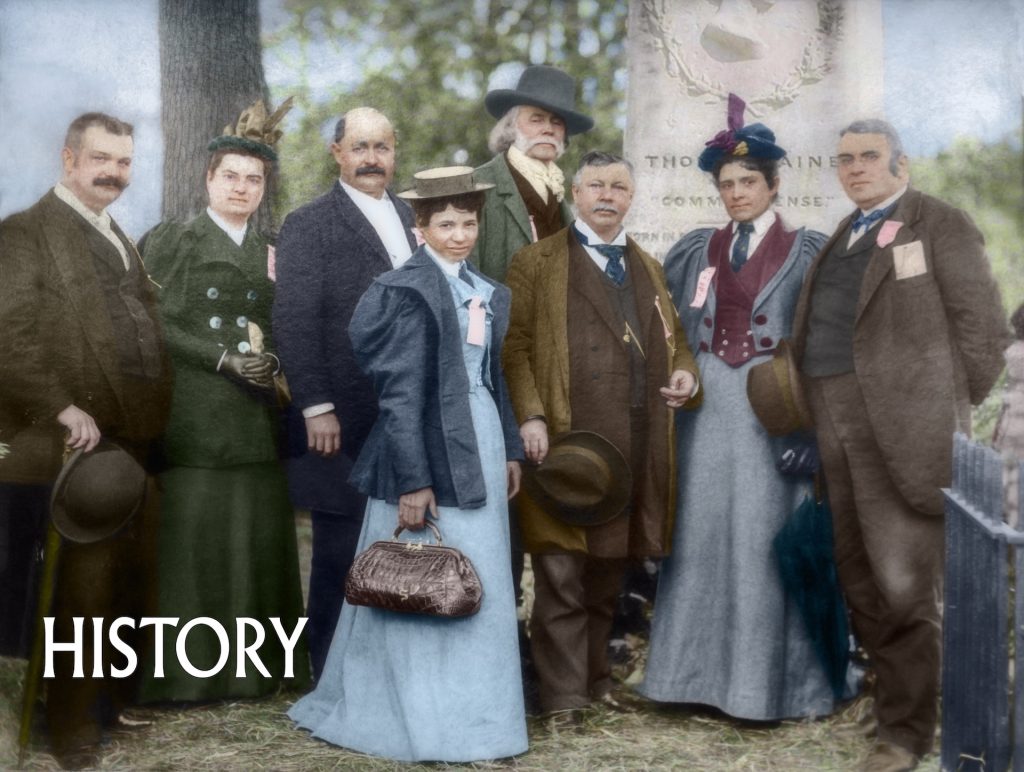
The TPNHA Board (now TPHA) from 1894, standing in front of the Paine Monument on North Avenue in New Rochelle, NY. On the right is Thaddeus Wakeman, a freethinker, professor, and noted philosopher, who took the lead in the creation of TPNHA. Also in the picture, in the rear wearing a hat, is Wilson MacDonald, the sculptor of the Paine bust on top of the Monument.

BOOK REVIEW: Freethought In The United States, A Descriptive Bibliography

Thomas Paine Society UK, TPUK 1979 Number 3 Volume 6

Even among the students of social movements there is a wide measure of ignorance as to the extent and influence of the Freethought movement particularly in the second half of the 19th century.

, ,

BOOK REVIEW: Freethought In The United States, A Descriptive Bibliography Read Post »

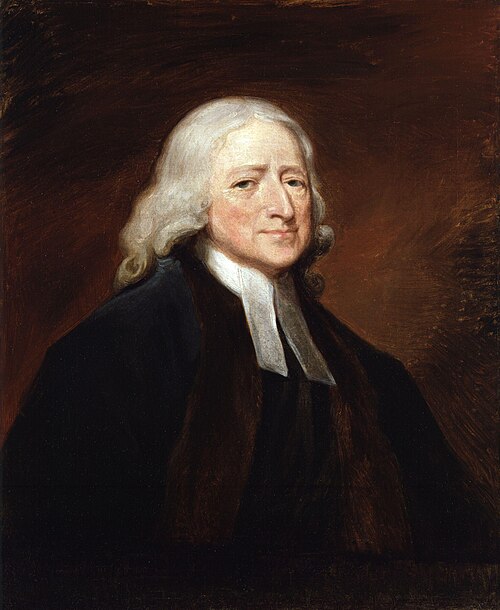
John Wesley (1703-1791) was an English cleric, theologian, and evangelist who was a principal leader of a revival movement known as Methodism - link

THOMAS PAINE: THE METHODIST INFLUENCE

Thomas Paine Society UK, TPUK 1979 Number 3 Volume 6

Paine admired the teachings of Jesus, and he went to great lengths to free them from smothering additions, which had been drawn from the mythology of ancient cults and grafted onto them by the churchmakers who usurped Jesus’s role of teacher.

, , , , ,

THOMAS PAINE: THE METHODIST INFLUENCE Read Post »

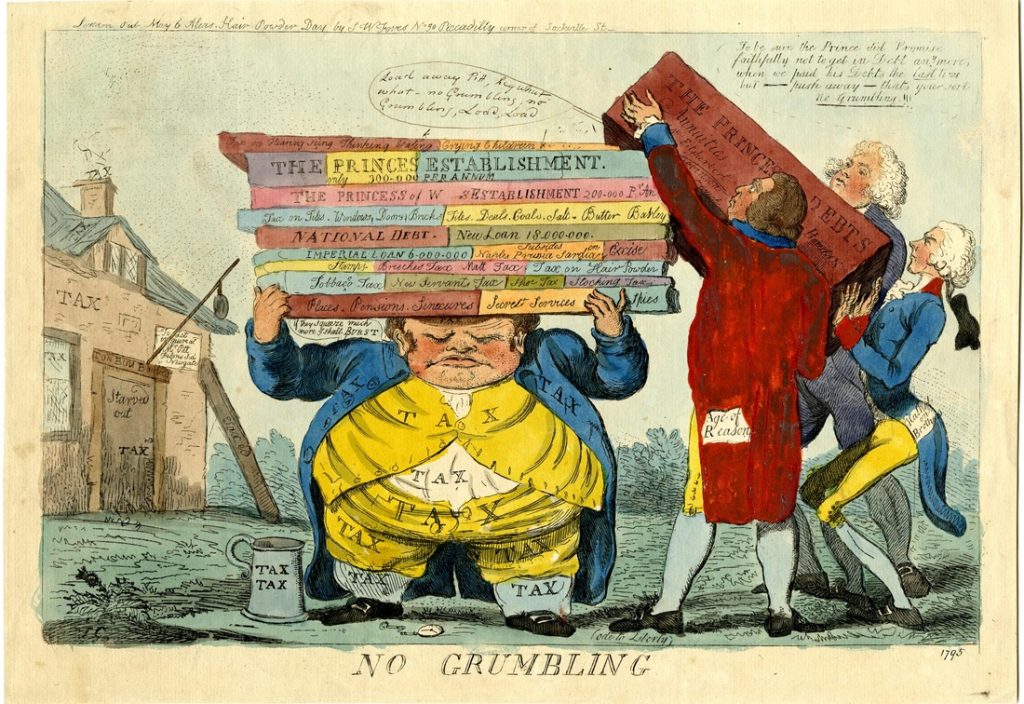
“No Grumbling” a 1795 political cartoon by Isaac Cruikshank shows John Bull (a British equivalent of Uncle Sam) under a heavy load of blocks. The king, in a red coat, helps add another block onto Bull’s head. From his pocket hangs a paper: ‘Age of Reason’ – © The Trustees of the British Museum

The 1790’s: Paine And The Age Of Reason 

Thomas Paine Society UK, TPUK 1975 Number 2 Volume 5

Paine’s Rights of Man was prosecuted for libel not so much because of its contents but because, rather than confining his audience to ‘the judicious reader’, he had addressed ‘the lowest orders of the people – people who…cannot from their education or situation in ‘life, be supposed to understand the. subject on which he writes.’

, , , , ,

The 1790’s: Paine And The Age Of Reason  Read Post »

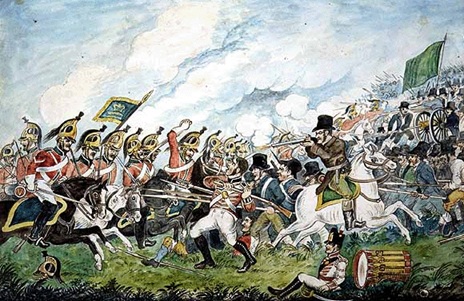
Battle of Vinegar Hill by William Sadler Kelvin II during the Irish Rebellion of 1798 - link

Dr. Hincks And The Age Of Reason In Cork 

Thomas Paine Society UK, TPUK 1971 Number 2 Volume 4

There can be no doubt that Paine’s ideas in the 1790’s had profound effects upon political thinking among Irish radicals, just as they did among the revolutionaries of France, the United States, and Britain. Both he and Wolfe Tone met in Paris in 1797 and during the “dragooning” of Ulster.

, ,

Dr. Hincks And The Age Of Reason In Cork  Read Post »

“Reason against unreason” a 1882 illustration by Joseph Keppler and Adolph Schwarzmann shows the “Light of Reason”, containing bust portraits of “Johannes Kepler, I. Kant, Thomas Paine, Jefferson, B. de Spinoza, Franklin, Voltaire, E.H. Haeckel, Tyndall, Huxley, [and] Darwin”, beaming against a large umbrella labeled “Bigotry, Supernaturalism, [and] Fanaticism” – Library of Congress

The Relevance Of The “Age Of Reason” For Today

Thomas Paine Society UK, TPUK 1968 Number 2 Volume 3

Paine appealed to reason, his ultimate cause was a democratic system of society. His spirit stands in glaring contrast to that of the politico-religious dictators who lorded it over most nations when he wrote, and who have their counterparts today in dictators.

, ,

The Relevance Of The “Age Of Reason” For Today Read Post »

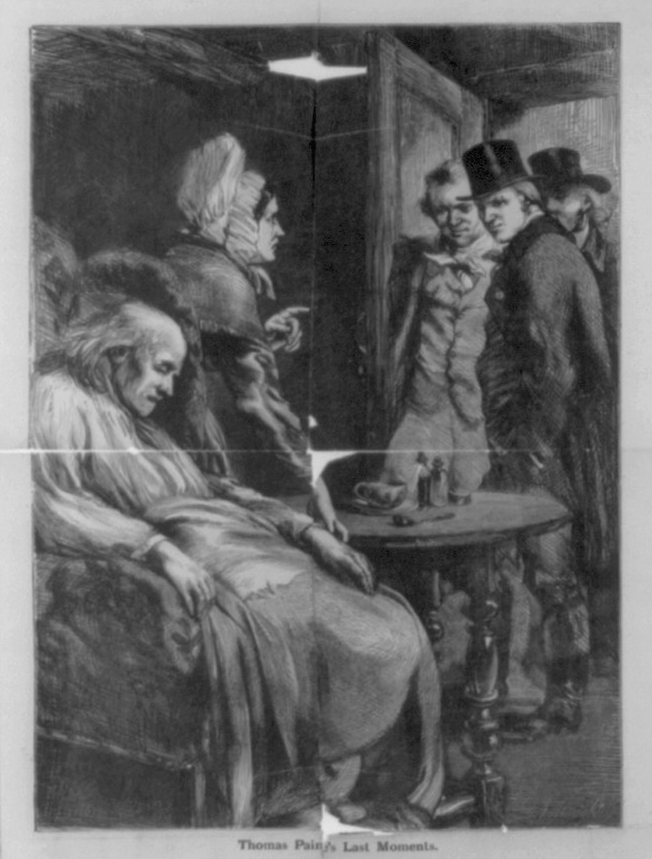
A 1809 American print titled “Thomas Paine’s Recantation!” or “Thomas Paine’s Last Moments” portraying a fictional scene of Paine on his deathbed seated in a chair with a woman, identified as Mary Roscoe (or Mary Hindsdale), at his side. Paine did not recant his beliefs on his deathbed; the image is propaganda circulated by his political and religious opponents – Library of Congress

The Paine Conversion Myth 

Thomas Paine Society UK, TPUK 1968 Number 2 Volume 3

Stories of Paine’s recantation or conversion were once the stock in trade of any self-respecting evangelical preacher or writer. In our more sophisticated age with its closer attention to detail, claims of such a specific nature have given way to those of a more general character.

, ,

The Paine Conversion Myth  Read Post »

Age of Reason Writings

Paine As A Biblical Critic

Thomas Paine Society UK, TPUK 1968 Number 2 Volume 3

The Age of Reason exerted an anti-religious influence on the reader at the end of the nineteenth and beginning of the twentieth century. Merciless criticism of the Bible, revelations of the hypocrisy of tho clergy, a passionate call to readers to rely on the facts of Nature and human reason.

,

Paine As A Biblical Critic Read Post »

Scroll to Top