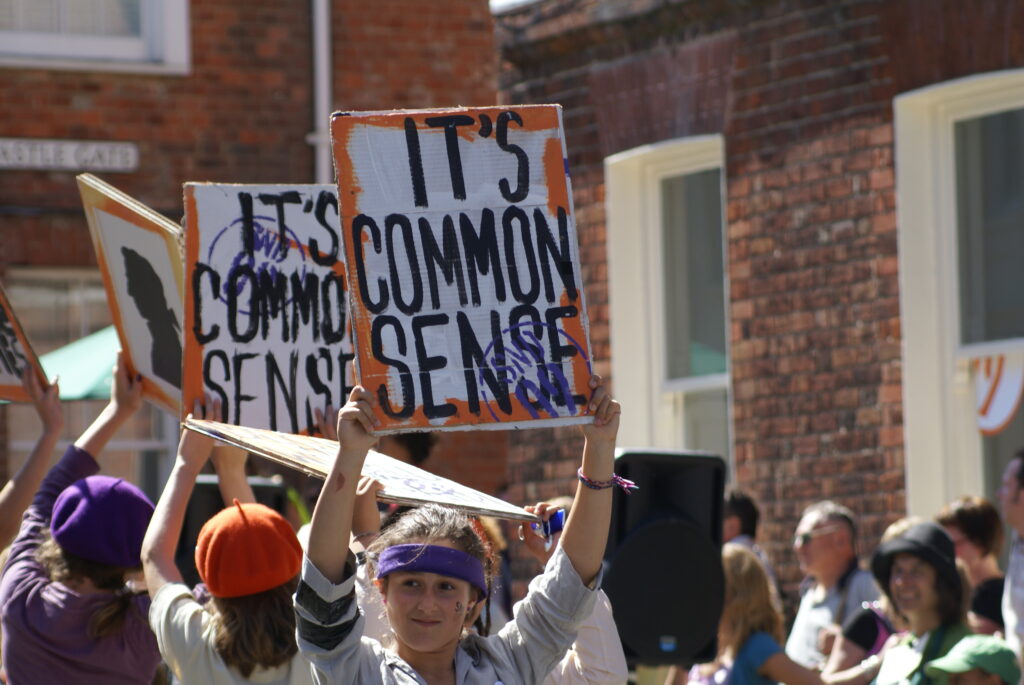
Thomas Paine’s Common Sense

“Contrasted Opinions of Paine’s Pamphlet” is a 1791 intaglio by Frederick George Byron. Eight public figures are depicted reading excerpts from Rights of Man and reacting to them. Charles James Fox, Richard Brinsley Sheridan and Mary Wollstonecraft are the three supporters of Paine’s writings while the rest deplore them – American Philosophical Society

Thomas Paine: Founder of Modern Democracy: Part 2 

Beacon, Beacon September 2025

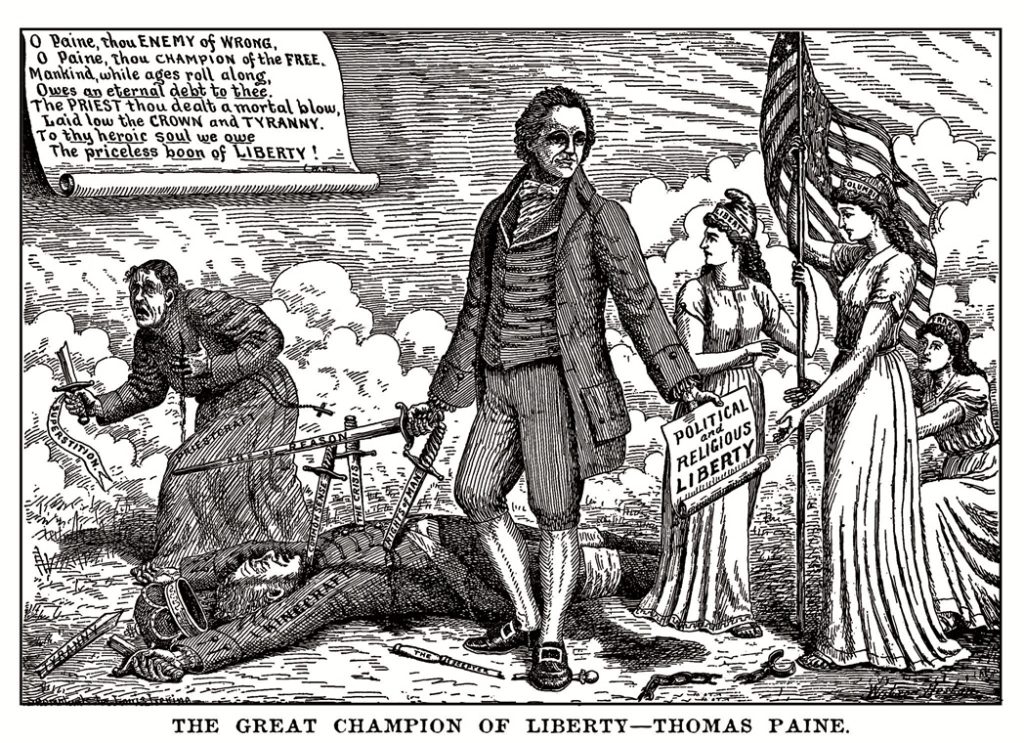
Thomas Paine’s first principles built the structure of democracy. The mechanisms central to Paine’s political theories are rooted in his ideology of first principles. The basic foundation of these principles is equality, and as a direct result, justice. If equality is practiced, then people share equal justice. 

, ,

Thomas Paine: Founder of Modern Democracy: Part 2  Read Post »

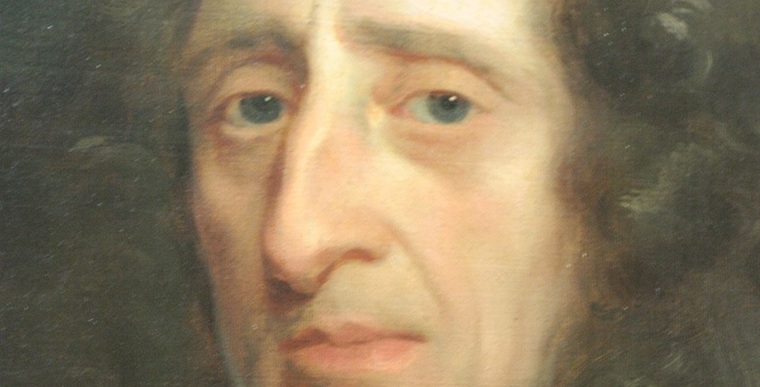
John Locke's Kit-cat portrait by Godfrey Kneller, National Portrait Gallery, London

How Paine Transformed Locke

Resources Essays

Thomas Paine was the most prodigious political and social polemicist of the revolutionary era. His thinking is more original and seminal than he has been given credit for by historians. Its scope is immense which is one of many reasons he is much more than a “Political Propagandist” and “Pamphleteer”.

, ,

How Paine Transformed Locke Read Post »

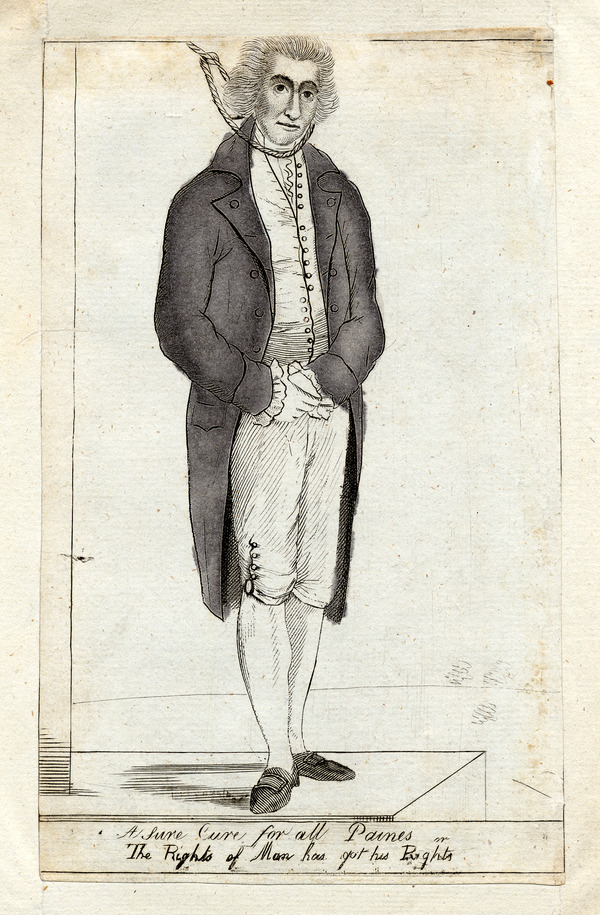
“A Sure Cure for all Paines” or “The Rights of Man has got his Rights” is a 1792 political cartoon showing Paine being hung – American Philosophical Society

Banning Thomas Paine

Beacon, Beacon May 2024

Lukin identified the 32 books most often banned worldwide. Two of those books, Rights of Man and The Age of Reason, were authored by Paine. As true from Common Sense forward, governments purporting to support democracy and free speech will resist the radical impact of Paine’s thoughts.

, , ,

Banning Thomas Paine Read Post »

Marker in Philadelphia, Pennsylvania with the inscription, ‘At his print shop here, Robert Bell published the first edition of Thomas Paine’s revolutionary pamphlet [Common Sense] in January 1776. Arguing for a republican form of government under a written constitution, it played a key role in rallying American support for independence.’ Erected in 1993 by the Pennsylvania Historical and Museum Commission – Photo by J. J. Prats

Common Sense and the Revolutionary Moment 

Beacon, Beacon March 2024

In Common Sense, Paine introduced the concept of modern democracy. This idea is what the “revolution” in the American Revolution rested upon. Self-rule was a by-product of the concept of government “of the people, for the people, by the people.” Before Common Sense, the meaning of “democracy” was diffuse.

Common Sense and the Revolutionary Moment  Read Post »

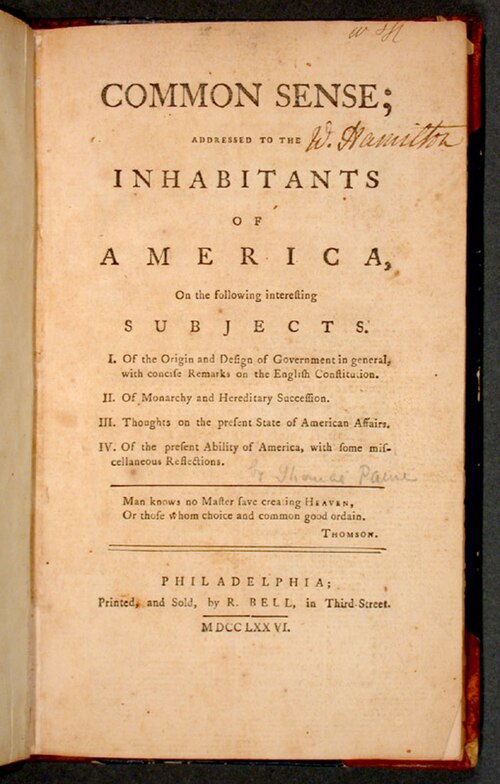
Cover of Common Sense, the pamphlet, released in January 1776 that ignited the American people to independence from the British Empire and called for a revolutionary representative democracy - Indiana University Bloomington

Common Sense as Timely Today as in 1776 

Beacon, Beacon May 2024

Unlike the political theorists employed by our own self-important news media, Paine doesn’t think it the duty of the political writer to keep things running quietly and smoothly. His aim is to arm ordinary individuals with the weapon with which to defend themselves against organized deception and arbitrary power.

,

Common Sense as Timely Today as in 1776  Read Post »

declaration of independence

BOOK REVIEW: Thomas Paine And America

Thomas Paine Society UK, TPUK 2009 Number 1 Volume 10

Those studying the reaction by Americans to Thomas Paine’s ideas, and, perhaps, to him as an individual, will find the judicious selection of works reprinted herein of immense value. Of course, there are works that one feels should have been included, but where does this process end, another six volumes?

, , ,

BOOK REVIEW: Thomas Paine And America Read Post »

vote box ballots

Paine’s Personal Involvement In The American War Of Independence And The French Revolution, And Other Countries Influenced By His Ideas 

Thomas Paine Society UK, TPUK 2004 Number 2 Volume 7

It is well known that Paine came close to losing the fight to establish democracy within the ruling circles in the American Colonies, because of the wish of John Adams, an American Federalist Congressman, who wanted to have a monarchy in the new United States of America. Paine would never have accepted this, because, to him, democracy was everything.

, , , ,

Paine’s Personal Involvement In The American War Of Independence And The French Revolution, And Other Countries Influenced By His Ideas  Read Post »

Scroll to Top