
The Lewes Railway Project
The Lewes Railway posters were hung in late December 2025, badged as a Thomas Paine Historical Association project with my having recently joined its Board.
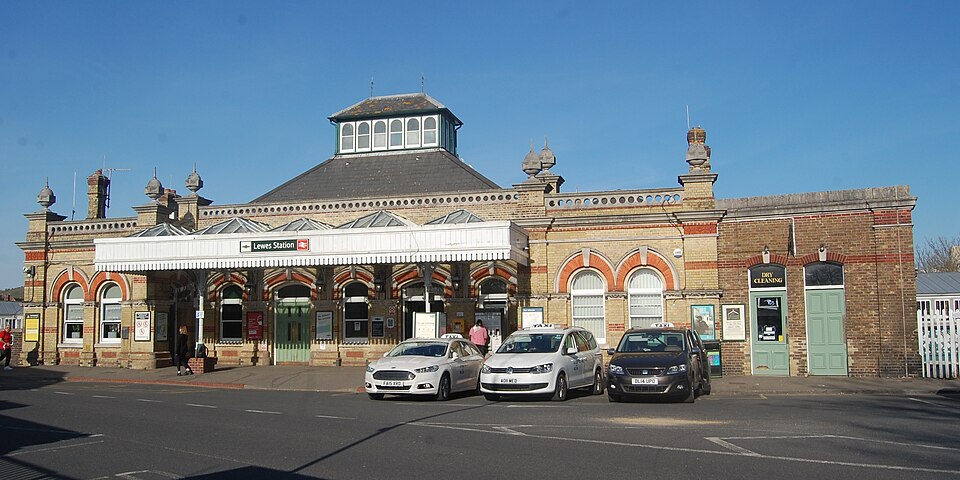
The Lewes Railway posters were hung in late December 2025, badged as a Thomas Paine Historical Association project with my having recently joined its Board.

Today’s British accent emerged in the 19th century. As the century progressed, Americans largely retained traditional ways of speaking English while England radically deviated from those linguistic roots. Spoken British English and American English diverged.
The Federalist Party, anointed by most historians as the founding party of the new United States, shaped the Constitution, adopted in 1787. Their conservative and nationalist ideas were voiced in 85 newspaper essays, collected in “The Federalist Papers,” to counter arguments against the plan from those who wanted more democracy.
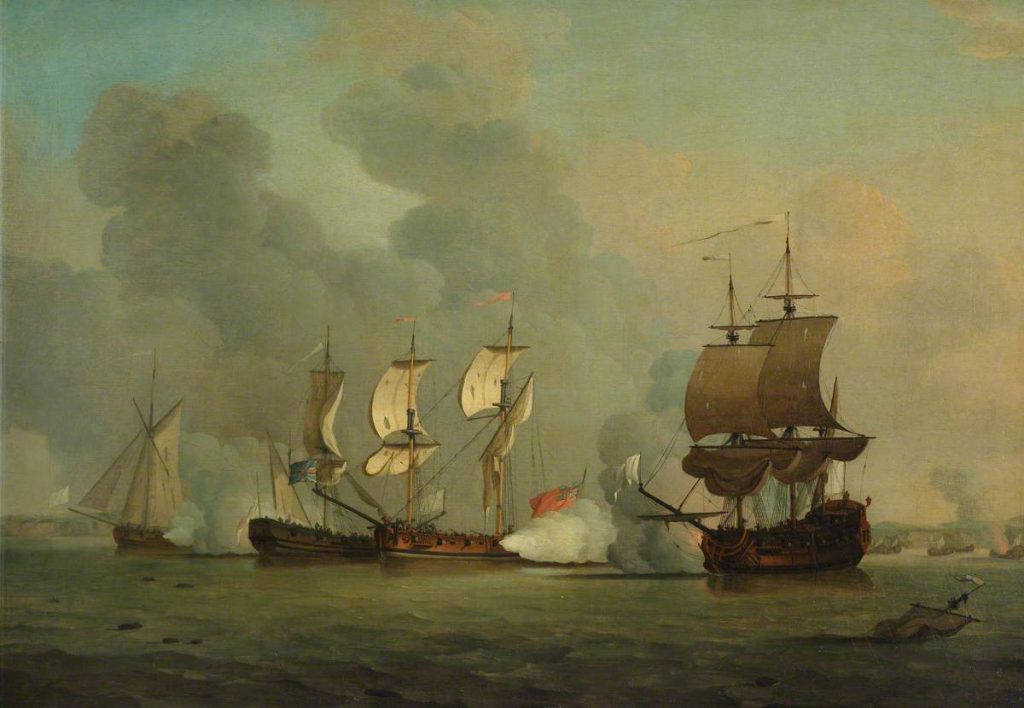
Imagine Thomas Paine as a “raw and adventurous” youth, scurrying up a ship’s rigging in storm-tossed waters, overwhelmed by the booms of two dozen cannons fired in unison, the clouds of choking smoke, and the violent lurches of a shuddering ship.
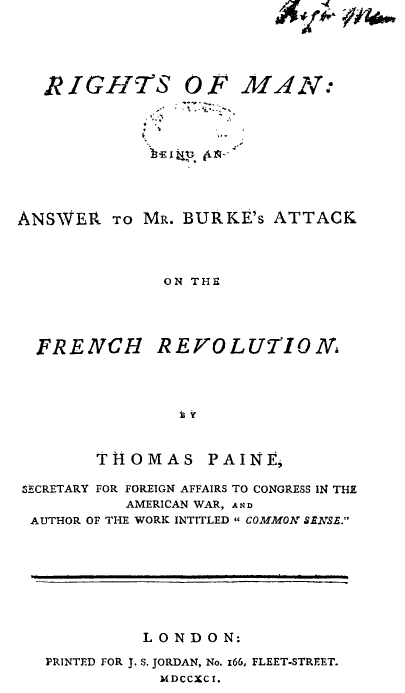
Paine purposed to realize for every individual, as much as possible, the God-given natural rights and liberty of mankind. Such a goal for any nation, Paine believed, is best and most easily accomplished through the agency of a constitution that by its sequence of adoption and substantive content.
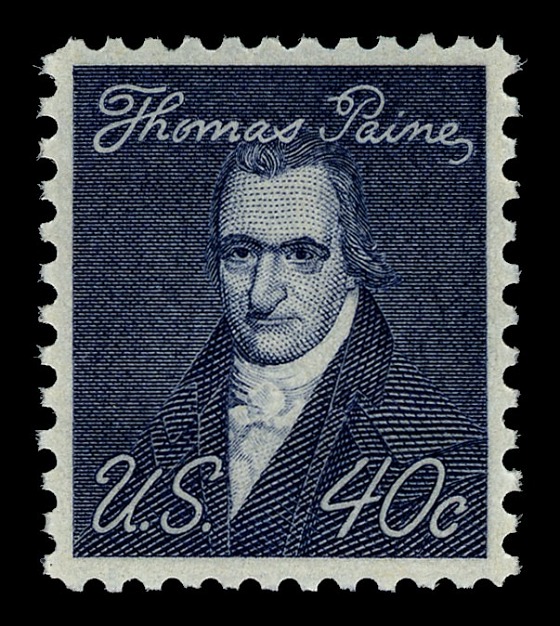
I joined the TPNHA because Paine still lives among us, on bookshelves, yes, but moreso here in The Beacon. There are still statues to be cast, a national monument to be built, national school curriculums to be written, and biographical movies to be made.
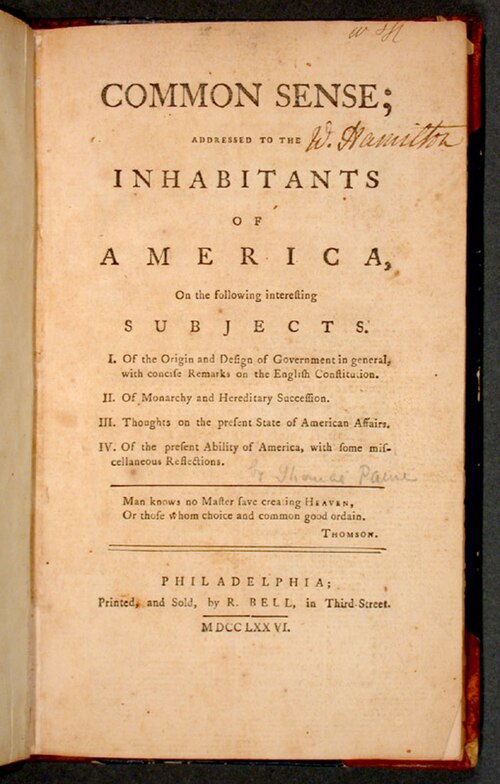
We should never fail to recount the story of the American Revolution. We should never forget that our nation was forged in struggle, a struggle — however inadequate and in need of continual renewal and advancement — that was revolutionary.
![Marker in Philadelphia, Pennsylvania with the inscription, ‘At his print shop here, Robert Bell published the first edition of Thomas Paine’s revolutionary pamphlet [Common Sense] in January 1776. Arguing for a republican form of government under a written constitution, it played a key role in rallying American support for independence.’ Erected in 1993 by the Pennsylvania Historical and Museum Commission – Photo by J. J. Prats](https://thomaspaine.org/wp-content/uploads/2025/12/thomas-paine-common-sense-788x1024.jpg)
When power is concentrated in the hands of the few that, by very definition, is an example of tyranny. To allow oil companies, the trucking industry, or whatever to do whatever they want because we believe that they will do the right thing is to fall into the trap.
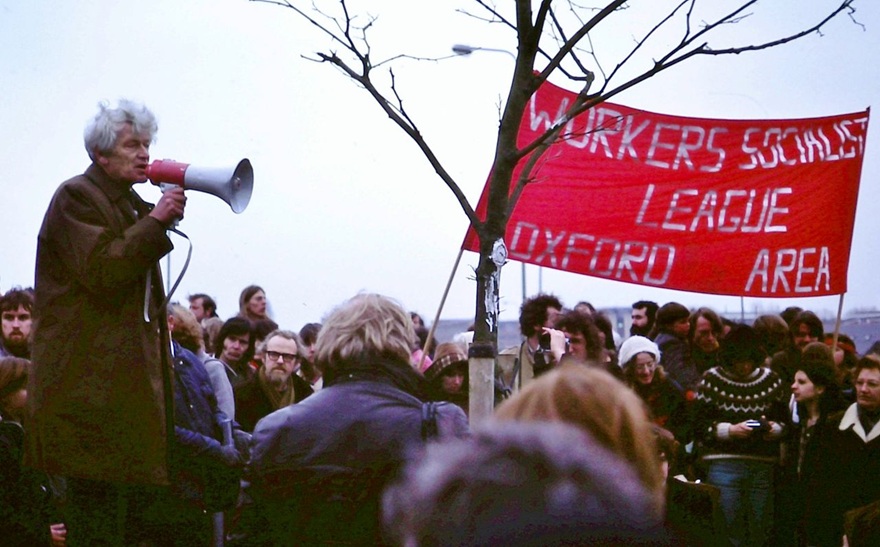
Thompson’s interpretation underlined Paine’s importance in what was labelled by historians as the ‘Atlantic-Democratic Revolution’. In the 1960s, my undergraduate days, this exercise in comparative history breaking through the constraints of nation state historiography was as fashionable as Thompson’s history from below.
Thomas Paine, the Rights of Man and the Rights of the Freeborn Englishman Read Post »
The evening went with a real swing, and notwithstanding the heat ended amicably, with the final vote showing no change in the audience position. The feedback from this event, one of a series of topics, was very favourable, showing that there is an appetite for a debate of this kind.
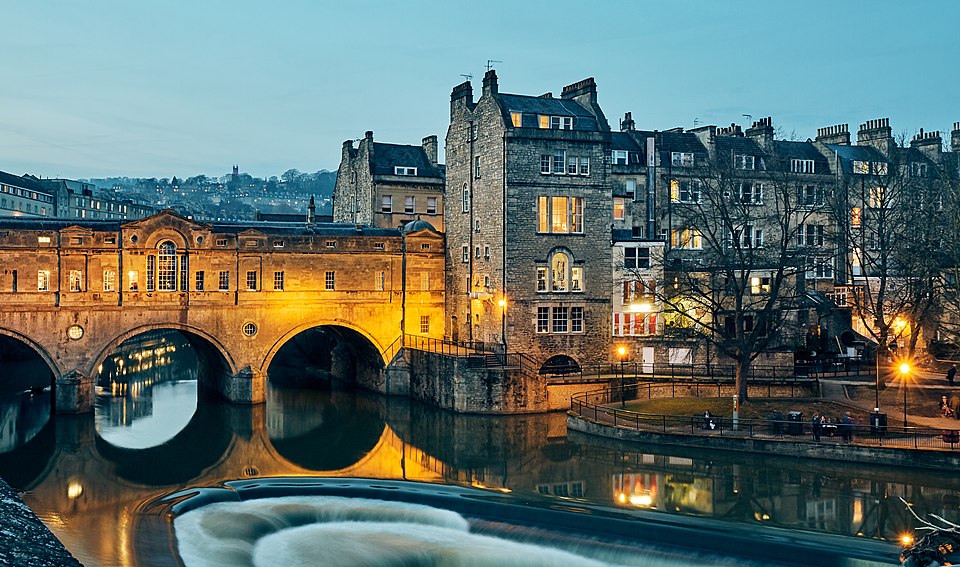
What the chapter relates offers is a tour of the places in the city associated with individuals known for their support either for Paine and/or his ideas. It commences with Henry Hunt, who in 1817 is said to have addressed between twelve and twenty thousand people at a gathering.
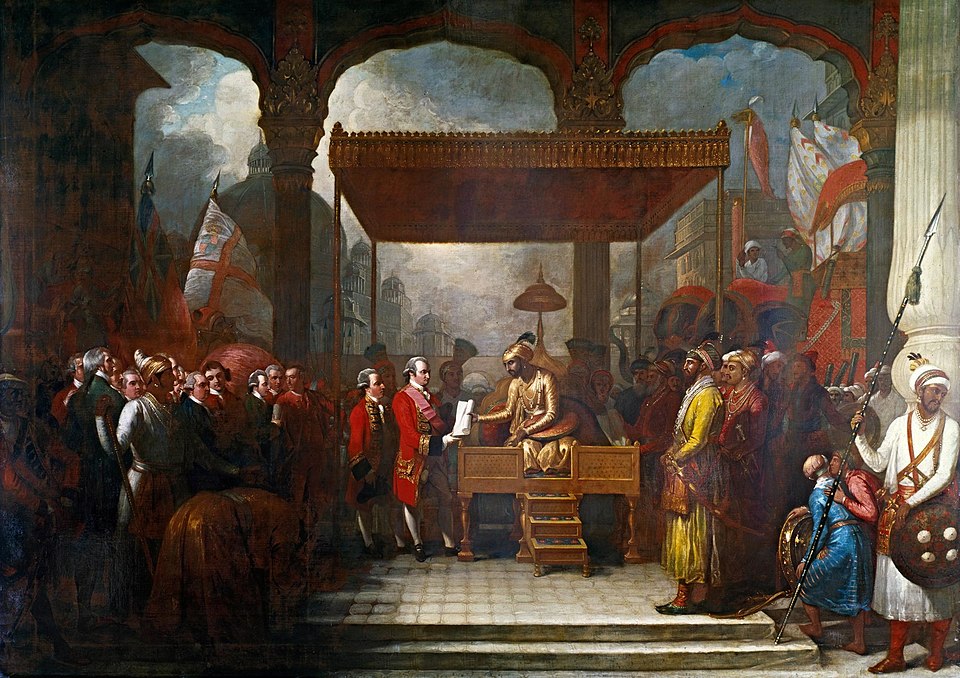
Shortly after his arrival in Philadelphia, however, Paine published an essay on ‘the Life and Death of Lord Clive’ which was highly critical of the type of ‘nabob’ whose election campaign he had supported in Shoreham. Clive’s conduct in India had been investigated by parliament.
The Role Of The East India Company In Thomas Paine’s Radicalisation Read Post »